All posts by Edward Staskus

Edward Staskus is a freelance writer from Sudbury, Ontario. He lives in Lakewood, Ohio. His crime thrillers "Cross Walk" and "Bomb City" can be found on Amazon.

Opening Act

By Ed Staskus

Before they turned the Victoria Hall into the Victoria Playhouse, and before they spent the next thirty years transforming the theater into ‘PEI’s Longest Running Little Theatre’, Erskine and Pat Smith bought a house in Victoria. The house, in which Pat Smith lives to this day, had bathrooms, running water, and electricity.

Their house in Point Deroche, where they had been living for three years, had no bathroom, no running water, and no electricity.

Victoria is a village on a sheltered harbor on the south shore of Canada’s Prince Edward Island. It is an arts community of family-run businesses. The year-round population is just a few heads above a hundred. Point Deroche is a pocket-sized community on the north shore. There are some summer cottages and a quiet gulf-side beach.

No one knows exactly how many people live in Point Deroche.

“Erskine and I homesteaded there,” said Pat. “We lived in a house that had been built in one day.”

Reggie and Annie McInnis, a brother and sister whose home burned down, built the emergency house in Point Deroche. “They were subsistence farmers. They had no money. They were poor people, but kind and generous.”

The McInnis’s gathered driftwood, had it milled, and cobbled the house together. They nailed the roof down when the sun was shining. It served as shelter against a rainy day.

“It was unfinished on the inside,” said Pat. “You could see all the wormholes from the sea worms that had eaten into the wood.” As small as the house was, there were three rooms and two more upstairs. There was a well and the Smiths built an outhouse.

“Erskine hauled in a Silver Moon wood cook stove.” In the wintertime the stove never went cold. “That’s how we heated the house.”

Erskine Noble Smith, a native PEI-man, lived the length and breadth of Canada. His father was in the Armed Forces and was routinely transferred from base to base. Military brats are time and again drawn to the stage because they’ve learned how to make a fast impression at the drop of a hat.

Pat Stunden Smith moved to Prince Edward Island from Montreal to work at the Confederation Centre in Charlottetown, the provincial capital. “I applied to work in the art gallery, but ended up as a tour guide,” she said.

After graduating from university she applied again and was accepted as an assistant curator. She worked at the gallery for several years.

“Then I got itchy feet.”

She traveled, lived in Toronto, and returned to Prince Edward Island. She enrolled at Holland College School of Visual Arts and trained in weaving and silver work. Erskine Smith met his wife-to-be the one and only time she ever appeared on stage.

“I had just moved back to the island, and I thought I needed to meet people, so I joined the Drama Club. I never wanted to be on stage after my first show, which was Brigadoon, but Erskine was in the audience, and we met at a party afterwards.”

Brigadoon is a musical about a mysterious village that appears out of thin air only one day once every one hundred years, and where a man and woman stumble onto each other and fall in love.

“There’s a nice little house in Victoria for sale,” Erskine said to his wife one night after work. He was working in children’s theater, lunchtime performances, and cadging shows around the island. He had taken on the role of Ronald McDonald, as well, becoming the jump suited big shoe big heart clown character for the whole of the Atlantic Canada region.

“He went to every parade and every hospital for seven years,” said Pat. “Kids loved him and he loved kids. He could just touch people. He had children die in his arms.”

The next day the family drove the family car through the heart of the crescent-shaped island to Victoria.

“After my daughter Emily turned three, and I got pregnant with my son Jonathan, no running water became an issue. We were young, but I was tired of washing diapers by hand, and my parents were desperate to help us find another house.”

The Smith family looked at, walked through, and ran the taps in the house. “Yeah, this is a good move for us,” they all agreed.

Victoria is a handful of blocks one way and a handful of blocks the other way. The Victoria Hall, built by a local carpenter between 1912 and 1914, was built at the exact center of the village. It is a wood shingled building with a gambrel roof. For more than seventy years it was where lobster suppers, quilting bees, and community council meetings were held.

It was home to the Red Cross and the Women’s Institute.

“The identity of Victoria is in the buildings that have been here for generations,” said Stephen Hunter, for many years the chef and owner of the Victoria Village Inn.

But, the Trans Canada Highway bypassed Victoria in the 1960s and many businesses left. The village declined as people moved in search of work. “It went into a lull for about two decades,” said Henry Dunsmore, owner of the Studio Gallery.

“When we moved here the hall was a community hall, but it wasn’t being used by the community,” said Pat. “It was empty.” Except for the New York City performing arts troupe that came some summers and put on shows.

“The village loved them, but they left a mess. They were kids, renting an old house, and living the life of Riley, although they had nothing. They raided the Women’s Institute room in the hall and took everything, dishes, silverware.”

While Erskine Smith tromped up and down the Maritimes in his red oversized Ronald McDonald shoes, Pat Smith started up a kindergarten, which she soon moved into the basement of the Victoria Hall.

“Don’t quit your day job,” play-actors are often warned. Pat went on to teach kindergarten for fifteen years. Since so many entertainers are the voices of cartoon characters on TV and in the movies, her classroom might have been a kind of informal inadvertent in-house training ground.

One day in 1981 Frieda and Loren McLelland, who owned a craft shop in the village, visited the Smiths. “Is there any way you could get the theatre going again?” they asked. “It would be good for the community.”

“It hadn’t occurred to us,” said Pat.

“Yeah, I think we can do it,” said Erskine.

“Actor people, do we want any of them?” asked the community council cross-examining the proposal.

“It wasn’t all easy sailing. What made the difference was that we were living in the community,” said Pat. “If they weren’t happy they knew where we lived.”

Where they lived was a few minutes walk from the Victoria Hall.

Erskine Smith recruited himself as actor and Artistic Director. “He looked after everything that happened on stage. Storytelling was who he was.” Charlene McLean and Bill McFadden came on board. Pat Smith became the General Manager, running the box office, searching for funding, writing press releases and programs, and everything else. “It’s a small community theatre. When things need to get done everybody needs to be on board 100%.”

They strategized, developed a mission statement, and opened a bank account. They recruited a Board of Directors.

Then they took a close look at the hall.

“It looked completely different,” said Pat.

The stage was painted black. The Women’s Institute had been using the stage for their suppers. The walls were painted, too, and the ceiling was false. “They had an oil furnace up in what is now our parts room and they pumped the heat down through the ceiling. We took that false ceiling out.“

The seats were hardwood pressed-back chairs. They were attached to two-by-fours because the floor was raked. The back legs of all 153 seats had been sawed down three inches and bolted to the two-by-fours. “The back legs had to be shorter so the seats would be level,” said Pat.

“We had a fund-raiser and auctioned off those chairs. I don’t know where, but they all actually went.”

The theater lacked a proscenium, which is the arch that frames the stage. It is the metaphorical fourth wall, a kind of window around the set. They are helpful to actors because on the other side they can pretend to not hear what the audience is saying, or not saying. It helps the company to mind their own business.

The proscenium was fashioned by chain saw and grinder. David Bennett, a set designer, did the job on his own after everyone else had gone home. “He was a creative guy. He marked the pine boards with a magic marker, did the initial cuts with a chain saw, and then used a small grinder,” said Pat.

“Everybody pitched in to make sure things worked.”

They tracked summer sunset times to make sure they knew when the theater’s windows could be opened during a performance. “We didn’t get air conditioning until 2004,” said Pat. “The windows were darkened and as soon as it got dark outside we would open them so there would be a cross draft in the auditorium.”

The Victoria Playhouse mounted its first show the summer of 1982. “All there was on the island at that time was the Confederation Centre of the Arts in Charlottetown, and then we did what we needed to do and there was the Victoria. It was a very different landscape back then.”

Opening nights only happen once. After all the preparations and rehearsals you’re on your own. The lights go down and the curtain goes up. It helps, however, that opening night is for your friends and community. There were just enough seats in the new theater for them.

The Victoria Playhouse’s first season ran two months. It featured three plays running in repertory. The plays were Dear Liar, The Belle of Amherst, and The Owl and the Pussycat. “The Owl and the Pussycat want to get married – but they’re in the middle of the sea! They reach the land where the Bong Trees grow, and alight to find a vicar and a ring.”

Everybody was on board and everybody was all in. Everything came alive. Pat and Erskine Smith pulled it off.

Theatergoers go to plays because they want to have a great time at the theater. The best show halls, like the Victoria Playhouse, are more like verbs than they are nouns. It’s an event as much as it’s a place. It’s where the drama comedy musical happens, bold funny truthful. You can’t bail out of a story once it’s gotten going, even though most shows at small theaters are just a few characters in a room living it up.

What happens in a lifetime can sometimes be random and disordered. The walk of life is learning about the going by going. In performance on stage the story about what’s happened is put into order and fleshed out. When the season ended Erskine Smith went to work reading plays for the next season, which in time came to mean eighty performances seven days a week all summer long. He continued to do so for thirty years until his untimely death in 2013.

“Erskine was a real storyteller,” said Pat. “Oh, yeah, he loved stories. As long as I knew him, we would go to parties and all of a sudden everyone’s in the kitchen and there’s Erskine telling stories.”

Erskine Smith was the glow in the kitchen, the man in the smoke of the campfire, the storyteller who loved the stage. Pat Smith made sure the nuts and bolts were in all the right places. Today their son and daughter, Jonathan, set carpenter and scenic painter, and Emily, Assistant General Manager, spend the off-season on Prince Edward Island getting ready for the next season.

Standing in the wings Erskine Noble Smith would be happy to see who’s working in the wings. 

Ed Staskus posts monthly on 147 Stanley Street http://www.147stanleystreet.com, Made in Cleveland http://www.clevelandohiodaybook.com, Atlantic Canada http://www.redroadpei.com, and Lithuanian Journal http://www.lithuanianjournal.com

A New Maritime Thriller by Ed Staskus

“Ebb Tide”

“Small book, big story.” Barron Cannon, Adventure Books

“A Down East crime mystery, wildlife and all.” Sam Winchell, Beyond Fiction

Available on Amazon: https://www.amazon.com/dp/B0CVDP8B58

Atlantic Canada, 1989. A town on the Gulf of St. Lawrence. A satchel of stolen counterfeit money. Two contract killers from Montreal. A gravel road cop stands in their way.
All Hands On Deck

By Ed Staskus

“What were we thinking?” Kate Doucette asked her mother, who was peeling potatoes in the kitchen of their eatery as they geared up for the second week of their new restaurant’s first season the summer before last.

“I know, we need fish-n-chips on the menu,” said Joanne Doucette.

On the Dock is at the far end of Harbourview Drive in North Rustico, around the bend of the harbor up from the lighthouse, catty-corner to Bob’s Deep Sea Fishing, on the north central coast of Prince Edward Island. The dining room is literally on the dock. More than two-thirds of the tables and chairs are outside, spread out over a big deck, on the edge of a square wharf on the ocean.

“I’ll go over to Doiron’s and get some,” said Kate.

She walked down the street and got five pounds of fish.

Doiron Fisheries, a fish market on the Inner Harbour, chock full of shellfish, lobsters, and fresh Atlantic seafood, is about a half-mile away, by way of a boardwalk, at the other end of the street.

“It wasn’t that much,” said Kate. “But mom wondered, what are we going to do with all this fish? Maybe we should freeze some of it, she thought, just to be safe. By the time she put it in the freezer, though, she had to take it out, since we were selling so much of it.”

When they sold out the fish-n-chips, Kate Doucette took another walk back down the street to Doiron’s, this time for more than just five pounds.

“It’s a simple menu, chowder, fish cakes, but it works,” she said. “We had lobster rolls from the beginning, because dad catches all of our lobster. After working here, me and mom go home and shell lobsters a couple of hours every night.”

The fish cakes are chips off the old block from her father’s handcrafted cakes. “On Boxer Day, Christmastime, parties, the whole family would come over for dad’s fish cakes. He served them with homemade mustard pickles.”

Joanne Doucette has made mustard pickles for a long time. “It’s a recipe that’s known around here,” said Kate. Every week is National Pickle Month when it has to be. “We make batches of them for the restaurant.”

“It’s hearty home-style cooking with the freshest seafood,” said Megan Miller, sitting outside in the sun on the seaside, pushing back from her table and empty plate of fish and pickles.

Kate’s father, Robert Doucette, is Bob’s Deep Sea Fishing. He ties his 45-foot fiberglas boat up at the end of the dock outside the restaurant. He harvests lobster in season and takes tourists out to catch cod and mackerel in July and August. His brother Barry and he bait hooks for tuna in September.

“His boat used to be called the ‘Jillian Marie’, who is my older sister,” said Kate. “But, when I got old enough to realize my name wasn’t on the boat, I got a little ticked off. When he got his next boat he called it ‘My Two Girls’.”

Bob Doucette has been working out of the North Rustico harbor for more than 40 years. “He grew up in a little white house right here,” said Kate. “He hasn’t gone far. Their house used to be up Lantern Hill, but it was moved down here, on the back of a big truck.”

Joanne and Bob Doucette met when they were 14-years-old. “They’re both from here, North Rustico, born and raised.”

Kate and her sister grew up in a house in a thicket of trees a mile-or-so up the road, behind her Uncle Ronnie’s Route 6 Fish-n-Chips “We were so lucky to grow up where we were in the woods all the time,” she said.

There’s something about woods that you can’t find in books, at school, or on the infobahn. Moss grass shrubs insects birds trees will teach you what you can never learn from flatscreens. Trees wise you up to being grounded from the trunk down and limber on top from the branches out.

North Rustico is a community of about 600 residents. The bay is sheltered by Robinsons Island and houses a fleet of forty-some lobster boats. Fishing is the town’s main focus, although, since it has direct access to Prince Edward Island National Park, it has long been popular with vacationers.

All summer long kayakers launch their boats from Outside Expeditions at the mouth of the harbor, paddling up and down the north coast. It’s a way to get focused on the wide-open water. When you’re tucked into a kayak and paddling, there’s literally nothing else you can do.

“Dad used to bring me down here when I was a kid,” said Kate. “I was a huge little tomboy. He bought me a kit with a saw and hammer for my seventh birthday. He made me a miniature lobster trap to work on while he was repairing his traps.”

By the late 1990s the wharf was rotting. “Dad still had a slip for his boat, but you could hardly walk anywhere, it was just run down.” The wharf was rebuilt and a new red-roofed building, the front half housing the Fisheries Museum and the back half housing the Skipper’s Café, was built with provincial and town funding, built on the spot where Bob’s Deep Sea Fishing shanty had stood.

“They moved all the shanties to the side when they built this,” said Kate.

“We grew up down on the harbor. My sister Jill and I worked in the canteen from the time I was 12-years-old, in the shanty, where reservations were made. We sold chips and chocolate bars and soda, except Jill and I ate all the chips and chocolate until dad finally ended up only selling ice cream.”

Kate Doucette’s grandmother opened the first restaurant in North Rustico in the 1940s. It was the Cozy Corner, at the convergence of Route 6, Church Hill Road, the gas station, the post office, and the road down the harbor. Her grandparents later opened the Isles, a sizable seafood restaurant, up the road.

“My Uncle Ronnie was a big part of it and mom served there for years. The whole family worked there. They had a bakery in the basement and I’d run over every afternoon and get fresh rolls.”

One day the restaurant burned to the ground.

“It was a pretty big upset,” said Kate. “We were lucky there wasn’t any wind and none of it got into our woods.”

Towards the snowy front end of 2016 Kate Doucette was living in Charlottetown, the capital and largest city on Prince Edward Island, taking business classes part-time at UPEI and working full-time, while her boyfriend Sam roughnecked oil rigs more than three thousand miles away in Grande Prairie, Alberta. One evening her mother paid her a visit. Joanne Doucette had a proposal for her daughter.

Kate was surprised by what her mother stumped for that night.

“I wasn’t thinking of doing a restaurant, for sure,” she said. “I never in my wildest dreams thought that was going to be our conversation.”

The Skipper’s Café on the ocean side of the Fisheries Museum in North Rustico was closing. The Port Authority was leasing out the space. She was being offered first crack at it.

Kate Doucette called her boyfriend in Alberta.

“Go for it,” said Sam MacLeod. “You’ve got to take a risk sometime.” Even though it was going out on a limb, it wasn’t necessarily risky, since most risk comes from not knowing what you’re doing.

“It’s in our blood,” said Kate. “I’ve been serving since I was 16-years-old. I’ve had a hell of a lot of other jobs, but I’ve always had a serving position on the side.”

Her family and she began making plans.

“The guy who owned Skipper’s Café, he was closing since he wasn’t feeling wellish,” said Kate. “Then he told us, ‘Oh, I might run it for another year,’ but by the first of May he closed and took absolutely everything out of the place.”

Many of the restaurants on the north shore of Prince Edward Island are seasonal, opening roughly at the first sign of summer and closing more or less at the start of fall. From a business point-of-view, there are two seasons, June July August and winter.

“We started from fresh, but it was a crazy month. We had to get all our licensing, buy all our equipment, and design our menu. Our tables were made by a local carpenter. We rebuilt the kitchen, which is very small, and the first summer we worked with table fryers. It was insane. I don’t know how we did it.“

The difference in fryers is that the oil capacity of tabletop models might be seven or eight pounds. The capacity of commercial deep fryers, which can have two tanks, is often 50 to 85 pounds.

“The first thing we did when we closed in October was get a commercial fryer, a grill, and a seven-foot range hood,” said Kate. “We still peel all of our potatoes with a little hand cutter. There’s a machine that can do it, if we could find the space to put it. Right now, Sam does it. He calls it his corner office.”

The reason Sam MacLeod gives a leg up at the potato peeler back in the corner is that Kate Doucette called him one day in the middle of their second summer, when he was working in Alberta. He is on rigs twenty days in the oil fields northwest of Calgary, and then off ten days, which he often spends having flown back to PEI.

“I was crying,” said Kate. “I don’t know what I’m going to do, either I’m going to kill my mother with all the work she’s doing or I’m going to have to close down.” After working all day, and after closing everything down at night, her mother was spending two more hours peeling potatoes for the next day, every day.

“It was just too much,” said Kate.

“I’m going to take August off and come back and help you guys,” said Sam.

Sam MacLeod and Kate Doucette met in a Subway on the eastern end of the island at the moment Kate knocked over her young niece. She and her sister, Jill, were distributing Bob’s Deep Sea Fishing fliers at tourist cottages. They stopped for lunch. She and Mila, Jill’s daughter, were walking across the dining room to the soda fountain.

“I had my hand on top of her head and I accidentally pushed her over,” explained Kate. “She fell down.”

Sam MacLeod, who had just pulled into the parking lot and walked in the door, stopped where Mila was lying on the floor in front of him.

“Is she all right?” he asked.

“I hadn’t even noticed it happened.” Kate looked down at her niece. “Oh, she’s fine, she just kind of fell over.” Sam gave Mila a helping hand up.

“He’s nice, he’s cute,” said Jill as they watched Sam drive away in his white knight white pick-up truck.

Six months later, on a Friday night, while in a bar and grill in Charlottetown with friends, she recognized a young man wearing a red hat at the bar. She walked up to him

“Do you remember me?” she asked.

“You’re the girl who pushed that kid down on the floor,” he said.

“She survived,” said Kate, grasping at straws.

They exchanged phone numbers. Twenty days later, a few days after Christmas, Kate and Jill were loafing in their apartment in Charlottetown. “Jill and I were going to hang out, have a chill night.” But then, out of the blue, she got a text from Sam.

“Do you want to go out to dinner?”

“I told him to give me a second. He took me to Cuba the next month. We’ve never spent a night apart since then, except when he’s out west.”

The couple built a house in Stratford, outside Charlottetown, but then rented it out on Airbnb. They planned on building something in North Rustico, but in the meantime realized they needed somewhere to live. They considered buying a camper and parking it in her mom and dad’s backyard.

“We found a reasonably-priced one on-line. It wasn’t the nicest, though, kind of shitty, and I was thinking, at the same time, do I want to shower in a camper all summer?”

She showed a picture of the camper to her parents. They took a close look at it, retreating to the other end of the room to compare notes. “I could see them kind of talking. They knew we were trying to save money.”

“Just stay with us,” said her mom. “We’ll fix you up a room. We’ll make it work.”

What she meant was, since they were already all working together, if they were all living together, it would make seeing one another all the time sticky. It might be too close for comfort. That’s why, since God has given us our relatives, many thank God they can pick their friends.

It would take some sufferance, fifty-fifty payoffs. They made it work.

“We’re only there to sleep, anyways,” said Kate. “We don’t cook there, we don’t hang out there, we don’t do anything, really. We’re always working. You give up your whole life half the year when you work at the restaurant.“

On the other hand, if you’re doing what you want need and enjoy doing, you’re never actually  clocking in to the daily grind rat race any day of your life.

“The one place I’d rather be in the world is down at the harbor,” said Kate. “It’s hard, you see everyone working so hard, but to be with the people you love the most, my mom and my dad, my sister, my boyfriend, I can’t think of anywhere’s else I’d want to be.”

Joanne Doucette runs the show in the kitchen. “You’re not going to have anyone in the kitchen who cares more about you than your mom.” Kate is the hostess server business manager, Jill busses serves odd jobs, while Sam and Bob run errands deliver seafood peel potatoes and take out the trash.

Kate’s niece Mila is in training.

One evening at closing time, looking for something to do, her Crocs at the ready, Mila asked if she could clear the outside tables.

“You can take the salt and pepper shakers and candles in, but leave the flowers,” Kate instructed her.

When Mila was done, two men were still at the last occupied table on the far side of the deck, their plates pushed to the side, kicking back at the edge of the ocean. “She went right up and took their empty plates off the table. They ended up giving her five dollars.”

“Kiki, Kiki!” Mila whooped, running up to the front counter, waving her five-dollar bill.

“She calls me Kiki. It just happened. She just one day decided,” said Kate. Since no one is allowed to give themselves a nickname, it might as well be your six-year-old niece. Catching a break, Kiki is better than, say, having to answer to Pickles.

“I don’t work here, but I help out all the time,” said Mila on a warm breezy sparkly afternoon, a broom a head taller than her in her hands, sweeping up around the chairs and under the tables on the deck, in the interval between lunch and dinner.

When you’re helping out it’s all hands on deck.

There’s no keeping Mila down.

Photograph by Vanessa Staskus.

Ed Staskus posts monthly on 147 Stanley Street http://www.147stanleystreet.com, Made in Cleveland http://www.clevelandohiodaybook.com, Atlantic Canada http://www.redroadpei.com, and Lithuanian Journal http://www.lithuanianjournal.com

A New Maritime Thriller by Ed Staskus

“Ebb Tide”

“Small book, big story.” Barron Cannon, Adventure Books

“A Down East crime mystery, wildlife and all.” Sam Winchell, Beyond Fiction

Available on Amazon: https://www.amazon.com/dp/B0CVDP8B58

Atlantic Canada, 1989. A town on the Gulf of St. Lawrence. A satchel of stolen counterfeit money. Two contract killers from Montreal. A gravel road cop stands in their way.

Face in the Bunker Gear

By Ed Staskus

Bunker gear is what a firefighter wears, boots pants jacket, and more modern apparatus, like masks and breathing cylinders, to stay safe and be effective when responding to an emergency. It is also called turnout gear, which is what firefighters do, turning out when there’s an alarm. The protective clothing is triple-layered and fire resistant. It is sometimes stowed beside or under a firefighter’s bunk at the station.

It all weighs more than 50 pounds, and that’s before picking up an ax or an extinguisher. Two hundred-some years ago headgear was a felt cap meant to keep water out of your eyes. Today’s helmet, high-peaked with a long rear brim, was first introduced in the 1830s. The New York City luggage maker who designed it was also a volunteer fireman.

Fighting fires means a lot of stepping up and down bending crawling, as well as working with your arms both in front of and over your head. When a firefighter bends at the knee or waist they need added length in their pants and jacket to accommodate their movements. Although bunker gear isn’t necessarily oversized, it’s oversized for mobility’s sake.

When a firefighter is in full bunker gear it’s hard to tell if the reflective-striped all-suited-up hulk pulling hose off a truck is a man or a woman. If it’s the fire chief of North Rustico in the Canadian province of Prince Edward Island doing the work, it’s a woman.

It is Alison Larkin. A member of the town’s fire department since she was 18-years-old, she is in charge of the 30-man-and-woman volunteer company.

Before being appointed fire chief in the spring of 2016, the 28-year-old Ms. Larkin was and remains a full-time paramedic with Island EMS, where she has worked for seven years. But, before becoming a professional lifesaver, after graduating from high school, she had to first apply to the paramedic program at PEI’s Holland College.

She didn’t get in.

“My high school marks were terrible,” she said. “I loved school, all my friends, but I did just enough to pass.”

Regrouping, she took Adult Education classes, upgrading her math, science, and English scores. “I had no problem working on my own,” she said. “Healthcare was something I wanted to do and my best friends weren’t around to influence me about going or not going to class.” In the meantime, she filled out an application and was accepted as a member of the North Rustico Fire Department.

There are more than 125,000 volunteer firefighters across Canada, most of them serving in countryside that can’t afford to staff a full-time career department. Volunteer firefighters date to the year 6 in the city of Rome.

North Rustico is a small town of fewer than 600 year-round residents on the central north shore of the province, on a natural harbor along the Gulf of St. Lawrence. The National Park shoreline is a short walk from the harbor.

Although her family lives in the town of Rusticoville, her hometown is within a few miles driving on rising and falling rural roads of Rustico, Anglo Rustico, and South Rustico, as well as North Rustico. “I pretty much knew everyone in the department from being around here.” She spent her first year learning the ropes.

Alison’s plan was to bring her new marks and newfound experience in the fire department to bear in petitioning for admission to Holland College. “They save some seats in each course for people who have upgraded their marks,” she said. The next year she applied to the paramedic program again.

She didn’t get in.

She went to work at Lorne’s Snack Bar in North Rustico. “I waited tables, cooked, cleaned, everything. They had the best poutine and gravy in town.” Lorne’s was a stone’s throw from the Irving service station owned by her parents. “My dad does all the mechanics at the back and mom manages the front. You see a pretty lady walking around, that’s my mom.”

One day the following year her mother walked over to Lorne’s from the service station and dropped off a letter addressed to her. She slid the poutine she was making to the side. She opened the letter.

“I remember freaking out behind the counter,” she said. Alison Larkin had finally gotten into Holland College.

It’s when first and second chances haven’t played out that the third time’s a charm.

”I’m happy it took that long,” said Alison. “It can be a crazy job, seeing all the stuff you see. I wasn’t mentally prepared for it. How do you help people when you have no life experience?”

When first responders get to where they’re going there’s no waiting. They’re always stepping into something that’s gone wrong. When stepping into the middle of some emergencies they hear see smell things that most people never do, and don’t want to. Their job is to help people, sometimes people whose lives are hanging in the balance.

“It’s stressful, very stressful” said Alison. “I don’t carry a lot of the calls with me. If you hold on to it, get personal with it, you’re never going to last. My brain just lets me do the call and let it go.”

It was after Alison Larkin prevailed and became a paramedic and found work that she was able to stay in the Land of Rustico, stay on the North Rustico Fire Department, and stay on Prince Edward Island. “It’s a beautiful place, a great place to be, but it’s hard to make a living.”

Recent data released by Statistics Canada suggests that PEI natives have been moving to other provinces in search of work at a rate not seen in 30 years. “Five thousand people in Prince Edward Island declare Prince Edward Island as their home, but work in Alberta,” said Workforce and Advanced Learning Minister Richard Brown.

“There‘s not a lot of work here, you can’t make any money,” said Alison “It’s hard to buy farms and lobster gear, it’s so expensive, so finding a good well-paying job was the biggest thing, definitely.”

In the meantime she became more involved with her town’s fire department. “I fell in love with the firefighting side of things, almost changed my career to it.” She trained at the PEI Firefighters School “I loved it, got right into it. I loved hanging around with the guys.” She trained in fire and search simulators, climbed real ladders, and hauled high-pressure hoses. She aced the question and answer test at the end.

The men and women sitting in a fire truck speeding to the scene of a calamity do one of the most physically demanding of all jobs. No emergency call they go on is ever the same, from chain sawing holes in a steep roof ventilating it to dragging someone out of something smoky hot dark on fire to safety.

The first fire Alison Larkin fought was her helping handle a hose cooling off a propane tank that was next to a burning building. “It was a total adrenaline rush. It’s not boring. Every day is different.” It takes steady nerves. Half-hour bottles of air can empty fast if you lose your composure.

“Not every woman can do it, but not every man can do it, either,” said Alison. “There are definitely people who are built for it, man or woman. It’s hard, but I can do it. I’ve only ever been pushed further by the guys.”

The first female firefighter, a young slave from New York City, was Molly Williams, described in 1815 “as good a fire laddie as many of the boys.” When Emma Vernell’s husband died in the line of duty in the 1920s, she took his place on Westside Hose Company #1, becoming the first firewoman officially recognized by New Jersey.

The first female career firefighter was hired by the Arlington County Fire Department in Virginia in 1973. By the middle of the 1980s about 1% of all firefighters were women. Today more than 3% of them are women. On Prince Edward Island 65 of the approximately 1,000 firefighters are female, twice the national average. In 2016 Toronto Fire Services, the largest Canadian municipal fire department, made history when its top three graduates were women.

Alison Larkin made history when she was appointed fire chief.

“The job came up, so I put my name in,” she said. The chief who was stepping down recommended the stepping-stone of standing for deputy chief. “Why don’t you go for chief,” some of the members suggested. “If you’re going to help me, if I have your support, I will do it,” she said. The members voted her in and at a Committee of Council Meeting the town confirmed her appointment.

“The opportunity came up and I just took it.”

She is the first woman on Prince Edward Island to hold the post and one of only three women in the Maritimes who are fire chiefs. Making history is being who you are, not being your past history, not letting anything in your past keep you from doing something in the present.

“A woman fire chief fifty years ago? No, definitely not, but there are now,” said Alison. “I don’t know what changed. Maybe women decided, yeah, we can do it, and men decided, yeah, women can do it. Back then it would have been crazy. I think the culture has changed.”

Jane Ledwell of PEI’s Advisory Council on the Status of Women agrees, adding that Alsion Larkin is a “terrific role model. We are so thrilled to see she has been named PEI’s first female fire chief.”

After finishing her paramedic courses and finding work with Island EMS, Alison went back to PEI Firefighters School for more training. She is the first woman in the province to gain Level II accreditation and the next year was sought out to become a part-time instructor. “They really built up my confidence. I never thought I’d be teaching there.”

The North Rustico Fire Department is an all-volunteer force. Nobody gets paid, “I know a lot of people can’t understand that, but what we do we do for this community,” said Alison. Not everything that counts is just counting what’s in your wallet.

“We get calls to people’s homes on their worst day. That’s what we’re there for, to turn a bad situation into something manageable, try to make them feel a little bit better. The most rewarding part of the job is when someone thanks us, says we turned their crisis into not a crisis.”

The new fire chief has put a new emphasis on training. ”It’s a big thing. We’re always working on that.” The department meets every Tuesday night. One Tuesday is maintenance night on the rescue vehicle, the tanker truck, and the two fire trucks. Two of the Tuesday nights are devoted to training.

“It was more known as a boy’s club long ago, you come and hang out, when really now it’s more geared toward training, and doing a lot of work and making sure everyone knows what’s going on and what they’re doing.”

Safety is the cornerstone of firefighting. Although firefighters die at a rate barely greater than the rate for cashiers, when trouble comes it’s not a dollar bill paper cut, it’s a chain saw gone haywire. At the end of the day training is what keeps you from putting your life on the line. “You never want to put people into situations you feel they’re not trained for,” said Alison.

Just like cauliflower is just cabbage with a higher education, firefighters are just men and women who put their bunker pants on one leg at a time, except that before they’re even in their gear they know what to do next. Practice may not make perfect, but it makes getting it wrong less likely.

At the North Rustico fire station the department’s emphasis on training has gone the extra mile, extending to family pets. Atlantic Vet College recently schooled the members on animal first aid and rescue, reviewing facets from cardiac arrest to breathing distress.

One of the firefighters volunteered his unsuspecting dog as a guinea pig. “We found out how much oxygen we needed to turn the masks on to, what flow rate for what animal,” said Alison “They gave us pointers in how to go up to a scared dog or cat and get them to come to us.”

Besides getting everyone’s training up to speed, getting to where they have to go in a timely fashion is another goal she has set. “Our old trucks are just old. It’s time for new ones. After 25 years you need to upgrade your equipment.” Like roads and bridges, trucks don’t upgrade themselves. It takes someone to make it happen.

Although firefighters are faceless in their bunker suits and breathing masks, when Allison Larkin is off the truck and back at the North Rustico station after an emergency call, stripping off her gear, helmet pants jacket boots, there‘s no mistaking who she is.

She’s the firefighter with her toenails painted purple.

Ed Staskus posts monthly on 147 Stanley Street http://www.147stanleystreet.com, Made in Cleveland http://www.clevelandohiodaybook.com, Atlantic Canada http://www.redroadpei.com, and Lithuanian Journal http://www.lithuanianjournal.com

A New Maritime Thriller by Ed Staskus

“Ebb Tide”

“Small book, big story.” Barron Cannon, Adventure Books

“A Down East crime mystery, wildlife and all.” Sam Winchell, Beyond Fiction

Available on Amazon: https://www.amazon.com/dp/B0CVDP8B58

Atlantic Canada, 1989. A town on the Gulf of St. Lawrence. A satchel of stolen counterfeit money. Two contract killers from Montreal. A gravel road cop stands in their way.

Jumping Stanley Bridge

By Ed Staskus

   “It was terrifying,” Johanna Reid said.

   What was terrifying was standing on the outside ledge of a bridge in the town of Stanley Bridge, on the St. Lawrence side of the Canadian province of Prince Edward Island, looking down into the New London Bay. She was twelve years old. She had never jumped the Stanley Bridge, Her father had already leapt off the overpass. The hard blue water of the bay was more than twenty feet below her. It looked like it was a hundred feet below her.

   “My dad didn’t tell me much. I stood on the opposite side of the rail looking down at the water for probably a half hour,” she said. “I just couldn’t do it. I finally closed my eyes and jumped feet first. It took a lot of effort. After I hit the water I thought, oh, my gosh, why couldn’t I have done that before?”

   Now twenty years old she’s been jumping every summer ever since. The Stanley Bridge is a beam-style bridge on Rt. 6 where it crosses the Stanley River. It was built in the 1960s to replace a worse for the wear wood overpass, The new one is made of steel with a concrete deck. There is a sidewalk on the jumping side. 

    “The first couple of times I jumped I screamed, but now I just get up there, crawl over the railing, and go.” 

   Prince Edward Islanders living on the Queens County north shore have been jumping the Stanley Bridge for as long as anybody can remember. It’s a tradition. “I used to go there whenever I wanted and jump off the bridge in the 1950s,” said Harriet Meacher. Some traditions are more spur of the minute than others.

   “We all jumped off the bridge,” said Phyllis Carr, whose Carr’s Oyster Bar, on the west shore of the bay, is a hundred-or-so yards from the bridge. Anyone on any summer day can sit on the outdoor dining deck of the eatery with a pint and a plate of shellfish and watch jumpers all day long. 

   “My brother Leon was only four years old when he first jumped,” Phyllis said. 

   The bridge at Basin Head, one of province’s better-known beaches on the east end of the island, is the other launching pad popular with jumpers. The bridge there spans a fast-flowing boat run that bum rushes jumpers out into the Northumberland Strait, which is one way to get swept off your feet. Although signs prohibit jumping, it is honored more in the breach. 

   “It’s one of those time-honored traditions on Prince Edward Island, and from when I was down there watching the activities, people were really enjoying their experience,” said Tourism Minister Rob Henderson.

   “A lot of people do it,” said Johanna about jumping the Stanley Bridge, “especially from around here. My dad lived just up the road and used to jump all the time when he was younger.”

   “I dived since I was little,” her father Earl Reid said.

   “I remember seeing people jumping off of it ever since I was born,” Johanna said . “At first, I told my dad, you forward dive, but I’ll jump feet first. I’m too chicken.”

   Majoring in Kinesiology, which is the study of human body movement, at the University of New Brunswick, Johanna Reid has played hockey since she was four years old, through high school, and continues to play in a women’s conference. A fit young lady, she has played rugby since she was a teenager and competes in her college league. 

   “I like making tackles, pulling them down, even when they’re twice my size,” she said. She may have been a chicken once on the Stanley Bridge, but she takes the chicken out of chicken noodle soup everywhere else.

   Some people forward dive off the bridge, others back dive or back flip, but most leap feet first. They do it for good reason. “You can do a starfish, or a belly flop, but that really hurts,” said Denver McCabe, Johanna’s nine year old cousin, who first jumped Stanley Bridge when he was eight years old. “I pencil dive, like a pencil, feet straight in.”

   Belly flops are the bane of jumpers. “You never want to belly flop,” Johanna said. It is always a pancake slap of a bad time. The crack of a belly hitting the New London Bay at velocity is the Frankendive of Stanley Bridge. 

   “One day there were a bunch of tourists jumping, and a little boy, he was seven or eight years old, was trying to jump with them,” recalled Johanna. “I was swimming back after a jump. He was going to dive, so I watched him while I paddled around. Halfway down he decided he didn’t want to be diving anymore and started to pull back. He belly flopped. We had to help him out because he was freaking. But, it just smarted at the time and he was fine in the end.”

    “It’s not quite like falling on concrete, but it’s a similar sensation, ” said Dr. Sonu Ahluwalia, a surgeon at Cedars-Sinai Medical Center. “Most of the time, other than ego and the skin, nothing will happen.”

   The curious and adventurous come to Stanley Bridge from around the island, from Victoria, North Rustico, and Kensington, as well as some summertime tourists from the rest of Canada and the United States. They jump alone or with their friends. “Nothing says bonding like jumping off the bridge at Stanley Bridge,” said Rika Kebedie of Burlington, Ontario, about jumping with friends.

   “When I was thirteen years old a lady was biking by,” Johanna said.. “She had just gotten a cottage down the road and we had a chat when she stopped on the bridge. She was wearing her bathing suit, so I said, you should jump off.” The woman gave it a thought. “OK, I’ll jump,” she said, leaning her bicycle on the railing and going over the side.

   “She jumped off the bridge and survived, and now she’s here every summer, and she said I was her first friend on the island.”

   Jumping the Stanley Bridge starts in mid-to-late May, once the water has warmed up. “Some people jump in early May,” Johanna said. “That’s too crazy for me. I usually start at the start of June. When it’s cold, it’s an instant shock, like someone dumping a bucket of ice water on you. You come up from under the water pretty darn fast.”

   Since the harbor on the bay side of the bridge brims with working fishing boats, and pleasure craft go up and down on both rivers, the Stanley and the Southwest rivers, spotters keep an eye out for traffic. “I’ve heard someone once jumped and landed on the deck of a boat, but that could be a myth,” Johanna said..

   Besides passing boats and belly flops, jellyfish are the scourge of jumpers swimming back to the break wall or the shoreline dock ladder. “They just float along, their tentacles floating behind them, and they hit you going by. Some days there are huge ones, as big as a pie plate.”

   Jellyfish are free-swimming marine animals and are called jellyfish because they are jelly-like. They have no brains and have been swimming the oceans from even before there were dinosaurs. Crabs sometimes hitch a ride on top of them so they don’t have to exert themselves swimming to where they want to go. Jellyfish never give their crustacean freeloaders a second thought.

   “Every so often you can see them from the bridge, so you wait until they go by,” Johanna said. “When they sting you it really stings, it can really hurt. What I do is take some mud off the ocean, rub it on the bite, and you’re good to go.”

   The first step off the edge of a bridge into mid-air is a step into a second-or-two of complete freedom. It is where most people never thought they might be. “Once you step off nothing in the world matters,” said Marta Empinotte, a world-class Brazilian BASE jumper, about stepping into space.

   In mid-air jumpers find out that they don’t know anything, only that they’re in the nothing of mid-air, even though there’s no such thing as nothing. Once you’re off firm ground there’s nothing you can do about it, anyway. It’s only when you hit the water that you become something again.

   “Whenever you go out on the bridge it looks kind of scary when you look down,” Denver said. ”The water will be thirty feet, even forty feet down. The last time I jumped, when I checked on my iPad, it was twenty six feet. It felt like nuthin’.”

   The bravery of small boys can sometimes be larger than life, or not.

   “But you don’t want to belly flop, that’s for sure,” he added. 

   You don’t want to jump into a mass of eels, either. “We used to jump off Tommy’s,” said Carrie Thompson, whose family owned the aquarium next to Carr’s Oyster Bar. She worked summers at the marine exhibit. “We weren’t allowed to jump off the bridge, so we jumped off the wharf. Maybe the current pushed the eels our way. It was gross.”

   On hot days when there is a crowd on the Stanley Bridge waiting their turns, motorists often honk their horns while driving by, yelling, “Jump, jump!” Sometimes friends encourage their friends to make the leap, usually by daring them. “I dare you, they’ll say,” Johanna, said, “and then they do it, even from the top of the railing, even when they’ve never jumped from the top of the railing or done a back flip.” 

   Sometimes the encouragement takes the form of a shove.

   “I wouldn’t push anyone I didn’t know or who was younger than me,” Johanna said, “but if they were my friend, and weren’t going, weren’t doing it, I would just push them right in. The way I do it, I attempt it a few times, freak them out, and when they’re about to jump, it’s get in there! I just push them.”

   The fear of nose diving can take an unlikely turn. “One of my friends from Bermuda was scared to get into the water because in Bermuda you can see everything, the water is so clear, but here it’s dark water. He eventually jumped the bridge, but he would only do it back-flipping.”

   Joanna has jumped the bridge every summer with all of her friends. “Pretty much everyone in my high school did it. You could say, want to go bridge jumping, and everybody would go.”

   A native of Stanley Bridge, “Yup, born and raised,” she spends autumn, winter, and spring at school in New Brunswick, but her summers at home, kayaking, hanging out with friends, and waiting tables at Carr’s Oyster Bar, as well as jumping the bridge at Stanley Bridge.

   “When it’s a nice day, but there’s no wind, and you’re really hot, I will jump ten times, more-or-less. It cools you off.” She never loses her cool, flying thrill downwards off the Stanley Bridge into the hard blue water of New London Bay.

A version of this story appeared in Literary Heist.

Photograph by Andre Forget.

Ed Staskus posts monthly on 147 Stanley Street http://www.147stanleystreet.com, Made in Cleveland http://www.clevelandohiodaybook.com, Down East http://www.redroadpei.com, and Lithuanian Journal http://www.lithuanianjournal.com

“Ebb Tide” by Ed Staskus

“A thriller in the Maritimes, out of the past, a double cross, and a fight to the finish.” Sam Winchell, Beyond Books

Available at Amazon: https://www.amazon.com/dp/B0CV9MRG55

Summer, 1989. A small town on Prince Edward Island. Mob money on the move gone missing. Muscle from Montreal. A constable working the back roads stands in the way.

A Crying of Lot 49 Publication

Let ‘Er Rip

By Ed Staskus

“J’aurais quelque chose a dire.”  Barachois

The Sterling Women’s Institute is the Stanley Bridge Hall on the corner of Route 6 and Rattenbury Road on the north-central coast of Prince Edward Island. The small town of Stanley Bridge spreads out in all directions.

A new traffic circle at the old intersection keeps the traffic moving. On one corner is the Race Trac gas station and farther down is the farmer’s market. Where the road flattens out at the river is the actual bridge that kids spend the summer jumping off down into the channel flowing out to the New London Bay.

The Women’s Institute is a yellow two-story clapboard building with white trim and a fair-sized deck. From the vantage of the front deck is a solitary house across the street, a cropland spread out wide and long, and the Atlantic Ocean. It is a quiet building on rising ground, except when six nights a week ceilidhs fill the hall with Irish Scottish Acadian fiddles guitars pianos and step dancing.

The hall holds close to 150 if every seat and bench along the side is taken. The night the Arsenault Trio – Helene Arsenault Bergeron, Jonathan Arsenault, and his mother Louise Arsenault – joined by Gary Chipman, played their first show of the summer in Stanley Bridge on a Wednesday night, there were upwards of a hundred ready to go.

“It’s great to see you all, thanks for coming,” said Marsha Weeks, the host of the show.

“All set?” asked Gary Chipman.

“All set,” said Louise Arsenault.

Ceilidhs are concerts, but more like musical gatherings, often staged at small halls in the Canadian Maritimes. Not so long ago, and sometimes even today, they were more along the lines of a kitchen party, a kind of jam session at home with the neighbors. Whoever could play a fiddle or a guitar or belt out a song at the top of their lungs would inevitably find themselves in the kitchen with everyone else. In the middle of January a case of beer might be close at hand in the snow just outside one of the windows.

The word itself comes from the Old Irish for companion.

“On long, dark winter nights it is still the custom in small villages for friends to collect in a house,” Donald Mackenzie wrote explaining ceilidhs more than a hundred years ago. “Some sing old songs set to old music or new music composed in the manner of the old.”

The music at Prince Edward Island ceilidhs is alert animate full of life, mainly jigs and reels, with a mix of waltzes and country songs. There are occasional vignettes about life on the island, some island humor, and stories about islanders making the music. Most of the shows are set in community centers, churches, town halls, and Lion’s clubs.

The Arsenault Trio ripped into the ‘Acadian Reel,’ an Evangeline Region tune in the Cape Breton style played in 4/4 time, in other words, on the fast side. From kitchen parties to laser-lit techno dance floors, the same rhythm pattern is part and parcel of the carousing. The signature style of Acadian fiddling is down home rhythmic drive with sawstroke syncopation, sometimes called shuffles.

“When you do the shuffle,” said Louise Arsenault, “it’s like two up bows in a row. That was dad’s style.”

The Evangeline Region of PEI is the land west of Summerside, from Miscouche to Mont Carmel to Abrams Village. Flags in blue, white, and red with a single gold star fly from front porches and front yards. Mailboxes are painted in the Acadian colors. The annual Agricultural Exhibition and Acadian Festival features boot throwing, horse pulling, and a big music and dance party at the end.

The communities are about co-operatives, farming and fishing, vittles and fiddling.

“Where’s everybody from?” Marsha asked the crowd.

Ontario, Quebec, Alberta, Ohio, Florida, and Australia were some of the answers.

“Massachusetts,” a man called out.

“Whatever you said,” said Marsha. “I can’t pronounce that.”

“Wellington,” another man called out.

Several in the audience, probably all from Prince Edward Island, laughed. Wellington is a small town on PEI. It is home to the head office of College Acadie as well as the Bottle Houses, which are three fantasy-like buildings made of approximately 30,000 recycled glass bottles.

Most of the year islanders have the island to themselves. In the summer ten times as many people as live on PEI visit there for a week-or-two.

“They gave it 150% and we could feel it down to our tappin’ toes,” said a man from Amherst, Massachusetts.

The Aussies in the audience thought it was an “all there bonzer” show.

“The energy was amazing,” said a woman from New South Wales, Australia. “We all clapped and stamped our feet.”

Gary Chipman announced he was going to sing a song.

“I’ve been told I have a great voice, but that I’m going to ruin it by singing,” he said. Still and all, he has been singing for many years. He sang ‘Prince Edward Island Is Heaven To Me,’ a country song penned in 1951 by Hal Lone Pine and recorded with his Lone Pine Mountaineers.  

“The air is so pure, and the people so gay, Prince Edward Island, I’m coming to stay, there’s swimming and hunting and fishing galore, the sun shines so bright on its long golden shore, a touch of God’s great hand this island must be, Prince Edward Island is heaven to me.” 

“Yes, sir!” somebody rang out at the end of the song.

Somebody else called out a request for the ‘Arkansas Traveler.’

“It was some hot day today,” said Louise Arsenault. “You can go from your fur coat to your bikini just like that here on this island.” A few days earlier it had rained eighteen hours straight and never reached fifty degrees. The day of the show it was a breezy sunny 74 degrees.

“Arkansas Traveler!”

“Has anybody got a drink in his car?” asked Gary Chipman, to keep his singing voice well-oiled. He told a joke about a young woman in a tight skirt trying to board a bus.

“Arkansas Traveler!”

The ‘Arkansas Traveler’ is a plantation fiddle tune, a quick reel, from the early 19thcentury, one of the most famous of American fiddle tunes. Back in the day it was a barn raiser, meant to tear the audience up. The band tore into it, followed by ‘The Maid Behind the Bar’ and ‘Farmer’s Daughter.’

Jonathan Arsenault played ‘Cottonwood’ on his guitar. In the second half of the show he played ‘Jerry’s Breakdown.’ Written by Jerry Reed, a Nashville guitarist and country singer, the song is played finger-style on guitar in a similar way to the banjo.

“It’s a wicked hard tune to play, but Jonathan makes it look easy,” said Gary.

“When I was a boy, mom bought a little guitar at a flea market,” said Jonathan. “That was her only guitar back then. She sat me at a table, put the fiddle in her lap, and played a set. I learned to flat top pick from my mom, from the fiddle, since she didn’t have a second guitar to show me what a fret was.”

Step dancing is a part of most, if not all, ceilidhs on Prince Edward Island.

“Louise and I are from Acadian backgrounds,” said Helene Arsenault Bergeron. “We grew up with fathers playing the fiddle. In those days they didn’t have a lot of accompaniment, so they accompanied themselves with their feet. That way they always had their accompanists with them.”

She and Louise Arsenault stepped to the front of the stage.

“When you hear that every day, you learn how to play and dance and you don’t even remember learning it. We saw our fathers, aunts and uncles, and grandfathers, and it was just kind of always there, and so we’re going to do a dance for you now.”

The dancing was sparkling high-spirited swashbuckling.

“I was waiting all night for that,” said Jonathan.

Step dancing descends from traditional Irish dancing. Tap dancing is a modern form of it. It is a looser form. The arms move along with the feet. Step dancers keep their upper bodies still with their arms at their sides, except when they don’t, when they’re fiddling at the same time.

Creating your own melody by using your feet is challenging enough, but fiddling a reel at the same time as step dancing like the Arsenault’s do is gnarly, time to sit up and take notice. Louise and Helene do it like a walk in the park, no matter the large front tap on one of Helene’s shoes secured with black electrical tape.

Louise grew up down the road from Helene and Albert Arsenault, who she would later collaborate with in a roots music band. Her father, Alyre Gallant, played music, too. “I grew up in a musical family,” she said. “My father played the fiddle and my mother played the pump organ. I started playing when I was seven. I learned a lot of tunes from my dad.”

At a time in the 1960s when few Prince County girls picked up the fiddle, her father jigged tunes when she was a girl so she could find them on her instrument.

The first half of the show ended with a series of reels. “Whoop, whoop,” someone in the audience shouted. Someone else stamped their feet. It was getting dark on the other side of the windows. It was still fired up inside the hall.

The second half opened the same way as the first half, with the ‘Acadian Reel.’ The song is the work of Eddy Arsenault, a carpenter and fisherman and one of the hands-down best fiddlers on PEI for more than 70 years. Helene Bergeron’s father, he blended local Acadian fiddling with the Scottish approach.

“Is this a new tune,” asked Marie Gallant Arsenault the first time she heard the song a few minutes after its composition. “It is lively.”

“Yes, it is,” said Eddy Arsenault. “What are we going to call it?”

“That sounds right like Acadian music,” said Marie. “Why don’t you call it the Acadian Reel?”

The name stuck.

Even though Eddy Arsenault wrote it, it’s the kind of song that was never new and never gets old.

Gary Chipman strolled into ‘You Are My Sunshine,’ inviting everyone to join in, which many did, some of their voices uncommonly good.

“You are my sunshine, my only sunshine, you make me happy when skies are gray, you’ll never know dear, how much I love you, please don’t take my sunshine away.”

After Gary put his guitar down to the side, Helene stepped around her piano to the front of the stage, and brought some perspective to the sunshine song that had brought a warm glow to the hall.

“Louise and I used to be in a band called Barachois,” she said.

Helene Arsenault Bergeron got her start as a fledgling in a barn putting on step dancing shows set to old records scratching out fiddle tunes. She watched her elders. “The kitchen parties we had at my grandfather’s and at our house, everybody was always jumping up to dance because the fiddling, the music was so lively.” By her 30s she was one of the best step dancers on Prince Edward Island. She took up the piano, taking on the Cape Breton style, with lift, syncopated, marked by step dancing rhythms.

“Jonathan would come on tour with us when he was a small boy, and he just loved this song we’re going to do for you. Some of the older generation, they used to compose songs as a way of keeping track of local events. It’s a song about an old maid, an old girl, whose neighbor, a young girl, asks for advice about getting married, but the old girl is disillusioned, so it’s not a very encouraging song.”

Louise threw her head back and laughed zestfully full-mouthed.

“It’s called ‘The Family Song,’” said Helene.

Later in the summer Gary might tell a joke about a RCMP officer who calls his station from a crime scene.

“I have an interesting case here,” he says. “A woman shot her husband for stepping on the floor she just mopped.”

“Have you arrested her?” asks his sergeant.

“No, not yet, the floor’s still wet.”

After more hoedowning by the band, Helene and Louise brought two chairs to the center front of the stage.

“Helene and I are going to do a sit down dance,” said Louise. “It’s not because we’re lazy. We can dance standing, we can dance sitting, so here we go!”

Their arms at their sides, their hands gripping the sides of their seats, able-bodied, their feet a breakdown blur, seeming to never leave the floor no matter the tapping, they chair danced up a storm.

Marsha Weeks walked out from the wings with her fiddle.

“You know it’s a great show when the host comes back on stage,” said Jonathan.

Gary, who taught Marsha how to play, picked up his fiddle, as did Helene and Louise.

Gary Chipman has been playing the fiddle since he was five-years-old. He says it was “about a hundred years ago.” Later in life he picked up the guitar and vocals, when “Elvis Presley and the boys came along and the fiddle was out.” With the revival of PEI fiddling in the 1990s, he rosined up his bow again. He earned a degree in clinical psychology, but says it “only made me a smarter fiddle player.”

A hundred years later he concedes, “I’m going to keep playing until I can’t play anymore.”

They played an arrangement of the ‘Tennessee Waltz,’ a tune from the 1940s whose lyrics were first written down on the back of a matchbox and whose music by Pee Wee King remains sad and lively to this day, tracing a man and a woman turning around and around a dance floor.

“I was dancing with my darling to the Tennessee Waltz, when an old friend I happened to see, I introduced her to my loved one, and while they were dancing, my friend stole my sweetheart from me.”

They played a pretty arrangement on four fiddles of the pastoral melody ‘The Rosebud of Allenvale.’

Although they had been letting it rip all along, at the last Gary and the Arsenault’s let it rip. “We’re going to end with the fastest tune of the night, I’m pretty sure,” said Marsha. They dove headlong into an instrumental version of the ‘Orange Blossom Special.’

Laisse les aller!

The tune is for raising high the roof beam. It is sometimes just called ‘The Special’ and is known as the fiddle player’s national anthem. For a long time fiddle players needed to know how to play that one song before being able to join any bluegrass band.

“It is a vehicle to exhibit the fiddler’s pyrotechnic virtuosity,” wrote Norm Cohen in his book about railroads in folksongs. “It is guaranteed to bring the blood of all but the most jaded listeners to a quick, rolling boil.”

No one at the Stanley Bridge ceilidh was left jaded as the last notes of the ‘The Special’ steamed away into the night.

“She’s the fastest train on the line, it’s that Orange Blossom Special, rollin’ down the seaboard line.”

The show ended with hootin’ and hollerin’ and a big round of applause.

“If you had a great time, please tell everybody at your cottage and campgrounds,” said Marsha as the lights came up. “If you didn’t have a good time, you can just see Gary in the kitchen after the show.”

It wouldn’t be a kitchen party if something lively wasn’t going on in the kitchen.

Ed Staskus posts monthly on 147 Stanley Street http://www.147stanleystreet.com, Made in Cleveland http://www.clevelandohiodaybook.com, Atlantic Canada http://www.redroadpei.com, and Lithuanian Journal http://www.lithuanianjournal.com

A New Maritime Thriller by Ed Staskus

“Ebb Tide”

“Small book, big story.” Barron Cannon, Adventure Books

“A Down East crime mystery, wildlife and all.” Sam Winchell, Beyond Fiction

Available on Amazon: https://www.amazon.com/dp/B0CVDP8B58

Atlantic Canada, 1989. A town on the Gulf of St. Lawrence. A satchel of stolen counterfeit money. Two contract killers from Montreal. A gravel road cop stands in their way.

Lobsterman

By Ed Staskus

“It will bring tears to a grown man’s eyes,” said Kelly Doyle, a lobsterman who works out of the Prince Edward Island harbor of North Rustico. He was talking about lobster claws. The bite force of a large dog in pounds per square inch is about 500 PSI. A good-sized lobster’s crusher claw exerts about 1000 PSI.

   “I had a claw on my hand one morning, he was squeezing my finger, and not letting go. He’s got you and you think, that’s it, he can’t go no more, but then he’ll squeeze some more. My brother Kenny had to take a screwdriver to it. Kenny is a big man, and he had a big screwdriver, but it took him a few minutes to pry it off of my finger.”

   A 27-pound lobster was caught off the coast of Maine in 2012. The claws were so large they would “break a man’s arm,” said Elaine Jones of the Department of Marine Resources.

   “We don’t catch those kinds of monsters,” said Kelly. “The biggest one I ever caught in my traps was maybe 7 pounds, max. But that’s a damn big lobster, a foot-and-a-half long.”

   29 million pounds of lobster were harvested on Prince Edward Island in 2014, much of it during the spring season, which is May and June. It is a limited entry fishery. “1200 lobster fishers land their catches at approximately 42 ports all around the province,” said April Gallant of PEI’s Agriculture and Fisheries. Many of them are pulled up from the north shore, from Malpeque to St Peter’s Bay. The Rustico fisheries are roughly the axis of the lobster world along that shoreline.

   Besides North Rustico, there are the towns of Rustico, Rusticoville, and South Rustico, all named after a fisherman by the name of Rene Racicot, a French Norman who came to PEI in 1724. Racicot became Rustico among the Acadian-French settlers.

   The reason the north shore was settled was fishing. After the deportation of Acadians by the British in 1758, and the eventual return of those who had hidden or survived drowning and shipboard epidemics, fishing was what meant life or death for their families.

   “I’ve been fishing for 30 years,” said Kelly Doyle, “although I took a few years off, which was a little sabbatical.” After leaving PEI for Montreal in his early 20s, he returned in 1983. “I built a cottage, but I couldn’t get a job anywhere. The next spring I got offered a fishing job in North Rustico.”

   Although fishing in North Rustico dates back more than two hundred and fifty years, groundfish stocks contracted in the 20th century. Shellfish and crustaceans, especially lobsters, emerged as the species of choice. Lobster landings almost tripled between 1960 and 1990.

   In the early 1990s a moratorium was enacted limiting the taking of many kinds of groundfish. “We were shut down completely,” said Kelly. “No more white fish. All we were allowed was lobster, although we could still catch our own bait, like mackerel and herring, at that time.”

   Nowadays lobstermen buy their bait. “I come in, pull up to the wharf, and Doiron takes every lobster I’ve got,” said Kelly. “I buy my bait from them, too.”

   North Rustico’s Doiron Fisheries got its start when Aiden Doiron bought his first fishing boat in 1957. One day, when a man asked him for a cooked lobster, he said, “I’ll be right back.” He grabbed a lobster, a pot, and cooked the lobster on the spot. The Doirons still sell fresh fish out of a shanty on the wharf.

   “We cook lobster on the boat sometimes,” said Kelly Doyle. 

   Thirty years ago he often bagged his own bait for lobstering, late at night. “There was a freshwater run about 2 or 3 kilometers down Cavendish Beach, where the gaspereau would come up from the ocean, smell the fresh water, and spawn there. When they came back down we caught them in nets.”

   Alewife is a herring called gaspereau in Atlantic Canada. Catching them meant waiting for them to swim back to the ocean with the tide at midnight. “We would net them by hand, standing in waist-high water. When we got them on shore they’d be flapping around and sand flying everywhere. We’d fill up 40 or 50 boxes and carry them by hand back to our pick-up trucks.“

   Neither motor vehicles nor horses are allowed in the National Park, which is what Cavendish Beach is. “We’d ice them up for the morning, get home by 2, and then back up at 4 o’clock, 6 days a week in the season.”

   There are 37 boats in the harbor at North Rustico. All of them are made of fiberglas, all are equipped with diesel engines, and all carry a trove of electronic gear. Hulls cost upwards of a quarter million dollars. The annual cost to operate Kelly Doyle’s boat, which he co-owns with Paul Doiron, a man he’s known since grade school, is nearly $50,000. “The word boat is actually an acronym,” he said. “It means break out another thousand.”

   Seventy years ago lobster boats were all wood, ran on 6-cylinder gas engines, and most of them didn’t come with a cabin that anyone could stand up inside of. It wasn’t until the 1960s that windshields were added for protection against the elements.

   “In those days in the winter motors were removed and taken home,” said Norman Peters of the Fisheries Museum. “Boats were hauled to a field and turned upside down to keep rain and snow out. I remember playing under the upside boats and finding bits of fishing line to use to fly kites.”

   “Our boat is the Flying Spray,” said Kelly. “It’s hull number177, built in Kensington, so it’s called a Provincial. It’s a great lobster boat, very dependable, although a little on the rocky side. It’s good going into it, but it doesn’t like being turned. It throws you around a bit.

   “Most of my career was in wood. The best thing about fiberglas is it doesn’t leak. Except, not like wood, they don’t float at all. If you put a hole in them they sink pretty well instantly.” 

   Lobstermen start their day early. “He gets up at 4:20 in the morning,” said Kelly Doyle’s girlfriend, Ryoko. “I make his breakfast and lunch and he’s gone before 5. I go back to bed and sleep a little more.” 

   Paul Doiron captains the Flying Spray and Kelly Doyle is the sternman. Both are in long johns through May and sometimes into June. “On top of those I wear insulated overalls and when I get to the boat I oil up,” said Kelly. “We put on oilskins, a full bib, and a jacket. It’s so you can stand in the rain for hours.”

   After they’ve cleared the North Rustico harbor the first thing Paul Doiron does is turn on his GPS to locate their traps.

   “The first guy I fished with only had a compass,” said Kelly Doyle. “But, it never really worked right for him. They fished by strings back then, by their compasses and landmarks. You would probably find your buoys, but on a dirty morning, no. They’re only so big floating in a big ocean out there.”

   Fishermen on the island are restricted to 300 traps by the Department of Fisheries and Oceans. In the early 19th century lobsters were so abundant they washed up after storms. Islanders used wooden tongs to pick them up, although many were ashamed to be seen eating lobster because it was regarded as a poor man’s dinner. There used to be no rules about harvesting lobster. But, by the 1890s there were problems with declining stock.

   “Many fishermen had from 1200 to 1500 traps,” said Norman Peters. In the latter half of the 20th century the fishing season has been shortened, fishermen must be licensed, and taking spawning lobsters isn’t allowed. “It’s the responsibility of those who are fishing today to conserve our fishery,” said Mr. Peters.

   Once out on the Gulf of St. Lawrence the Flying Spray looks for its traps. “We’ve got 37 bunches of 8 traps and one trap of 4,” said Kelly Doyle. Traps are connected by a line, eight of them along a stringer, and attached to buoys with a unique color for easy identification. “There’s 8 traps between buoys and that’s called a set, or a full trawl. They’re all numbered in our GPS and we pick them up every morning.” 

   The Prince Edward Island gulf coastline is largely ledge and sand. When the frozen shallow waters thaw in April lobsters move in from the deeper ocean. They return to warm shoal water for egg-bearing females to hatch and release in springtime and early summer.   

   “Hard rock is what you want for lobsters, rock that looks like mountains,” said Kelly. “Sometimes they’ll cross sand. Most of the time sand is full of crabs and crabs hate lobsters. When lobsters cross sand they scare the crabs out and you can have a tremendous catch the next day. You’ve got to think like a lobster, about the depth of the water, how warm it is, and when you think they’re going to be there.”

   When the fishing is good he, and often a hired hand, haul one lobster after another out of the traps they’ve pulled, slip rubber bands over the claws of the keepers, loading them into onboard tanks, and re-bait the traps. As the traps are lowered back into the ocean the most important rule for sternmen is to not step on rope, get snagged in the rope, and get dragged overboard. 

   “Lots of guys will get caught for a minute,” said Kelly, “but the last guy who drowned out of this harbor was Jackie Dussett in the 1960s. He got his leg caught and was just gone, overnight. The tide worked him loose the next day.”

   Lobster fishing on Prince Edward Island is not usually unusually dangerous, but it is hard work, in more ways than one. Everything on a boat is hard. “Everything’s hard as steel,” said Kelly. “Or, it is steel. No matter, whatever you hit hurts.”

   Boats bob and toss at sea since the ocean is never steady like dry land. “I’ve been hurt every year I’ve fished, banged up like an old man.” Working on a lobster boat means working on an exposed, slippery, and moving platform in weather that is bad as often as it is good. Tourists drown in small swimming pools. Fishermen are faced with miles of open water.

   Next to logging, commercial fishing is statistically the second deadliest kind of work to be in, deadlier even than police work or firefighting. “Fishing at sea is probably the most dangerous occupation in the world,” according to the Food and Agriculture Organization of the United Nations.

   “I come out of the cabin one morning last year, coming up the three steps, when something came off the sea and literally threw me out of the cab. The momentum of the boat picked my body up like it was weightless. I banged on the bulkhead and just like that you’re on the ground, hurting, black and bruised.”

   Unlike many fishermen on Prince Edward Island, Kelly Doyle doesn’t come from a fishing family. The first Doyle came to the north shore from Ireland in 1847. He was granted land along was is now Doyle’s Cove. They raised thoroughbred horses and later bred black silver foxes for their pelts. When fox furs went out of fashion his grandfather and father mix farmed, growing turnips, barley, and wheat.

   “I have three brothers and they all became fishermen,” said Kelly. “We weren’t fishermen, but I think it was in our blood. We were all at ease on the water. None of us got sick. But, I’m the only one who still fishes. It can be hard on you.”

   In season the Flying Spray sails for lobster every day it can. Some days, like after a storm when the 7 kilometers of line they carry are tangled and need to be untangled, they are out for up to 15 hours. “Gear starts to move. Before you know it it’s all snarled, mine and everybody else’s. You’ve got to pull it up, bind your gear, and that’s rough.”

   Lobster cages weigh about 20 pounds without the 44 pounds of concrete ballast in them. When they are wet they are more than 100 pounds. “Thank you to the man who invented hydraulics!” said Kelly. “Years ago it was all hauled by hand. The forearms of those guys in Rustico back then were like Popeye.”

   Although not born to it, although his business interests have expanded to include Coastline Cottages and PEI Select Tours, and although it is exacting, physical work, Kelly Doyle plans to continue lobstering.

   “I had been out of fishing for a few years, but bought back into it. My first year back I thought I was going to die. It was a tough spring, shitty weather, and I was going to bed at 7 o’clock, just beat up. It’s all about wind, which creates seas, which creates bouncing around like a cork.”

   Seas can be dangerous and storms terrible. But, the lives of commercial fishermen are subsumed by their boats, the waters they sail, and the work they do. “Later part of March, you’ll hear a seagull on the coast, it just seems to draw you back,” said Francis Morrissey, a fifth-generation lobsterman in Tignish, on the northwest tip of the island.

   “This is the best place in the world to be fishing,” said Mike McGeoghegan, past president of the PEI Fisherman’s Association. 

   Oceans are more ancient than anything, including mountains. Men have fished for more than 40,000 years, from about the same time modern humans moved into Europe. 1,100 kilometers of red sandstone shoreline rim Prince Edward Island, some of it sand beaches, some of it cliffs, all surrounded by the wide sea.

   “I’m going to fish this year, at least I will as long as I’m on this side of the sod,” said Kelly Doyle. “To tell you the truth, if and when I die, I hope it’s out there.”

Ed Staskus posts monthly on 147 Stanley Street http://www.147stanleystreet.com, Made in Cleveland http://www.clevelandohiodaybook.com, Atlantic Canada http://www.redroadpei.com, and Lithuanian Journal http://www.lithuanianjournal.com

A New Maritime Thriller by Ed Staskus

“Ebb Tide”

“Small book, big story.” Barron Cannon, Adventure Books

“A Down East crime mystery, wildlife and all.” Sam Winchell, Beyond Fiction

Available on Amazon: https://www.amazon.com/dp/B0CVDP8B58

Atlantic Canada, 1989. A town on the Gulf of St. Lawrence. A satchel of stolen counterfeit money. Two contract killers from Montreal. A gravel road cop stands in their way.

Crackerjack in the Mess Hall

By Ed Staskus

   “I see you’ve made it back,” Michelle said, sporting retro eyeglasses and handcrafted rings on nearly every finger of every hand. Waiting tables, delivering three, four, and five plates at a time, is all hands on deck kind of work.

   “I want to try the pad Thai, after seeing the folks next to us digging into it the last time we were here,” Vera said.

   “That’s one of Emily’s best, definitely,” Michelle said. “Would you like to start with a drink?” She was one of the three servers on the floor the mid-September evening Frank and Vera Glass were there for dinner. It was busy but nobody had to wait long for liquids and solids. The place was The Mill in New Glasgow on Prince Edward Island.

   “What is a good mixed drink?” Vera asked, running her eyes up and down the menu.

   “Everything is good, but Kim can mix up anything if we don’t have it on the list.”

   “What is Straight Shine?”

   “Shine.”

   “Like moonshine?”

   “Just like that. It’s our island-made moonshine.”

   “Like Ole Smoky in a mason jar?” Frank asked.

   “Not the same, it’s more like a margarita,” Michelle said.

   “That’s a step in the right direction,” said Frank.

   “My God, I should moonshine,” Vera said. “My grandfather used to make his own vodka at home. All his friends from Lithuania, who escaped during the war, would come over on Sunday afternoons after church, drinking the rest of the day, yakking it up and singing their old country songs all night. I’ll try it, for sure”

   “Not for me,” Frank said, “I’ll have a pint, something IPA.”

   The Mill is in a two-story Dutch Colonial-like blue building built in 1896. It served as a community center and later as a courthouse, among its many incarnations. It was converted to a restaurant in the 1990s by the Larkin’s, nearby poultry farmers who are the largest turkey growers in the province.

   “We used to have a guy in shipping where I worked, in the warehouse, from West Virginia, who brought back moonshine every time he went home for a visit,” Frank said. Vera sipped her Straight Shine. “He always said you could tell it was good if you put a match to it and the flame burned blue. That meant it was good to go and wouldn’t make you go blind.”

   Michelle walked up and lit the tea candle on their table.

   “How is it,” she asked.

   “It looks good to me,” Vera said. “What I mean is, it tastes good.”

   When the Larkin’s transitioned out of the dining room business, The Mill stayed where it was when chef Emily Wells took over, putting her fusion-style stamp on the dining room. Diners soon put their stamp of approval on the fare.

   Vera ordered the stir-fried garlic ginger cilantro lemon juice rice noodle fettucine pad Thai with lobster and Frank ordered the special, which was curry sweet potato soup, baby back ribs with mac and cheese, and dessert. It was East meets West meets Italy. Fusion cooking is the art of mixing ingredients and preparation styles from different cultures into a distinctive plate of tastiness.

   The window Frank and Vera were sitting at had gone dark by the time they finished their dinners, although Vera was still coming around the bend. She was a slow eater and her plate had been stacked. A quarter-moon in a cloudless sky reflected a milky light on the Clyde River below them in the hollow. Frank leaned back in his chair as Vera lifted a final forkful to her mouth.

   “Since we both ordered something new to us, why don’t we try something new for dessert, too?” Frank asked Vera.

   They had eaten at The Mill several times and usually ordered coffee and carrot cake after dinner, since the carrot cake was just about the best they had eaten anywhere.

   “It’s better than my mom’s, and she’s a pro,” Vera said.

   Vera’s mother was a freelance pastry chef in Cleveland, Ohio, providing sundry restaurants with sweet treats. During the holidays she worked overtime making website-ordered Russian Napoleon cakes, shipping them frozen solid all around the country by Fed-Ex next-day air.

   “How about the chocolate cake that couple from Boston told us about?” Vera asked.

   “When we’re here we drive around the island,” the husband from Boston said. “We’ve eaten at a lot of restaurants but overall this is our absolute favorite.”

   “What’s so great about it?” the lady of the Boston house rhetorically asked “The unique combination of flavors and menu options, for one, and there’s not a deep fryer in the kitchen, for another thing. They’re dedicated to local sourcing, which means super fresh food and vegetables. Make sure to try the chocolate cake even if you’re full. It melts in your mouth.”

   She added that the portion was large, too, enough to share.

   Unlike more than one restaurant with a glowing reputation on Prince Edward Island, in the meantime serving prison camp portions at penthouse prices, The Mill gets it done with a square deal, even though it has as much, if not more, in the culinary arts to crow about.

   “Do you bake the chocolate cake here?” Vera asked.

   “Our baker does,” Michelle said.

   They ordered  a slice of the chocolate cake and two coffees. Michelle stopped at their table. She asked them how they liked the cake.

   “It’s totally delicious, the dark chocolate, if you want to let the baker know,” Frank said. A few minutes later a strapping youngster with disheveled hair walked up to their table. She said she was the baker and her name was Anna. She looked like she was a sweet sixteen teenager.

   “You made this?” Frank asked, pointing to the half-eaten slice of cake he was sharing with his wife.

   “Yeah,” Anna said, wiping her hands on her apron.

   “Do you make the carrot cake, too?”

   “Yeah.”

   “It’s our favorite carrot cake anywhere,” Vera said. “This cake is what chocolate cake should taste like, up-to-the-minute. They can be boring, the same thing over and over again. This is definitely a bomb cake, in more ways than one.”

   “You seem awfully young to be making something this good,”  Frank said.

   “Yeah,” Anna said, shrugging and smiling.

   “How old are you?”

   “I’m 17 years old,” said Anna. “I was 15 years old when I first started cooking here. I came in to work one day, bussing tables, and my boss said, you’re scaring everybody out there. You have to go into the kitchen. From that point on I’ve worked in the kitchen.”

   “Scaring everybody?” Frank asked.

   “Yeah, they said my personality was too big.”

   “Too big?” said Vera.

   “I was just barely fifteen. How scary could I be?” Anna asked. “I guess I can be scary sometimes. Nothing’s really changed.”

   “I told her when she worked out front that she was scaring the customers with her huge personality,” Kim, the mixologist, said “Now that she’s in the kitchen, she can still be scary. She’s come up with nicknames for all of us. We won’t talk about that, though. It can get gross.”

   “What did you guys eat?” Anna asked..

   “She had the Thai and I had the special,” Frank said. “We often have the big seafood chowder bowl, the unofficial one.” 

   “Ahhh,” Anna said.

   “I’ve heard you have a custom name for it in the kitchen.”

   “We have a nickname for it.”

   “That would be Big Ass Bowl?”

   “Yeah.”

   “I always taste orange in the soup,” Vera said.

   “Yeah, there are orange peels, marinated, and bay leaves, that we take out right before service. We make our own fish broth.”

   The restaurant, brainchild of Emily Wells, who was named one of Canada’s top chefs by the Matador Network in 2016, serves local food made with global flair. She works in an adaptive vein, adapting her recipes to what’s in place and on time. “We’re buying local lettuce, local tomatoes,” Emily said. “A huge chunk of it is seafood since it’s seafood season.” A graduate of the first class at the Culinary Institute of Canada, she cut her teeth in kitchens in Ontario, and later made a name for herself at The Dunes in Brackley Beach.

   “I’ve been at it for thirty-five years,” she said.

   “Oh, I’ve got mussels on the stove, back in a minute,” Anna said, striding out of the dining room.

   “I thought Emily was making the desserts, or they were buying them from some high-end bakery,” Vera said.

   “If that teenager is the pastry chef, all I can say is, she’s totally up to speed,”  Frank said.

   “Do you make all the desserts,” Vera asked when Anna came back to their table.

   “Yeah, I’m a line cook and the baker.”

   “My mother is a pastry chef,” Vera said “You’re very good.”

   “How did you learn to bake so well?” Frank asked.

   “Emily taught me. I‘m a quick study. I learned a lot from my grandmother, too I used to spend all my time with her when I was a kid. She taught me how to pickle and bake.”

   Not everybody is good with pastry, not by any means. Not even celebrity chefs. “I make no bones about it,” says Michael Symon, chef, author, and restaurateur. “I have no understanding of pastry whatsoever.”

   “Honestly, I hate to say this,” Anna said, “but my aunt makes an even better carrot cake than I do.”

   “You’re early on to be nearly as good as your aunt,” Frank said.

   “Most of our staff is young,” Anna said. “Everybody in the kitchen is under 20, except Andrea and Emily. We have a 19-year-old, another 17-year-old, and a 13-year-old, who I   is my sister. Luke, our other prep, has three younger brothers who work here.”

   “It’s like the family line on the line,” Frank said..

   If you are under 16 in the province of Prince Edward Island and want to work, you must have permission from your parents, must work only between 7 AM and 11 PM, and not work in an environment that is harmful to your health, safety, or moral development, among other things. If you are over 16, those limits don’t apply.

   “I’ll tell you about Prince Edward Island and Atlantic Canada, it’s a culture of honest, hard work,” says Canadian Prime Minister Justin Trudeau.

   Sometimes known as the Million-Acre Farm, farming is king on the island. Farming for a living is hard work. You probably won’t ever need a gym membership. There are some advantages. You are your own boss, you can go to work in boots and a t-shirt, and you eat like a king.

   “I started as a dishwasher,” Anna said.

   Working the dish pit means long hours on your feet, getting wet a lot, and ending the day smelling like food and soap. It’s not markedly different than farming, except farming is at the head of the line and washing dishes is at the end of the line.

   “The kids are great,” Kim said. “Ours is a teaching kitchen, so they get an education, and get paid. They all have a great work ethic. The little hostess, she’s fifteen, a crackerjack like Anna. It’s great to see that they want to work. I’ve worked in other places, and it’s like pulling teeth, all standing around. Here, they’re eager to learn and do.”

   “A lot of people, their idea of baking is buying a ready-made mix and throwing in an egg,” Vera said. “I make carrot cake at home, but it’s just carrots and stuff. One of our cats likes a piece now and then. Yours is both simple and complex. It’s subtle, really fine,”

   “The main spices we use are ginger, cloves, and cinnamon, and a bit of all-spice, and that’s about it.”

   “The cake isn’t heavy, which is what I like,” Frank said.

   “There’s pineapple in it, too.”

   “The frosting is terrific,” said Vera.

   “I was supposed to whip up more frosting yesterday, but I couldn’t come to work,” Anna said. “I decided my cat must have died.”

   “Oh, my gosh, that’s too bad!”  Vera said. “What happened?”

   “She was an outdoor cat. I had her since I was six, I came home one day and asked, where’s my cat, but nobody had seen her for days. It’s been a month now. I sat outside yesterday in my lawn chair until it got dark, hoping she would come back but she never did. I’m pretty sure she got eaten by a coyote.”

   After paying the bill, Frank and Vera lingered outside at the rail on the front deck. The band that had been playing in the upstairs loft was in the parking lot, still hooting it up. The night air was damp but brisk. The moon hovered in the inky northern sky. Across the street, lights glowed over the bay doors of the New Glasgow Volunteer Fire Department.

   “That girl might be one of the best 17-year-old pastry chefs no one has ever heard of, not anywhere, except for right here,” Frank said.

   “Between the known and the unknown, what else is there?” Vera said.

   “That moonshine seems to have gone to your head,” Frank said.

   “Ha, ha, ha. Anyway, she’s got a big smile, big energy, and some big cake talent. Somebody will hear about her, sooner or later.”

    There’s always a ‘Surprise Inside’ every box of Cracker Jack, Frank thought.

   They walked to the end of the deck leading to the side lot. Fluorescent lights blazed in the windows of the kitchen. Dishes clattered in sinks, the kitchen staff having a gab fest as they cleaned up. They heard high-spirited laughter, which followed them down the steps and stretch of parking lot gravel to their car. They drove back to their cottage in North Rustico in a well-fed state of mind.

Ed Staskus posts monthly on 147 Stanley Street http://www.147stanleystreet.com, Made in Cleveland http://www.clevelandohiodaybook.com, Atlantic Canada http://www.redroadpei.com, and Lithuanian Journal http://www.lithuanianjournal.com

A New Maritime Thriller by Ed Staskus

“Ebb Tide”

“Small book, big story.” Barron Cannon, Adventure Books

“A Down East crime mystery, wildlife and all.” Sam Winchell, Beyond Fiction

Available on Amazon: https://www.amazon.com/dp/B0CVDP8B58

Atlantic Canada, 1989. A town on the Gulf of St. Lawrence. A satchel of stolen counterfeit money. Two contract killers from Montreal. A gravel road cop stands in their way.
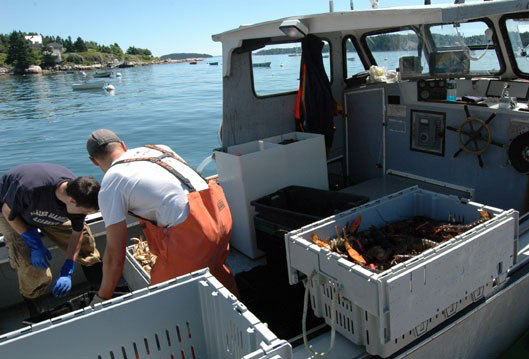
Cabin Fever

By Ed Staskus

The nearly 80,000 people who plug away every day on Prince Edward Island go to work in lots of places, including groceries school offices, aerospace and bioscience and pouring coffee and serving breakfast, but mostly in agriculture, fisheries, and tourism.

Grains, fruits, and potatoes lead production on farms, bringing in cash receipts of about $500 million.  “Good soil is better than money in the bank” was once a commonly used expression on Prince Edward Island. It is still true, although it doesn’t hurt to have a bundle in the bank, something for a rainy day.

The lobster fishery lands 40 million-some pounds, valued at more than $200 million. Every last person on PEI is too few to eat all the lobster, so exports are vital. There are more than 4,000 commercial fishers and 47 licensed processing facilities. The enterprise employs as many as 8,000 people during peak production times.

Tourism rounds out the big three. A million-and-a-half visitors come from all over the world to golf, eat, relax, and experience “Anne of Green Gables.” It is far more come and go in summertime than lives on the island.

When you live and work on PEI summer starts when the snow melts and the days get longer. If you are in a business dependent on tourism, ice cream theaters restaurants transportation accommodation, summer starts when summer is over.

Tourism on PEI generates 15,000 to 17,000 full-time, part-time, and seasonal jobs. When summer is over many in the trade go somewhere starting in mid-autumn, looking for a few weeks of summer in another country. The sweltering heat of Cuba is a sticky thing, but it is super in winter, when there are plenty of dry sunny days and lots of blue sky.

Visiting Prince Edward Island in summer means warm enough to go to the beach, swim sail kayak, and go walking, running, and biking. There are plenty of days in July and August when t-shirts and short sleeves are the order of the day, and maybe a pullover for cooler nights. It’s about four months on PEI of being able to get out the door and outdoors.

It is aces having a big cabin if you get cabin fever. But nothing is as wide open big as being out in the open air. Besides, not everyone has a big cabin, or a cabin big enough. Even the largest cabin is dwarfed by the overarching sky.

Yoga means “to yoke.” Even though nobody gets paid for doing it, it is a kind of work. It is also its own reward.

Most people consider yoga an indoor activity. It is mostly practiced indoors, the weather being what it is in North America. Yoga studios are almost always inside buildings, anyway. That is a good thing if it’s the middle of winter in Vermont, or the armpit of summer in Mississippi, or fall winter a wet spring on Prince Edward Island.

Almost 120 inches of snow falls during the winter on PEI. Skiers going to Vermont are happy if 80 inches has fallen during the season. The wind off the ocean can make everything feel colder than it is on the island. Sometimes harbors are still frozen stiff into May.

That was why Frank and Vera Glass never left northern Ohio on the edge of Lake Erie to go to Prince Edward Island until June. Although it was never a sure thing, they tried to make sure they could get outside as much as possible.

Doing yoga indoors means being able to practice in the middle of a blizzard or a thunderstorm, or even a light sprinkle. It means doing it in a space set aside for exercise and breathwork, or just meditation, without interruption. It means being able to be consistent in one’s effort, a good habit thought to be fundamental to gaining ground.

No rain checks are ever needed when unrolling a mat at your local studio or your rec room. They are private spaces, spaces in which the environment is controlled. If you’re looking for insight, lightning might strike, but it won’t be literal lightning. If you’re just looking for a dry place to exercise, you’re in the right place.

Some yoga, like Bikram Yoga, is only done indoors only, in sealed-up steam-filled rooms, like heat-ravaged parts of the world in the grip of a climate change event, when you might as well be outside. Even then it probably wouldn’t live up to what Bikram Choudhury, the eccentric mastermind of hot room yoga, calls his “torture chambers.”

K. P. Jois, the man who inspired and developed Ashtanga Yoga, on which most yoga exercise of the last half-century is based, recommended that it be practiced indoors.

“Outside don’t take,” he said. “First floor is a good place. Don’t go upstairs, don’t go downstairs.” When asked about yogis in in the past practicing in the forest, he simply said, “That is very bad.” K. P. Jois was a man of few words.

Even though there are problems associated with practicing outdoors, including that it will inevitably defy the weather forecast and rain the one day you try it, people do it all the time. Southern California is littered with classes like ‘Beach Yoga with Brad.’

“Ditch the confines of the indoors!” recommended CBS-TV Los Angeles, reporting from the great outdoors.

“If you’re doing yoga indoors then you’re cheating yourself,” said Sarah Stevenson, a Yoga Alliance-certified instructor in Orange County. “The sun’s rays and fresh air provide not only improved physical health, but also spiritual and emotional wellbeing.”

It isn’t just warm clime folks, either, who roll out mats regardless of rocks and roots and bugs. From Missoula to Minneapolis, any place where the winters are long and dark, the sun-starved come out in droves in the summertime.

Frank was a fair weather man, but some don’t wait for the solstice.

Members of ‘Y-8’ routinely practice their ‘Alsteryoga’ on the thick ice of the rock- hard Lake Alster outside the northern German town of Hamburg. They make sure to pull the hoods of their insulated sweatshirts over their heads when in headstand.

Whether it’s ice or sand or grass, the instability of ground outdoors makes for an easier said than done experience. Some people even practice on paddleboards when rivers and lakes have defrosted. “When you’re not on a solid wood floor surface, you end up using different parts of your body,” said Jennifer Walker, an instructor in Maine. “Outside, you end up engaging your core much more to stabilize your whole body.”

Although Frank Glass often got out into their backyard in the summer and fall, he still rolled out his mat indoors more often than not because he had carved out a space he liked at home, and because the weather in Lakewood, just outside of Cleveland, is unpredictable, while the midges and mosquitoes that fly up out of the Rocky River valley are predictable.

Sometimes, though, he jumped the traces.

The three mostly sunny weeks he and his wife Vera spent in North Rustico, on the north central coast of the island, at the Coastline Cottages, he moved his mat outside. Sometimes in the morning, but more often in the afternoon, when the crab apple trees at the back of their cottage cast welcome shadows, he unspooled it on the grass and set about doing yoga exercises, warming up with sun salutations.

“When I practice outdoors, there is this amazing energy,” said Angela Jackson, an instructor in Oakville, Ontario. “I feel more connected to the earth, the birds, the animals, the sky, and to myself.”

He did it almost every day, because they were on vacation with plenty of time, and because the days were warm, and it was fair and breezy where they were on the Atlantic Ocean. He was bitten every one of those days, sometimes more often than less, by creeping flying bugs, occasionally by black flies from the scrubby conifer woods next to the fifty acres of soybeans behind the cottages.

Prince Edward Island is predominately a farming and fishing province. There are croplands and cattle and fishing boats everywhere. A few years earlier they had stayed in a cottage one town down next to a field and a barn full of cows and thousands of flies. Every room in the cottage came equipped with a fly swatter. They checked to be sure all the screens were safe and sound and in place.

The reason we feel more connected to the earth when we do yoga outdoors is because we are standing directly on the earth, on the soil and grass of it. PEI is made of soft sandstone and its soil is an iron oxide red. The contrast of bright green grass and red land beneath a high blue sky on a sunny summer day is always striking.

Frank saw lots of sky doing things on his back on his mat behind the cottage. Insects crawling took shortcuts under him, the long way over him, or just bumped into him and zigzagged away. Seaside birds flew overhead. Most of them were cormorants, an easy to spot coastal bird with short wings and a long neck. There were plenty of wood warblers and a couple of yellow-bellied sapsuckers, darting in and out of the crab apple trees.

One afternoon behind their cottage a week-and-a-half into their stay on the island, a red fox hunkered down thirty-some feet away on the grass and kept his eyes on Frank for a long time. The fox surprised him, out in the open, even though he knew they were all over the north shore. They had seen plenty of them, on the shoulders of roads, or the edge of woods, always looking for handouts.

Vera ran on the all-purpose path every day and kept a wary eye out for them.

From 1900 until the 1930s black silver fox farming – the silver fox is a mutation of the island’s ubiquitous red fox – was a booming cash crop on PEI farms. Fox pelts were in high style but used to cost an arm and a leg because they could only be got from trappers. No one knew how to raise them until in the 1890s two men, a druggist and a farmer, perfected a way to domesticate and breed them.

It made many of the locals rich. The price for a bred fox pelt, never mind a trapped pelt, in 1910 was a jaw-dropping $1,200.00. To put that into perspective, farm laborers on the island in 1910 averaged a dollar a day in pay for ten-and- twelve-hour days.

The Great Depression and changing fashion in the 1940s crippled the market and by the 1950s fox farming was finished on the island. Most farmers simply let their animals loose. The foxes were glad to go, glad to be back on their own, glad to not have to be a fashion statement anymore.

“My grandfather raised horses, and kept foxes for their pelts,” said Kelly Doyle, a North Rustico native whose Coastline Cottages they were staying at. “But then they weren’t cool anymore, so he let all his foxes out, and since my father couldn’t make a living at that became a farmer.”

Rubbing eyes with a fox in woods or fields used to be out of the ordinary, but nowadays sighting have become commonplace.

“Whereas foxes once avoided human contact, they now venture up to parked cars, presumably looking for food,” said Ryan O’Connor, who grew up on PEI and is a historian of Canada’s environmental movement.

Although some of the issues with yoga in the great outdoors are biting bugs and bad weather and sometimes too much sunshine, rarely is the issue a wild animal. Red foxes are wild, but not so wild, too. They live in woodlots and sand dunes, are intelligent and adaptable, and have no trouble living in close association with human beings.

They are still wild, though, living out in the wild.

One moonless night, sitting on their deck overlooking Doyle’s Cove, they heard a god-awful noise somewhere out on the long dark sloping lawn. The next morning Kelly Doyle had to clean up the remains of a dismembered rabbit. Every fox hunts every night for mice rabbits voles.

Frank don’t know when the red fox slipped behind their cottage to watch him on the yoga mat. He saw him midway through his series for the day, when he lengthened into plank from down dog and transitioned into up dog, and there the fox was, nearly near-at-hand.

There is a rule at the Coastline Cottages. “Don’t Feed the Animals.” The rule is to discourage foxes from loitering, looking for food for their kits. Frank and Vera hadn’t seen anyone breaking the rule, because who wants a fox at their door cadging for a handout? But there was the red fox, plain as day, behind their cottage, giving Frank the once over.

“They won’t bother you, or bite you,” Kelly had told them.

Frank had no reason to doubt him, so he continued doing what he was doing, sneaking a peek at the animal now and then. The fox wasn’t small or overly large, maybe 20 or 25 pounds, with a reddish-brown coat, white under belly, and a black-tipped nose. One of his eyes was cloudy, as though the animal had been hurt or had a cataract.

He lounged and shifted and moved more like a cat than a dog, although foxes are a part of the dog family. His ears were triangular. When he cocked his head and his ears went up erect, he looked like a Maine Coon cat with his muzzle in mousing position.

All during the rest of Frank’s yoga practice that afternoon the fox never made a sound, and even seemed to doze off for a few minutes. He stretched and yawned. When he went away, sliding into the soybean field, he walked on his toes, heels off the ground, agile canny swift. No amount of yoga Frank ever did was ever going to get him to be able to move like that.

He didn’t see the fox with the bad eye again the rest of their stay, although Vera spotted him one day miles away near MacNeill’s Brook.

Living far north of Mason-Dixon, Vera was by necessity forced to run on a treadmill and Frank to do yoga indoors most of the time. But moving one’s mat outdoors isn’t necessarily for the birds, if only because that’s where the energy is. The fountainhead is under the arching sky in the wide blue yonder.

In the world of yoga, the word prana means energy or life force and pranayama means breathing exercises. To practice outdoors is to be immersed in the source of prana, whether you mean it as the source of life or simply as the air we breathe.

Bringing a breath of back roads air into your body mind spirit is refreshing. Great wafts of it are even better. It’s no holds barred taking in the old-school oxygen of the island. There’s more air in the air on the edge of the Atlantic Ocean than there is in most other places.

There was more than enough of it for both the red fox and Frank the afternoon they shared it, both of them dwarfed by a sweeping horizon and puffy white clouds blowing out to the Gulf of St. Lawrence, behind a cottage next to a soybean field.

“How was it?” Vera asked when Frank stepped back inside through the door.

“It was a breath of fresh air in my brain,” he said.

A version of this story appeared in International Yoga Journal.

Ed Staskus posts monthly on 147 Stanley Street http://www.147stanleystreet.com, Made in Cleveland http://www.clevelandohiodaybook.com, Atlantic Canada http://www.redroadpei.com, and Lithuanian Journal http://www.lithuanianjournal.com

A New Maritime Thriller by Ed Staskus

“Ebb Tide”

“Small book, big story.” Barron Cannon, Adventure Books

“A Down East crime mystery, wildlife and all.” Sam Winchell, Beyond Fiction

Available on Amazon: https://www.amazon.com/dp/B0CVDP8B58

Atlantic Canada, 1989. A town on the Gulf of St. Lawrence. A satchel of stolen counterfeit money. Two contract killers from Montreal. A gravel road cop stands in their way.

Breathing Room

By Ed Staskus

If you can breathe, then it’s working.” Lemony Snicket

Many actors swear by yoga, from Matthew McConaughey to Naomi Watts to Robert Downey, Jr., because acting is largely a movement art and yoga on the mat is mostly about body awareness. Unless the role is Frankenstein or you’re Vin Diesel, more wooden than a talking tree isn’t usually in the script.

When Russell Brand dedicated himself to Kundalini Yoga he said, “these things are right good for the old spirit.” Gwyneth Paltrow wakes up every morning at 4:30 to practice, according to People Magazine. “It kind of prepares you for everything, honestly,” said Jennifer Aniston.

God knows, Iron Man could use all the yoga he can get.

Rock-n-Roll Hall of Fame superstar dancer singers plug in to the practice, too. Madonna has unrolled her mat down the aisle of jumbo jets. The spectacle of the Queen of Pop in down dog pose is worth the plane fare, given that the average ticket price to one of her shows is upwards of $400.00.

Even though yoga is great for mobility stability control, it doesn’t always work out according to plan. When the singer Rod Stewart was trying a beginner’s balancing pose at home, he lost his balance and fell into a fireplace. “Surely, if God had meant us to do yoga,” he said afterwards, ”he’d have put our heads behind our knees.”

Not many yoga teachers swear by acting. They usually swear about you not being your authentic self, pretending to be somebody else. One of the eight limbs of the practice is all about self-observation. In some respects all of the practice is designed to be an expression of your true self.

Bryde MacLean, a native of Prince Edward Island, an Atlantic Canada province, is an actor and a Moksha Yoga teacher. Two Canadian teachers founded the practice in 2004, focusing on strength, therapeutic flexibility, and calming the mind. It is in the vein of hot yoga, although not as hot as Bikram Yoga, nor as rigid in its sequencing.

“It’s built with the long-term health of your spine in mind,” said Bryde.

Moksha Yoga, which means freedom from the cycle of death and rebirth, is environmentally active, one of its pillars of purpose being ‘Live Green’, and active in its communities, as well. There are more than 70 studios, most of them in Canada. They offer weekly karma classes with all the profits, currently more than $3 million, going to groups supporting human rights and holistic health.

“I was 21-years-old, working in a bar, hanging with my friends, having a lot of anxiety”, said Bryde. “Ryerson University had turned down my application. My sister recommended yoga. I had never taken a class in my life. Tara was dating Ted Grand, and he recommended it, too.” Ted Grand, her future brother-in-law, was at the time creating what became Moksha Yoga.

Bryde MacLean took her first class in the basement of a church in Charlottetown, the capital of Prince Edward Island. “It was myself and a bunch of women who were much older than me, in a definitely not heated space. We did lots of slow breathing and long stretches. It was a powerful experience. I decided I could get behind that.”

When Ted Grand offered her the opportunity to join his team and go to Thailand for yoga teacher training, she made sure she didn’t miss the team bus. “I wanted to travel and I wanted a skill I could travel with. I jumped right into the hot room. I loved it.”

She taught full-time in Toronto for a year before moving to Montreal, where she also taught, as well as attending Concordia University. “I had a full course load, but I wanted to study what I’m passionate about, so I applied to Ryerson again, and got in.”

Ryerson is a public university in Toronto, its downtown urban campus straddled by the Discovery District and Moss Park, focusing on career-oriented education. Bryde Maclean enrolled in the 4-year Performance Acting program. Long before she wanted to be a yoga teacher she had wanted to be an actor. She was scripting performing directing shows from the time she was six.

“We’d haul out Halloween costumes and my parent’s old clothes and dress up. We’d write fantastical stories and use construction paper to build our sets.” She and her friends play acted in garages, attics, and basements. Her parents encouraged her.

“They inspired me.”

Her parents were Sharlene MacLean and Bill McFadden. Her mother was pregnant with Bryde the summer of 1984 at the same time she was stage-managing ‘Blythe Spirit’ at the Confederation Centre in Charlottetown. As an actor Sharlene MacLean has played the maniacal Lady MacBeth in ‘Macbeth’ and the prattling Minnie Pye in ‘Anne of Green Gables’, working on stage and on film, working around the births of her four children.

Her father worked and performed long and often at the Victoria Playhouse. Victoria is a seacoast village on the south shore of Prince Edward Island. “I spent a lot of time in that theater as a little person,” said Bryde “My dad and I lived in the building down the street that is now the Chocolate Factory.”

Her parents played the aging couple in ‘On Golden Pond’ in 2012 at the Victoria Playhouse. They had both starred in ‘The Owl and the Pussycat’ during the theater’s first season in 1982, thirty years earlier. “I had never seen them on stage together, not as an adult,” said Bryde.

By the time she graduated from Ryerson University in 2011 she was teaching other people how to be yoga teachers. “I didn’t know what I was doing when I started, other than enough about teaching classes myself and being a good listener,” said Bryde. She became Manager of Yoga Teacher Trainings for Moksha International for 3 years.

“I dove into that. There’s a big community vibe. It pushed me to learn how to do things I didn’t consider myself capable of.”

2011 was a big year in more ways that one. She graduated with a BFA, got a full-time job, and got married, too. Jeremie Saunders, her boyfriend fiancée husband-to-be, was in the same class in the same program in the same university as her. One thing led to another. After graduation he trained to become a Moksha Yoga teacher.

“So, there we are, we do all the same things,” said Bryde.

They do all the same things, but with a difference. Yoko Ono once said the most important thing in life was, “Just breathe.” When Bryde wakes up in the morning she breathes free and easy. When her husband wakes up in the morning it’s with the thought, at least I’m still breathing.

Born with cystic fibrosis, Jeremie Saunders is in a lifelong fight with the inherited life-threatening disease. It is a genetic disorder that mostly affects the lungs. Infections and inflammation lead to a host of problems. 70 years ago, if you were born with it, you were likely to die within the year.

Even today, while cystic fibrosis has been made livable, there is no cure. No matter exercise regimens treatments antibiotics, median survival is less than 50 years. “I’m living with this terminal illness,” said Jeremie. “I know that my life expectancy is significantly shorter than most people.”

Two years ago he ran an idea for a new podcast by two of his friends. A month later they recorded their first episode of ‘Sickboy’. The podcast is about the day-to- day of living with an illness. Four months later it officially launched and three months after that it was included on iTune’s Best of 2015 list.

Although it is the essence of innovation to fail most of the time, when time is of the essence it’s better to succeed as soon as possible.

“It’s a comedy podcast,” said Bryde. “It’s laughing about the absurdities that happen when you’re sick, all the embarrassing and difficult things people usually don’t talk about.”

“I’ve always been a fan of honesty,” said Jeremie. All good comedy comes from a place of honesty. He doesn’t try to keep the beach ball underwater. “Every time I would talk to someone about being sick, this fog of awkwardness would fall over the conversation. It’s empowering to drop that, let it go, and not feel confined or chained down by your circumstance.”

Living in Halifax, Nova Scotia, teaching Moksha Yoga, co-starring in short films by Tiny Town Media, in early 2015 Bryde spied a last minute casting call for a summer show in Charlottetown. “I was lucky to see that.” She landed the role of the mom in ‘Hockey Mom, Hockey Dad’ in the Studio 1 Theatre at the Confederation Centre. She and the show were a hit. “Sets, characters, director score a hat trick,” wrote The Guardian in its review.

“Bryde MacLean says much with her guarded, often wordless reactions, like a smile tucked into her shoulder.” It was her first professional appearance on stage.

When actors unroll their mats it’s to learn to control movement. It helps them be more aware of where their physical bodies are in space and the dynamics of change in that space. “Yoga helps me get very present with my body and what’s going on with it,” said Jennie Olson Six, who is, like Bryde MacLean, an actor and yoga teacher.

It also helps develop command over one’s breath. But, that kind of command can be a double-edged sword.

“Yoga helps, definitely, as an actor But, I think in some ways, because I did my yoga training before my actor training, it has hindered me.”

Actors practice breath control so that they can manipulate the range, volume, and speed of their speaking. They might breathe in to the count of four, just like in yoga classes, but when they exhale they do it through their teeth with an sssssss sound. When they come back to four they cut the exhale crisply. It’s a way of practicing ending speech on an exact syllable, making it toe the mark.

When it doesn’t, sometimes actors will flap their lips, making a brrrrrrr sound.

“When you breathe in yoga it’s to create a steady, measured breath, focusing on it, calming your nervous system,” said Bryde. “You don’t want that when you’re acting. You want your breath connected to your voice. When you breathe to speak you want your breath to come from a place that’s connected to your impulse. Yoga is about observing your impulses, but not reacting. Acting is reacting.”

In Shakespeare’s day acting was called a performance of deeds. It’s the same today. “Acting is reacting in my book,” said Morgan Freeman. Where actors want to go in their work, even though they’ve walked through it a hundred times, is to express feeling by following an instinct, not by controlling it. Magic on film and stage is created, not by staying in the rehearsal hall, but by being in the moment.

“You need to have a cool head, however, not get caught up in whatever you’re working on, and go off into another dimension and never return,” said Bryde.

“Yoga has been good for me in terms of focus, my ability to concentrate, and be able to handle my anxiety. It keeps my feet on the ground. It rebalances my body, too, which is the only thing I have to work with.”

While at Ryerson University she played King Richard the 2nd in a student production. “He’s a hunchback, crooked. After two hours of him every day I had to balance out that side of me. Maintaining a healthy body is a super important thing for a performer. Otherwise, you end up with injuries.”

She went back to her roots in 2016, appearing in ‘Blythe Spirit’ at the Watermark Theatre on Prince Edward Island. It was her second professional appearance on stage. It was the same show her mother managed on the same island thirty-two years earlier when she was carrying her daughter-to-be. If anyone was ever born to play one of the leads in the Noel Coward play it was Bryde MacLean.

That same summer her husband starred in the comedy ‘The Melville Boys’ at the Victoria Theatre, the theater she had roamed explored left no stone unturned as a tyke. The Watermark Theatre seats about a hundred people. The Victoria Playhouse seats about fifty more than that.

Spectacle sells, splashy musicals, casts driven by stars. But, small gatherings at indie theaters can have a big impact. Little theaters, summer stock, some in your own backyard, often have big talent. “Bryde MacLean has probably the most difficult role to play – the straight woman – and she carries it like a pro,” wrote theater critic Colm Magner. “She has great fun combusting before our eyes later in the play.”

“I love small, intimate performances,” said Bryde. “I like to be right in there with the audience.” It works for her because she often works in film. “I tend to be a little smaller in my performance size. You can do the subtlest things, so subtle, but so real.”

She kept up her practice all summer at a Moksha studio in Charlottetown, taking bar classes, a mixture of ballet, pilates, and yoga. “I love it, but it kicks my butt.”

There are many reasons people take up yoga, among them stress relief, flexibility, and physical fitness. “They come to yoga to get a cute butt, but you can’t escape all the other benefits of it,” said Bryde. “They stay because they get more mindful, awake, in touch a little bit more.” If they stick with it, the reasons for doing yoga change. The focus shifts from the physical body to the subtle body. Almost 70% of people and 85% of teachers say they have a change of heart over time, changing their focus to self-actualization and spirituality.

“Their buns still get really tight,” she added with a teacher’s keen eye.

After ‘Blythe Spirit’ closed Bryde worked on a 5-week shoot of a horror film called ‘But What Are You Really Afraid Of’. She wasn’t an actor in a trailer waiting to be called for her next scene. She was one of the workers who serviced the trailer. “A craft services job takes care of all the food on the set, the crew that does the dirty work,” she said. “It’s not for the faint of heart.”

Although she continues to teach Moksha Yoga in Halifax, and continues acting, on stage and film, she is writing a screenplay for a feature film, producing a play she hopes to get on the road in 2018, and has launched another new podcast with her husband.

‘Turn Me On’ is a show based on sharing the couple’s sex life with others through interviews, candid conversations, and discussions about sexual orientation. “I don’t need crazy shock value to be interested,” said Bryde. In any case, guests on the podcast are free to talk about their sex lives “whether they’re whacky or not.”

“We are definitely having conversations that feel taboo,” said Jeremie Saunders.

Franklin Veaux, an author and sex educator, believes that what Bryde and Jeremie are doing is doing their audience a good service. “Sexual shame undermines people’s happiness and self-esteem, prevents them from being able to understand what they need and advocate for it and hinders intimacy,” he said.

Although ‘Turn Me On’ is not necessarily about heavy breathing, sex has always been a bestseller. It is often more exciting on stage and screen than it is between the sheets, but it is still emotion in motion, and a big part of nature and human nature. “I couldn’t have imagined we’d have over 12,000 listeners so quickly. It’s very cathartic for me.”

If it is about anything, yoga is about slowing down, slowing down your breath, your body, and your brain. It’s been said once you slow down you will connect with your heart. As many irons that Bryde MacLean has in the fire is enough to take your breath away.

“I wrestle with attachment and detachment,” she said.

Although detachment is a linchpin of yoga, nobody ever sincerely does it without a strong feeling of attachment to doing it. Almost everything we do is invented, so that detachment can be a kind of freedom. But, getting on the mat or breathwork or meditation is about involvement. Pattabhi Jois, who created Ashtanga Yoga a generation ago, on which most of today’s yoga is based, once said it is 99% practice and 1% theory. ,

“Lazy people can’t practice yoga,” he pointed out.

The way to get started is to get going get doing, opening doors, working hard at work worth doing. “I’m casting a net out for a bunch of potential opportunities. What matters is doing what you’re passionate about,” said Bryde MacLean.

Not much is ever accomplished without energy and passion, but to get anywhere you have to act it out.

“When you are inspired by some extraordinary project all your thoughts break their bounds and you discover yourself to be a greater person than you ever dreamed yourself to be,” said Pattabhi Jois. “Just do and all is coming.”

Catching your breath will take care of itself.

Ed Staskus posts monthly on 147 Stanley Street http://www.147stanleystreet.com, Made in Cleveland http://www.clevelandohiodaybook.com, Atlantic Canada http://www.redroadpei.com, and Lithuanian Journal http://www.lithuanianjournal.com

A New Maritime Thriller by Ed Staskus

“Ebb Tide”

“Small book, big story.” Barron Cannon, Adventure Books

“A Down East crime mystery, wildlife and all.” Sam Winchell, Beyond Fiction

Available on Amazon: https://www.amazon.com/dp/B0CVDP8B58

Atlantic Canada, 1989. A town on the Gulf of St. Lawrence. A satchel of stolen counterfeit money. Two contract killers from Montreal. A gravel road cop stands in their way.

Searching for the Surfside

By Ed Staskus

“Whenever we leave home, to Ontario or New Brunswick, I always say we are crossing into another world, into a strange world, into Canada,” said Marie Bachand. “I always ask Louie did you bring our passports?” She always asks in French because her partner Louie Painchaund doesn’t speak English.

It was a cumulus cloud high sky day when they went to Prince Edward Island. They didn’t have their passports. Who wants to look like their passport picture on a sunny summer day, anyway?

They live in Saint-Gregorie in Quebec, a community of the city of Becancour, on the south side of the St. Lawrence River. Their house dates to the 1780s, built by refugee Acadians after the French and Indian War. “They came down the St Lawrence River, four hundred families. It was a rough time. They stopped, said OK, looks good, and settled here.”

It is about six hundred miles to Prince Edward Island, up the St. Lawrence, down New Brunswick, and across the Confederation Bridge to PEI. The first time they went they were touring the Maritimes. The island was a spur of the moment runaround. They drove across the Northumberland Straights on the nine-mile-long bridge to the other side.

“We thought we could run over and visit PEI in one or two days,” Marie said. “It’s so small.”

Even though it is pint-sized, the smallest of the ten Canadian provinces at just a little more than two thousand square miles, compared to Quebec’s almost six hundred thousand square miles, it goes over big.

Ten years later, even after Andy’s Surfside Inn is no more, they still go to Prince Edward Island two weeks in the summer, staying at the Coastline Cottages up the hill across the street, riding their bikes all over the place, still finding substantial fresh things to rack up on the to-do list.

The inn was on the ocean side of North Rustico, near the entrance to the harbor, a white clapboard two-story house with a dozen windows, two dormers and three porches on the side facing the water. A broad lawn slopes down to the cliffs. It wasn’t always the Surfside Inn and isn’t the Surfside Inn anymore, having since taken up where it left off, back to being a home.

“The first house was bigger,” said Kelly Doyle.

Kelly’s grandparents, Mike and Loretta Doyle, were visiting and playing cards at a neighbor’s house one winter night in 1929. Their friends lived about a mile away. At the end of the evening, going home in their horse-drawn sled, they crested a frozen hill. A red glow lit up the sky and flared across the flat cove below them.

The house was being swallowed up by fire. The pitch-dark night was blazing. They had left seven children behind in the care of the eldest.

“It was a flue fire,” said Kelly. “It burnt down because of the stove.”

By the time the Doyle’s raced their sled down to the house, and finding all the children safe and sound outside, there wasn’t much they could do. There were no neighbors nearby to help and there was no fire department. Mike Doyle was able to drag some furniture from the first floor out the front door and saved as many fox furs as he could.

The house was rebuilt the next year and finished the following year.

“The foxes my grandfather saved built the new house.” Kelly’s grandfather was a fox farmer. What he sold the pelts for paid for the work of the itinerant immigrant tradesmen who built the house.

Furry garments are made of furry animal hides. Even though it has lately fallen on hard times, fur is one of the oldest forms of clothing. Once we started globe-trotting out of Africa, to where everywhere else was colder, we started wearing furs. Ever since, people have worn beaver racoon sable rabbit coyote wolf chinchilla opossum mink and foxes.

Mountain men wore the bears they shot and killed.

In the 1880s foxes were bred for the first time, accomplished on Prince Edward Island by locals Charlie Dalton and Robert Oulton. Theirs was the original fur farm in 1884. Within several years the rush was on. But the rush didn’t really and truly mushroom until after a pelt sale a few years later when their harvest of 25 skins brought them nearly $35 thousand dollars. It was a boat load of a barn door of money, bearing in mind that the average island farm worker those days made less than $30 dollars a month.

In 1926 nearly nine hundred live silver foxes were shipped from Summerside to the United States. It was the most valuable shipment in the history of Prince Edward Island up to that time and is still called the ‘Million Dollar Train’. Andy Doyle was born the same year, spunky and healthy, although nobody ever called him the ‘Million Dollar Baby’.

By the 1930s the fox farm industry was strong as a bull, raking in multi-millions of dollars. There were hundreds of thousands of foxes being farmed and skinned coast to coast throughout Canada and the United States.

“The furs my grandfather was able to rescue from the fire were worth five thousand. In the end the new house cost five thousand,” said Kelly.

“We stayed at a country inn, at the information center at the bridge they said it was nice, but it was a little room, yuk,” said Marie. She picked up the official PEI tourist book. Where to stay next? She thumbed through the book. She put her finger on Andy’s Surfside Inn. “I say to Louie, what’s that, the north shore? We had already decided to stay three or four more days. We went looking for it.”

Gavan Andrew “Andy” Doyle was 81 years old in 2007 when Marie and Louie went driving up and down the north shore looking for his eponymous inn. Andy had been born in the white house that was the inn. Years later, grown-up a young man, pushing off after World War Two, he landed in Montreal, married, brought up three stepchildren, and years later, when his wife Vivienne died, went back to Prince Edward Island.

His mother died shortly after and he inherited the house on Doyle’s Cove. “My aunt, his sister in Montreal, always had a soft spot for Gavan. She helped him get the place up and running. She bought a bunch of nice furniture for him,” said Kelly Doyle. It was the late 80s. Andy Doyle resurrected the Surfside Inn that had been his mother’s brainchild in the late 40’s.

“When my grandfather died in 1948, my grandmother wanted to make some money with the house and started taking in tourists,” said Kelly. “There was a white picket fence, she had ducks and geese and sheep in a big barnyard, and she kept a garden.” It was a large working garden. “She fed the bed and breakfasts herself.”

As her six girls and two boys grew up and left home, she converted their rooms to guest rooms.

“She filled those rooms all through the 50s and 60s,” said Kelly. “PEI wasn’t like the rest of the world back then. Tourists found the way of life interesting, honest and down-to-earth. There wasn’t much entertainment, but there was always lots to do. They just liked the place.”

When Marie telephoned the Surfside Inn, a Japanese woman answered the call.

“Andy always had Japanese girls, three girls, housekeepers for the season who were exchange students who wanted to learn English. They shared a small bedroom over the kitchen. She told us, yes, we have a room.”

Louie and Marie drove up and down Route 6 between Cavendish and North Rustico searching for the Surfside Inn. When they couldn’t find it, they finally stopped at a National Parks kiosk and got directions. It was in the park, although on private land, Doyle’s Land on Doyle’s Cove. They drove down the Gulf Shore Parkway, past Cape Turner and Orby Head, and down to the coastal inlet.

When they got there, there wasn’t a room. There were four rooms that shared a bath. They were all taken. What Marie and Louie didn’t know was that there was a fifth room on the ground floor, which was Andy’s bedroom with a private bath.

“When we are full, he gives you that room,” explained the young woman.

“We’ll take that,” said Marie. “Where does Andy go to sleep?”

“He sleeps in the boat.”

The Japanese girls did the heavy lifting in return for being able to learn English. “I don’t know where they learned it, but it wasn’t from Andy,” said Marie. “He never talked to them.”

Outside the house was a castaway wooden lobster boat. The hull and forward cabin were worthy enough, although it needed some planks and rib work. it looked like it still had some spirit to it, like it could still make a living at sea.

“It smelled bad, all old stuff papers tools junk a small bed,” said Marie. “It should have been burned long ago.”

The Surfside Inn had a kitchen with several refrigerators. “We thought it was just for breakfast, but we saw other people storing food and making supper.” They started shopping at Doiron’s Fish Market on the harbor road. One suppertime Andy saw them coming into the kitchen with lobsters.

“Let me fix those for you,” he said.

“Oh, my God,” said Marie, “he was good. Tack, tack, tack, all done.”

They started bringing their own wine from home, though.

“I don’t like PEI Liquor wines. We brought Italian and French whites and rose for the fish.”

Coming back from Doiron’s one day, putting away fresh cod wrapped in Kraft paper, Marie noticed small buckets of frozen milk in the freezer.

“There was a Muslim couple staying at Andy’s, the guy was always in the living room, but she was wrapped up, always going to the bedroom. She didn’t talk. At breakfast, no words. She looked at her iPad, that’s all.”

The mother was expressing her breast milk and storing it. She kept it in the back of the freezer, the coldest part of fridges. One day all the milk was gone.

“We never saw the baby, though, maybe it was somewhere else, with a grandma.”

“Tourists in the 50s and 60s weren’t from Monkton or Toronto,” said Kelly. “Some were from the States, but a lot of them were from Europe. We lived next door and ran around the yard, having fun, meeting people. In 1970 my grandmother got a little bit ill and couldn’t keep it going. She lived alone for seven years until my dad moved her into the senior citizen’s home in North Rustico.”

The white house was empty for about ten years, for most of the 80s. It came back to life as the rooms filled up. In summertime it was never vacant.

“You could see the sea right in front of you,” said Marie. “We sat on the porch every day. It was a special place. After a week we would say, let’s stay another day, then another day. Other people, too, were crazy about this place.”

One day Andy asked Louie to help him take an old heavy bicycle out of the lobster boat. “You’re a big guy, you can do it,” said Andy.

When the bike was on the ground Andy straddled it and pedaled to the downhill on the all-purpose path. “He was going down the hill, but Louie told me there were no brakes. Stop! Stop! I yelled but he yelled back, I’ve been riding this bike for thirty years!”

Whenever Andy pulled his four-door sedan out to run errands or go to the grocery, Marie and Louie kept their distance. “I don’t think there were any brakes on his car, either,” she said.

He seemed to own only three short-sleeve shirts. “I have three nice ones,” he said. “I got them for a dollar each at the Salvation Army.” One was yellow, one green and one blue. The blue shirt was his favorite. He dried all his laundry on an outside clothesline, in the sun and ocean breeze.

“All the guests, they were from Canada, the United States, Italy, England, all over. A Chinese couple had a four-year-old who had been born in Quebec, so they named him Denis. Whenever we saw a Chinese child after that we always called the child Denis Wong. There was a couple from Boston, they lived in the harbor on a boat there. He was 80 and she was in her 70s.”

“I didn’t come with my boat. I came with my girlfriend,” he said.

“There is no age,” said Marie. Until you find out your grade school class is running the town city province country.

Aging and its consequences usually happen step-by-step, sometimes without warning. One minute you’re only as old as you feel and the next minute you don’t feel good. It’s like going on a cruise. It can be smooth sailing or a shipwreck. Once you’re on board, though, there’s not much you can do about it.

“There were always many guests, but suddenly a few years ago Andy started getting mixed up. He forgot reservations, there were two Japanese girls instead of three, it wasn’t the same.” What it takes to make an inn work wasn’t getting done. By 2016 it was far more vacant than occupied and Marie and Louie were staying at Kelly Doyle’s Coastline Cottages up the hill across the street.

“Andy introduced us to him,” Marie said.

Like Dorothy said at the end of ‘The Marvelous Land of Oz’, “Everything has to come to an end, sometime.”

In 2018 Andy Doyle moved to the Garden Home in Charlottetown and his nephew Erik Brown took the house over, renovating it and transforming it into his home. In November Andy died. He was 92. It was the end of the Surfside Inn.

“On the ocean was wonderful,” said Marie. “Once we found it, Louie and I loved the Surfside.”

Ed Staskus posts monthly on 147 Stanley Street http://www.147stanleystreet.com, Made in Cleveland http://www.clevelandohiodaybook.com, Atlantic Canada http://www.redroadpei.com, and Lithuanian Journal http://www.lithuanianjournal.com

A New Maritime Thriller by Ed Staskus

“Ebb Tide”

“Small book, big story.” Barron Cannon, Adventure Books

“A Down East crime mystery, wildlife and all.” Sam Winchell, Beyond Fiction

Available on Amazon: https://www.amazon.com/dp/B0CVDP8B58

Atlantic Canada, 1989. A small town on the Gulf of St. Lawrence. A satchel of stolen counterfeit money. Two contract killers from Montreal. A gravel road cop stands in their way.