
All posts by Edward Staskus

Edward Staskus is a freelance writer from Sudbury, Ontario. He lives in Lakewood, Ohio. His crime thrillers "Cross Walk" and "Bomb City" can be found on Amazon.

At the Blue Cat Cafe

By Ed Staskus

   Some places are in the middle of nowhere. Other places are around the corner. The Bistro Le Chat Bleu is both in the middle of nowhere and around the corner. It is somewhere special. Locals in Baie Verte eat there. Others come down Route 16 from Sackville. Some drive from Nova Scotia, the province southeast of New Brunswick. Many call the place the Blue Cat.

   “Fabulous food at the Blue Cat,” said Robert Thomas, front man of the New Brunswick roots band Robert Thomas and the Sessionmen. “Gisele has created an oasis off the beaten path not to be missed.” The band is on the road more often than not. They know where to get a home-cooked kind of meal when they are away from home.

   “We pay homage to a classic bistro tradition,” said Gisele Landry. She is the owner and operator of the Blue Cat. She turns the lights on every morning. “We devote themselves to providing flavorful food in a cozy setting, using ingredients that, where possible, are sourced here. We buy from local farmers and friends including Bancroft Farm, Wysmykal Farm, and Portage Pork. We love growing our own food, too.” There is a garden outside the back door.

   The back door and garden are on the banks of a creek, some wetlands, and the Northumberland Straight, the body of water that separates New Brunswick from Prince Edward Island. The nearby Baie Verte Nature Preserve helps support eel-grass beds, tidal creeks, and salt marshes. Migratory birds have come and gone from the timeless past.

   The building that houses the eatery is nearly two hundred years old. It was built in the 1830s in a post and beam style. “It was built as a small church while a larger church was being built,” Gisele said. “When the larger church was finished the smaller church was moved across the street and became a store. The back of that church became the front of the store.”

   Robert Goodwin bought the building in 1880 and renamed it Goodwin’s General Store. The town of Baie Verte was flourishing. There were several blacksmith shops, a hotel, and a train station. The general store was in business for generations. It became a community hub. Robert Goodwin’s grandson took up the task of providing necessities, from buttons to dry goods to farming implements, after World War Two.

   In the 1980s another family acquired the building and made it into a variety store. When they went out of business a second family worked it as an antique shop, but quit after a few years. “They complained that when November rolled around it was too cold inside the building,” Gisele said. “They abandoned it.”

   Gisele’s background is in contemporary dance and the arts. “But sometimes life tosses you an opportunity. I discovered this tiny village with it’s beautiful coastal landscape and its big old general store which I thought I could turn into a bistro. I like to say I created the place I was looking for but couldn’t find.”

   She began trying to buy the building in the early 2000s. “By then it belonged to Mike Spence, who was the great grandson of the original owner. He was reluctant to sell because it had finally come back into his family. It took him two years to decide.” It eventually took meeting Mike’s mother. Gisele and her partner were invited to dinner. “She must have approved of us because before long Mike decided to sell.” By then it was 2006.

   “My partner and I were both foodies but he had more experience. He had gotten through university by working in restaurants and had gotten to be a very good cook. The only cooking I had really done was on a 50-foot sailboat when I was working in eco-tourism in British Columbia.” She had moved from her hometown of Moncton, New Brunswick to the west coast in the 1980s. “I stayed for nearly 20 years but came back after a relationship I had there broke up and I was wanting to spend more time with my family, especially my folks.”

   She and her partner started renovations in 2007. “It was freezing cold,” she said. “There was no insulation in the walls. The wiring was ancient.” They stripped the interior. “We exposed the beams and repurposed as much as we could.” They insulated the building and rewired everything. “There was no running water. We had to do plumbing, do a septic system, and dig a well.” They did most of the work themselves, nights and weekends and summers. Gisele had summers off, being a schoolteacher, although it meant no time off.

   She had bought a house in Shediac, a 25 minute drive from Baie Verte, and was teaching French and French culture in an elementary school. When she finally had running water, indoor plumbing, and insulation, she sold her house and moved to Baie Verte.“ The renovations began to move more quickly then,” she said. “We lived in a small room in the back. We had a table, chairs, and a bed.” She has since moved upstairs where she maintains a bigger and more habitable loft apartment.

   In the end, renovating the general store took nearly nine years. “Plenty of people said we were crazy. They said you’re in the middle of nowhere, it will never work. When we finally opened I didn’t know what would happen, but it was the community and the cottagers who surround us who made it happen. The first day many folks showed up. I was serving, my partner was in the kitchen, and we had one helper. At the end of the evening a young man,  a high school student, said he wanted to help. He came back with a resume. It was everybody around here who made it take off. Within a year we had ten full-time and part-time employees.”

   The Blue Cat opened on June 21, 2015. “Ça été un coup de coeur” Gisele said. In other words, “Creating this place was a labor of love.” It was Father’s Day. “My dad always supported me but he passed away six months before we opened. I didn’t consciously open on Father’s Day, but maybe subconsciously it was meaningful for me.”

   The bill of fare at the Blue Cat is eclectic. “We’ve got Greek items, Tuscan items, and Canadian items. We stress fresh, made in house, organic and local as much as possible. I love to travel and experience new flavors, but if I can’t I travel I go to cookbooks. I experiment with recipes, make them my own. I’m curious and like investigating other cultures.”

   Early in the 2025 season she offered up Espagut de Marisco, brought back from Madeira, an archipelago west of Morocco. “After a long hike while we were there, a group of us found a simple place to tuck in for a bite to eat,” Gisele said. “A large cooking pot was placed on the table. Lifting the lid, we were met with the wonderful aroma of seafood. Clams and fish of all sorts in a delicious broth with pasta. It was heaven!”

   A mid-summer 2025 addition to the chalk board behind the counter, which is the only menu, was a karaage crunch bowl. It is a Japanese dish, chicken marinated with soy sauce, ginger, and mirin, then coated in starch, and finally deep-fried until golden brown and crispy. “I didn’t know what it was until we made it.” She didn’t know until she did. “That kind of thing satisfies my curiosity and creativity.”

   The creativity goes hand in hand with intention. Creativity is facing a blank page and taking a leap of faith. Intention is the first step in getting it done. The chalk board menu behind the front counter with its diverse offerings is the proof of the pudding.

   “The Blue Cat is definitely a place to stay away from, that is, if you don’t appreciate gracious service with a smile, a charming and airy atmosphere, and delicious food,” said Carolyn Stampeen, a photographer from Nova Scotia. “And I do mean delicious food. They have a limited menu that changes frequently, but they manage to have options for meat and fish eaters as well as vegetarians. The food is unique and freshly prepared. The first bite of my fish cakes made it instantly apparent they really do make their own food and I appreciate that they don’t rely on salt and fat to make their food taste good.”

   There are some dishes at the Blue Cat that have been on the menu since day one. One of them is the French Onion Soup. “I tried taking it off once, but I got so much feedback that it went back rather quickly,” Gisele said. “What’s comfortable for me is having a portion of the menu that stays and another portion that can change from year to year. I throw in occasional rotating  features. We try to balance staying power with new culinary experiences.”

   There is a Francis-Barnett motorcycle standing on its kickstand between the kitchen and the front counter. It is a lightweight bike nicknamed Fanny-B by enthusiasts. It was manufactured in England from 1919 to 1966. it was popular for its innovative design, two-stroke engine, and speediness.

   “A pal’s father on the west coast had one,” Gisele said. “My former partner loved motorcycles.  When he spotted one for sale in Montreal, he picked it up. We put it in the front window for a while. It attracted a lot of attention. Our thinking was to attract men. Women sometimes say they can’t get their husbands to come to the bistro because their husbands say there’s nothing for them to eat. They want their meat and potatoes. When they saw the motorcycle they became a little more willing to come in and give us a try.”

   Gisele planned on restoring the motorcycle and riding it on the back roads. “But I haven’t had the time. The  bistro takes most of my time and energy. I never say never, though. It’s light enough and small enough for me, so maybe it will happen.”

   Across the street from the Blue Cat is a cairn. A weatherbeaten Monuments Board of Canada bronze tablet is set into the front of it. The tablet is engraved in English and French. “Prehistoric Indian Portage. This route from the Gulf of St. Lawrence to the Bay of Fundy was the chief means of communication between Quebec, Isle Royale and Chicnecto. The portage connected the Baie Verte and Missaquash rivers.”

   There aren’t any Indians in canoes hunting game and trading up and down the riverways and coast anymore. But if there were and they happened to be riding motorcycles instead of paddling canoes, the Blue Cat would be a good place for them to stop for lunch. They wouldn’t be able to read the chalkboard menu, wouldn’t have any idea what coffee is, but the fresh local fare, like wild mushroom ravioli and salmon fish cakes, would be right up their alley.

Photograph by Vanessa Staskus.

Ed Staskus posts monthly on 147 Stanley Street at http://www.147stanleystreet.com, Made in Cleveland at http://www.clevelandohiodaybook.com, Down East at http://www.redroadpei.com, and Lithuanian Journal at http://www.lithuanianjournal.com. To get the site’s monthly feature in your in-box click on “Follow.”

“Ebb Tide” by Ed Staskus

“A thriller in the Maritimes, out of the past, a double cross, and a fight to the finish.” Sam Winchell, Beyond Books

Available at Amazon: https://www.amazon.com/dp/B0CV9MRG55

Summer, 1989. A small town on Prince Edward Island. Mob money on the move gone missing. Muscle from Montreal. A constable working the back roads stands in the way.

A Crying of Lot 49 Publication
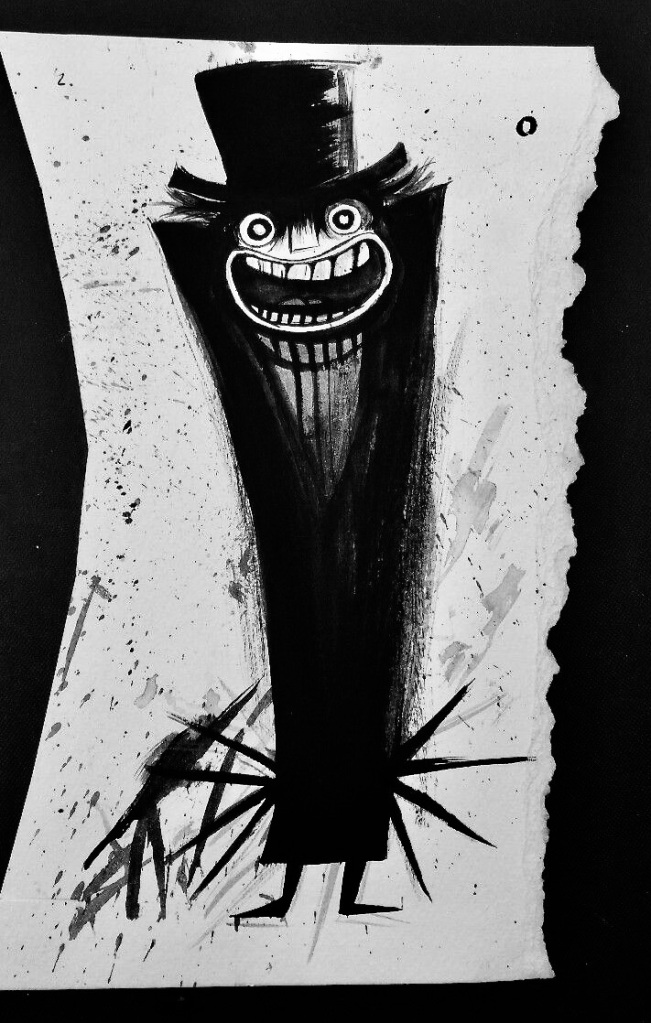
Back in Action

By Ed Staskus

  “Oy, where is that you are coming from?” Kieran Foyle asked the kitten going on tomcat at his feet. The half-pint was looking up at him. He had been on board the ferry when Prince Albert’s gunman shot Tom Spate dead. As the ferryman was spitting out his last breath, the kitten jumped off his perch and scurried to the side. He watched Kieran roll, push, and kick the dead Englishman into the Stanley River. He floated face down into the New London Bay. The Kulloo flying overhead didn’t bother glancing down at the end of Tom Spate.

   That was the end of Queen Victoria’s would-be killer, at least until he sank. When he did bottom feeders like eels would eat whatever was left of his decomposing body. The kitten had seen plenty of eels in his short time on Prince Edward Island. He knew what they were up to. It was why he never snacked on them.

   The kitten was striped and gray, still small but on the stocky side. “The only true animal is a cat, and the only true cat is a gray cat,” Lucy Maud Montgomery said. The Green Gables author had two of them. “When people ask me why I want to keep two cats I tell them I keep them to do my resting for me.”

   Snapper was a Scottish half-breed from Rear Settlement, on the west side of Settlement Rd. beside a tributary of the Montague River. Everything had gone wrong a month before when Ann Beaton, the woman who had given him his name and kept him fed, dry, and warm, was murdered when somebody smashed the back of her head with a grubbing hoe.

   Ann was 41 years old and a spinster. She was lonely but had a one-year-old daughter to keep her company. Nobody knew who had gotten Ann pregnant. She had a lot of explaining to do but kept it a secret. She had called the bun in the oven her snapper. When she found the kitten, who had wandered away from his litter, she called him Snapper. She lived with her brother Murdoch and his family. The night she was killed was the day she went visiting her neighbor who was weaving some cloth for her. They had tea and raisin pie after dinner and Ann started for home when it was near to sunset.

   “What do you say, it’s getting awful dark, maybe you should stay overnight,” her neighbor suggested.

   Ann said she knew the way back like the back of her hand and besides, she enjoyed walking in the dark. Her brother was away and one of his children was watching her girl. She wanted to get back to her young one. Ann was found dead the next day in a ditch at the back of her brother’s farm. She was lying in blood day-old dry and caked.

   She was laid out in the barn. She had been stamped on and violated. Her body and dress were marked with the prints of a shod foot. Everybody from the community filing past the viewing laid a hand on her. There was a Scottish belief that if a murderer touched the body of his victim, blood would gush forth. At the end of the viewing everybody was in the clear. There had not been any gushers. The killer was never found.

   Snapper stayed alert as Kieran walked back to North Rustico. He bounced up and down in the man’s coat pocket. The island’s pioneer days weren’t over, except where they were. Most still farmed and fished, but not all of them. Some made and sold farming implements while some worked in shipyards. Everybody needed lumber and many men worked at lumbering. There were sawmills and shingle mills. There were schools, churches, and post offices. There were some inns and hotels. There were plenty of distilleries.

   Ann Beaton’s funeral was presided over by the Reverend Donald McDonald, a minister of the Church of Scotland. He had a large following of “kickers” and “jumpers.” They were known that way for the religious frenzy they fell into while being “under the works.” The clergyman had emigrated from Scotland to Cape Breton and finally to Prince Edward Island. Everybody knew he drank too much when he was still a Scotsman. When he became a Canadian, he tried to stay on the wagon. “Prince Edward Island is a dubious haven for a man fleeing demon rum,” one of his kinsmen said. There was plenty of strong drink on the island. 

   A year before her death Ann attended several prayer meetings and while under the works had knocked a Bible and a candle from Reverend McDonald’s hands. She invertedly kicked the Bible, too. She purposely blew out the candle. “They are both under her feet now and mark the end of that girl,” the clergyman said by way of a sour eulogy.

   Snapper watched country folk going to Cavendish by horse and buggy to buy tea, salt, and sugar. If they had something extra in their pockets, they bought molasses and tobacco. They only bought clothes they couldn’t make themselves. They didn’t buy food as a rule. They grew and processed it themselves, picking and preserving berries, milking cows and churning cream for butter, and curing beef and pork after slaughtering the animals.

​   The grubbing hoe that killed Ann Beaton belonged to Archibald Matheson. He lived nearby on the Settlement Rd. with his wife and son. The three of them were arrested on suspicion of the crime. Some local women reported being molested by the farmer. But bad feelings among neighbors weren’t facts. He and his family were soon released. He may have had a bad reputation, but so did Ann. There were rumors she had been killed by a jealous wife. A smutty ballad was composed describing her as “light in her way.” 

   After the funeral she was buried in the Pioneer Graveyard. Her brother moved away nobody knew where. Nobody knew what happened to her baby, either. Nobody wanted to know. By the time Snapper was on his way to North Rustico everybody had done their best to forget all about it.

   The kitten had been sleeping in the back of a wagon one day almost a month after Ann’s death. He was sick and tired of nobody feeding him. Before he knew it the wagon was on its way. When he looked back, he didn’t see anything worth going back to. He made himself comfortable and went with the flow. The flow went towards the northwest. The wagon stopped overnight at Saint Andrews and the next night at Covehead before getting to the Stanley River, where it rang for the ferry. Once they were across, and the wagoner was stretching his legs, Snapper stretched his legs, too. When he was done the wagon was long gone. Unlike wagoner’s hauling freight, the kitten wasn’t on a schedule. He was go-as-you-please footloose.

   Tom Spate’s young wife took him in, poured him a bowl of milk, and fed him scraps of white fish. He bulked up and stayed agile by staying out of Tom Spate’s way. The ferryman had a bad temper and wasn’t above hitting his wife or trying to kick the kitten. Snapper was fast and none of the ferryman’s kicks ever landed. Tom Spate’s wife wasn’t fast enough and had the bruises to prove it.

   Snapper wasn’t overly distressed to see the dead as a doornail Tom Spate floating away. Kieran was his kind of man, irascible but not mean-hearted. I have never known anyone worth a damn who wasn’t irascible, the kitten thought. Snapper stayed where he was, not jumping ship. Besides, he had already spotted foxes along the coastline. He would deal with them once he was grown up and ready for bear, but for the moment he kept his eyes open and his nose on high alert.

   He saw a lighthouse in the distance. It was weather-beaten. He was farsighted but saw well enough so long as it was a few feet past his nose. He made good use of his nose and ears for everything closer. They walked past a house where it was wash day. Behind the house was a field of sunlit rapeseed. A woman was raising water from a well with a bucket and washing clothes on a washboard with home-made laundry soap. She pressed what clothes needed to be pressed using an iron she heated on her kitchen stove. Snapper didn’t own or wear clothes and thought it was a lot of bother.

   A traveling tailor was walking up the path to a nearby house. He was going to stay for several days, maybe even a week, making wool coats for everybody. The lady of the house had already spun, dyed, and woven the cloth. What Snapper didn’t know was winters on the island were long and cold. He was going to find out soon enough. When he did, he was every day going to sniff out wool so he could curl up into it.

   When they got to North Rustico there was still plenty of daylight left in the day. Snapper ran behind the boarding house where Kieran was staying and started pawing at a beetle. He batted it one way and another way. The beetle looked for a tree to scurry up. The only beetles Snapper never messed with were lady bugs. He liked the way they went about their business as they hunted for aphids. They were deadly killers of the pests. Snapper never killed lady bugs. It would have brought bad luck. Everybody knew that.

   Snapper slept on Kieran’s bed that night. He made himself small and pressed himself into the man’s ribs. The Irishman didn’t toss and turn, which suited the kitten. He didn’t have to catnap with one eye open, ready to jump at any minute. He slept better that night than he had in many nights. By the morning he had forgotten all about Tom Spate.

Excerpted from the book “Ebb Tide.”

Ed Staskus posts monthly on 147 Stanley Street at http://www.147stanleystreet.com, Made in Cleveland at http://www.clevelandohiodaybook.com, Atlantic Canada at http://www.redroadpei.com, and Lithuanian Journal at http://www.lithuanianjournal.com. To get the site’s monthly feature in your in-box click on “Follow.”

“Ebb Tide” by Ed Staskus

“A thriller in the Maritimes, out of the past, a double cross, and a fight to the finish.” Sam Winchell, Beyond Books

Available at Amazon: https://www.amazon.com/dp/B0CV9MRG55

Summer, 1989. A small town on Prince Edward Island. Mob money on the move gone missing. Two hired guns from Montreal. A constable working the back roads stands in the way.

A Crying of Lot 49 Publication

Swamp Thing

By Ed Staskus

   “There is no Bayfield,” Oliver’s father said as he, his wife, and two children stood next to a sign on the side of the road saying “Bayfield.” The four of them looked in all four directions. They looked at the sign again. It was a bright sunny day. There wasn’t a cross road and there were no buildings. There was no town. Oliver’s father looked at his son,  who was looking at a road map.

   “Are you sure this is where the Swamp Lady is supposed to be?”

   Oliver was the Monster Hunter of Lake County. The county was in Ohio, just east of Cleveland. The family was on Prince Edward island enjoying a two week vacation. Emma was Oliver’s sister. She was 12 years old, two years older than Oliver. She was his right-hand man when it came to monster hunting.

   “This is the place, dad,” Oliver said.

   Bayfield is on the east end of Prince Edward Island, just west of North Lake. It is named after Admiral Henry Bayfield, who surveyed the coast of the island for the British Admiralty between 1842 and 1845. He spent long days tramping through woodlands to get to coastlines.

   “What I’m trying to say, Ollie, is that when it comes to this place, there is no place here.”

   Oliver was looking for the Swamp Lady. She roamed the road between Bayfield and Glencorradale. There is a large marsh along that stretch of road, hundreds of acres of it, mostly covered over by woods. The first sighting of the Swamp Lady was by Little Johnny MacDonald. It happened long ago. Little Johnny had a farmhouse and a plot of land near Bayfield. He was going home after a kitchen party one night in his horse and buggy, One minute he was looking at the rear end of his horse and the next minute he had a feeling that somebody was close by. He looked over his shoulder and saw a queer woman beside him. 

   She was sitting silently and staring straight ahead. Little Johhny didn’t know what to say and so stayed the course, letting the horse find its way. When he looked again the woman was no longer beside him. He stopped his horse and jumped out of the buggy. The Swamp Lady was nowhere to be seen. 

   “Why is she called the Swamp Lady?” Emma asked.

   “Her clothes are always wet,” Oliver said. “Her eyes, lips, and hair are black. Her dress is in tatters. Her feet are bare and dark with mud. She carries a lantern, even though it’s always unlit. When she talks her voice sounds like bubbles. But mostly, she’s called that because she lives in a swamp.”

   “All right, smarty pants,” Emma said.

   When Josephine Miller was a girl living on Priest Pond northeast of Bayfield, one early spring day she and her family hitched up the horse and went to visit relations who lived on the edge of what she called “the big bog.” They were visiting because there had been  a death in the family. On the way they saw the Swamp Lady behind a tree on one side of the road and then behind another tree on the other side of the road. 

   “Don’t mind that,” her father said. The closer they got to their relation’s farm the farther it appeared they had to go. They seemed to be moving but were stuck in the same place. The big horse pulling their wagon was walking, but no matter how much the horse walked it didn’t seem to be getting anywhere. 

   The horse and wagon finally came to a standstill. Josephine’s mother reached into the basket beside her and pulled out one of the raisin pies in it. She hopped off her seat and put the pie on the side of the road. As soon as she was back in her seat the horse and wagon began to move for real. When they looked back the Swamp Lady had the pie in her hands and was walking back into the forest.

   Raisin pie was often served in those days to family and friends at a wake following a funeral.  It was commonplace to take a gift of food to pay your last respects. Most homes had dried raisins on hand. The pie was a favorite because the ingredients were always available and the pie kept well.  That meant it could be made weeks before whatever funeral needed a pie.

   Don MacGregor grew up in nearby East Baltic but lived in Bayfield. He married his wife Elaine in the late 1970’s. One summer night he decided to join his wife at a friend’s house in Rock Barra for a card game. The friend lived on the other side of the swamp. His wife had taken the car, so he started walking. The walk was going to be twenty-or-so minutes. Half way there he caught sight of a haggard woman standing on the road. She was wearing a white wet dress. She was the Swamp Lady. She watched him silently as he approached. He walked slowly past her, tipping his hat as he did. The woman’s face were blank as an owl’s eyes. As soon as he passed her he started running. He didn’t stop until he got to the front door of the house where the card game was going on.

   “What’s the matter with you?” his wife asked. “You’re pale as a ghost” 

   “I think I’ve just seen one,” he said.

   “It was probably the Swamp Lady,” his wife said, declaring the total value of her unmatched cards and saying “Knock.” They were playing Gin.

   “The who and what did I see?” he asked.

   “The Legend of the Northside,” one of the other card players said nonchalantly while handing Don a stiff drink.

   “Come on, Ollie, it’s getting dark,” Oliver’s father said. ”It’s time we get back to North Rustico.” They were staying at the Coastline Cottages on the seashore just off the town’s harbor. Everybody piled into their Jeep Cherokee and they drove away.

   The Swamp Lady watched them drive away. “I’ll have to talk to that wee boy if he ever comes back by himself” she said to herself before taking a bite of the slice of raisin pie she had in her hand. She only talked to those who believed in her existence. She never said a word to those who doubted her. She didn’t doubt that Oliver believed in her. 

   She would wait for the boy. She had all the time in the world. The swamp was here to stay. Neither it nor she were going anywhere.

Ed Staskus posts monthly on 147 Stanley Street http://www.147stanleystreet.com, Made in Cleveland http://www.clevelandohiodaybook.com, Down East http://www.redroadpei.com, and Lithuanian Journal http://www.lithuanianjournal.com. To get the site’s monthly feature in your in-box click on “Follow.”

“Ebb Tide” by Ed Staskus

“A thriller in the Maritimes, magic realism, a double cross, and a memory.” Sam Winchell, Beyond Books

Available at Amazon: https://www.amazon.com/dp/B0CV9MRG55

Summer, 1989. A small town on Prince Edward Island. Mob money on the move gone missing. Two hired guns from Montreal. A peace officer working the back roads stands in the way.

A Crying of Lot 49 Publication
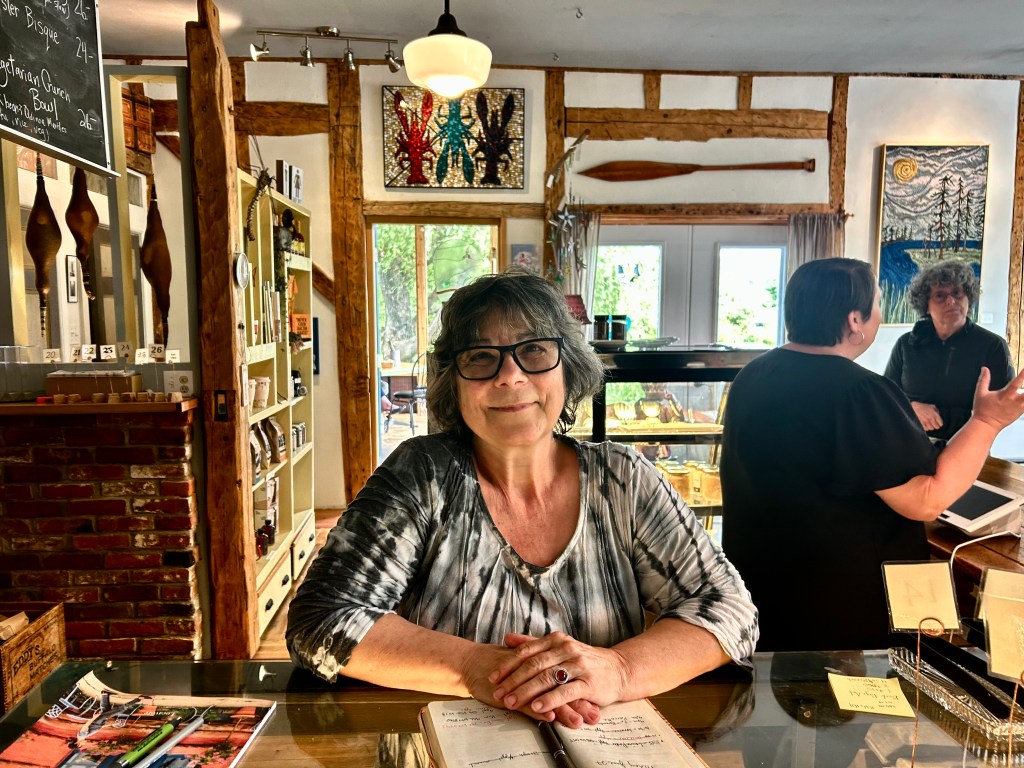
The Well Gone Dry

By Ed Staskus

   Cavendish is an unincorporated community on the central north coast of Prince Edward Island, a half hour drive from Charlottetown, the capital of the province. The population is less than 200, although in the summer it swells to more than 8,000, who sleep in tents, campers, motels, cottages, and resorts. In the dead of winter it is a ghost-of-a-place with only a red fox or a white hare crossing Route 6.

   The place was founded in 1790 and named after Lord Cavendish, Colonel of the 34th Regiment of Foot. In 1893 the world-record holding clipper ship Marco Polo got caught in a storm, grounded, and broke apart on its coastline. Lucy Maud Montgomery, the author of “Anne of Green Gables,” grew up there. She is buried in the Cavendish Community Cemetery. It was largely a quiet whistle-stop through the first half of the 20th century

   In the second half of the 20th century campgrounds, amusement parks, restaurants, and bars were built. The PEI National Park was created along 40 miles of the Gulf of St. Lawrence. Some of the province’s best beaches are in the park, including Cavendish Beach. There are four championship golf courses, each one only a few minutes from the others.

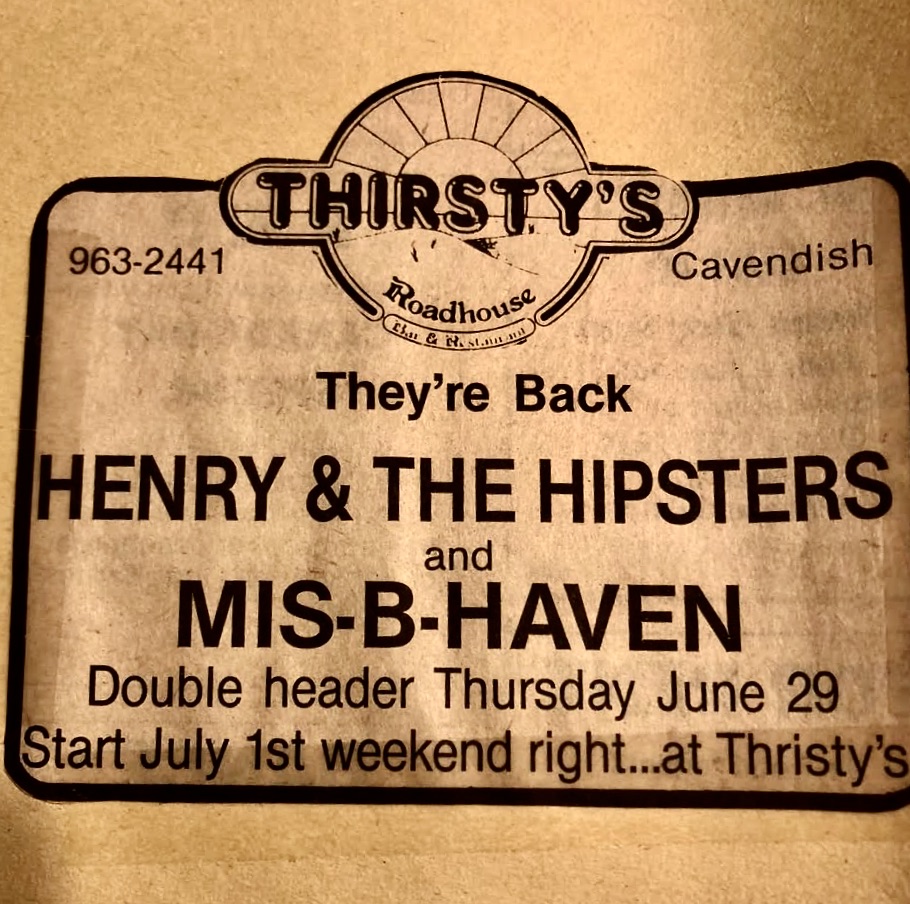
   Cavendish caters to family vacations, romantic getaways, and golfers. It wasn’t always like that. It was once more like Dodge City and Thirsty’s Roadhouse was where to be and be seen. “Cavendish was the place to be on Prince Edward Island,” said Rob Gibson, who was the long-time general manager of the roadhouse. “And Thirsty’s was the place to be in Cavendish, bringing in up to seven hundred people on a Saturday.”

   My wife and I first discovered Cavendish the second summer we went to Prince Edward Island. We had been on an improvised road trip around Nova Scotia three years earlier when somebody we met in Halifax suggested we take the ferry to Prince Edward Island for a look-see. 

   “What is Prince Edward Island?” I asked.

   “It’s a big island on the other side of the Northumberland Strait. It’s one of Canada’s original provinces. Mapmakers sometimes forget to include it on their maps. I shouldn’t say so, I suppose, but it’s even nicer than Nova Scotia.”

   “I’ve never heard of it and I’m from Canada.” I said. 

   I was born in Sudbury, Ontario. My parents were refugees from the Baltics, which they fled after World War Two and before the Iron Curtain came down. My father worked in the nickel mines of the Sudbury Basin for almost ten years. My mother worked as a nanny for thirteen children until she began having children of her own. They left for a better life in the United States once they had saved enough money to make the move. Even though I lived in the United States ever after, I had dual citizenship, which meant I could say I was a compatriot whenever I went to Canada. That and some loose change meant I could get a cup of coffee at Tim Horton’s.

   We took the ferry to Prince Edward Island. We had a Rand McNally road atlas but no idea where to go. We ended up in Cornwall. When it started to get dark we started looking for a place to sleep. We found the Sunny King Motel, which was clean and affordable. We stayed there three nights. We spent two days roaming around the island. It was on the second day, the day before we had to go home and get back to work, that we stopped in North Rustico to get a bite to eat. It was late morning. There was an unassuming place called Lorne’s Snack Shop on the side of the road. They had a fisherman’s breakfast that amounted to an all-you-can-eat plate. The plate was full of fried eggs, a slab of bacon, sausage, grilled tomatoes, chunky home fries, and thick toast with jam. There was a side of baked beans. We took a pass on dinner that night.

   A woman speaking a dialect of English we had to pay very close attention to suggested we take a drive along the coast on the Gulf Shore Parkway. We found out later she was from Newfoundland. We also found out later about poutine at Lorne’s Snack Shop. It wouldn’t be long before we started dashing in for the French fries topped with cheese curds and gravy. We took a drive along the coast and discovered the landscape was pretty as a postcard. 

   We decided to come back the next summer for a two week in one place vacation. There were several groupings of cottages on the Gulf Shore Parkway between North Rustico and Cavendish. One was across the street from MacNeills Brook, but it was too expensive. One was on a hillside overlooking North Rustico Beach, but it wasn’t to our liking. We stopped at the Coastline Cottages across from Doyle’s Cove. It was just right. We made a reservation for the next year.

   Thirsty’s opened the summer of 1984, except it wasn’t Thirsty’s at first. It was G. J.’s North. Phil Manovilli, who was part owner of Gentleman Jim’s in Charlottetown, created the near-to-the-beach bar. He changed the name the next year. It became one of the two most popular watering holes in Cavendish. The other one was the Cavendish Arms, which later became Chevy’s. A sign behind the bar at Thirsty’s said “Hangovers Installed and Serviced Here.”

   Loose-knit groups of the young trekked across the street from nearby campgrounds for drinking, dancing, local bands, high-spirited conversation, and Silly Olympics. The dancing was haphazard, but if you can dance you’ve got a chance. When the night was done there was no need for designated drivers. Everybody walked back to their  campgrounds. There was plenty of grass to cushion face-first encounters.

   The next summer, after miscalculating our ability to drive 1,236 miles from Cleveland, Ohio to North Rustico in one-and-a-half days, we got to the intersection of Cavendish Lane and Route 6 at two o’clock in the morning. When we did we realized we had little idea of where the Coastline Cottages actually was. Everything looked different in the dark a year later. We pulled off onto the shoulder of the road in front of Shining Waters. We were standing outside of our car looking at everything with no lights on anywhere when we heard talking and laughing. Four men were sitting by the light of an electric lantern on the front deck of one of the Shining Waters cottages drinking beer. We explained out predicament.

   “From the States, are you?” one of them asked.

   “Yes, but I’m originally from Canada.”

   “Ah, then,” he said. “Just go that way to the ocean, follow the road to the right, and you’ll come to the Coastline Cottages soon enough. If you get to North Rustico, you’ve gone too far.”

   We found our beds without any trouble and fell into them without unpacking. We woke up to a bad-tempered rainstorm that cleared up by noon and became a sunny day. We were at the top on a long gradually sloping  lawn that ended at the Gulf of St. Lawrence. Every so often a flock of cormorants flew past.

   Now and then Thirsty’s was cited for something or other. Overcrowding was one of the things they were cited for. “The Prince Edward Island Liquor Control Commission has suspended the lounge operation as well as the liquor service in the dining-room of the licensed premises known as ‘Thirsty’s Roadhouse’ located in Cavendish, PEI, for a three day period. The violations of the Liquor Control Act Regulations are ‘A Licensee shall not admit more persons in his licensed premise than the capacity established and posted by the Fire Marshal’s Office’ and ‘A licensed premise shall comply with the Fire Prevention Act.’”

   We stopped in a few times, although we never stopped in on happening weekend nights when there was barely enough room to stand or turn around, much less find a table or a bar stool. The drinks were abundant, the food was fair, redeemed by its agricultural island roots, but the music was mostly unremarkable, cover bands skilled at a few chords and not much else. We did see Mis-B-Haven there, who were three guys and two gals who knew what they about and were fine to listen to.

   “I still have the note my mother wrote allowing me to perform at Thirsty’s when I was under age,” said Janet Boulter, who was one of the gals. “Man, did we have fun!”

   We discovered the roots music of the Maritimes and started going to a Women’s Institute in Stanley Bridge,  a Lion’s  Club in Cymbria, and a community hall in Brackley Beach to hear it. The music is based on Scottish and Irish and Acadian traditions. We especially liked Acadian fiddle music. We went to the Agricultural Fair in Abram-Village to hear Eddie Arsenault and to Charlottetown to hear Barachois. We went to the Piping College in Summerside to hear everything else, including a bagpipe marching band.

   Somebody once said a gentleman is a man who knows how to play the bagpipes but doesn’t. There were no gentlemen in the marching band. You could hear them a mile away.

   Thirsty’s closed at the end of the Labor Day weekend in 2010. “The 1980s and after the bridge opened in 2000 were good to Thirsty’s but the downward spiral began in 2005,” Phil Manovilli said. “Part of it is my fault, our fault. I’m 52 years old now. When I started I was 28. I’m out of that loop,” He was sitting at a table near the dance floor. “Successful bars need to be in touch with their age groups. I’m just so far removed from that now. Kids here now could be my kids.” He watched his two growing children playing on top of a pool table.

   “Cavendish has been changing over the last 10 or 12 years,” said Donald McKearney, the Chairman of the Cavendish Resort Municipality. He said it wasn’t going after the party crowd any longer. “We don’t want the party people. They bring some money to the economy but basically they’ll pitch a tent, 25 people will be there, and they just drink, fight among themselves, and generally carry on. That’s not what we’re looking for.” He said the Victoria Day weekend in Cavendish had gotten to be nothing but a boisterous party weekend on the north shore.

   All good things come to an end. That’s not necessarily a bad thing. It usually means something else is about to begin. The goal of a song isn’t to get to the end but if it doesn’t get there it doesn’t reach its goal. “Thirsty’s holds a special place in people’s hearts and I think they’ll remember it fondly,” Rob Gibson said after the roadhouse’s closing day, standing behind the bar in front of shopworn signs for Alpine and Moosehead beer.

   Yesterday is always just a memory. It’s what is left when the past doesn’t completely unhappen.

Ed Staskus posts monthly on 147 Stanley Street http://www.147stanleystreet.com, Made in Cleveland http://www.clevelandohiodaybook.com, Down East http://www.redroadpei.com, and Lithuanian Journal http://www.lithuanianjournal.com. To get the site’s monthly feature in your in-box click on “Follow.”

“Ebb Tide” by Ed Staskus

“A thriller in the Maritimes, magic realism, a double cross, and a memory.” Sam Winchell, Beyond Books

Available at Amazon: https://www.amazon.com/dp/B0CV9MRG55

Summer, 1989. A small town on Prince Edward Island. Mob money on the move gone missing. Two hired guns from Montreal. A peace officer working the back roads stands in the way.

A Crying of Lot 49 Publication

Beyond the Haunted Motel

By Ed Staskus

   The Adventure Zone in Cavendish on Prince Edward Island’s north coast is three attractions. One of them is the River of Adventure Mini Golf Course. The second one is the Hangar Laser Tag Arena. The last one is the Route 6 Haunted Motel. Neither Oliver nor Emma planned on playing golf until they were senior citizens. They couldn’t play laser tag because their parents didn’t want their children playing with guns, even if the gunplay was called laser tag. What Oliver and Emma were mainly interested in was the Haunted Motel.

   They had a professional interest in it. Oliver was the Monster Hunter of Lake County and Emma was his right- hand man They were from Ohio. They were on the island with their parents on a two-week vacation.

   They were standing in front of the Haunted Motel, sizing it up, when two children walked out of the Hangar Laser Tag Arena. One of them was a big boy wearing a pink sweatshirt. The other one was a black-haired girl wearing baggy Sinbad pants.

   “When we went one-on-one, I totally destroyed you,” Big Pink said.

   “Sure, but when we played that family, I dominated,” Baggy Pants said.

   “You were super good at sneaking around, getting behind them, and shooting, shooting, shooting,” Big Pink said. “You would just surprise run up and shoot them in the back the whole time.”

   “Sneak attacks are the best,” Baggy Pants said.

   A pack of  tweens came out of the Haunted Motel while Oliver and Emma were wondering whether to try it out.

   “That was twice as scary as the Haunted Mansion in Kensington,” one of them declared.

   “I know why they say ‘No Money Back’ if you leave early,” another one said.

   “Did you see that moon faced boy crying?” 

   “Yeah, he looked all freaked out.”

   “How about that mom who ran out? She went in with six kids and she was the only one who bailed.”

   That sealed it for Oliver and Emma. They paid the admission charge. They stepped into the Haunted Motel.

   Afterwards, even though it had been loud and claustrophobic, and they thought it was fun, they wondered what was so scary about it. In their time they had gone up against Destoroyah, the Green Goblin, and Long Tall Sally, the Loch Ness Monster’s sister. They weren’t babes in the woods when it came to scary. 

   They spent most of their time in the Haunted Motel in total darkness. There were small red lights that were markers signaling when and where to turn. The floors were uneven and they had to bend and twist to make their way. They found out later every third or fourth person, young and old, didn’t make it through from beginning to end. 

   “That boy behind you, who kept clutching at you, he was scared out of his wits,” Emma said.

   “I finally held his hand and he made it all the way through,” Oliver said.

  “What about that girl, who as soon as the lights went out, she curled up into a ball on the floor and wouldn’t get up?”

   “If that want scary, you should visit the Midgell River Motel in St. Peters Bay, which may or may not still be there,” a voice behind them said.

   When they turned around to find out more, the voice wasn’t there anymore. There wasn’t anything other than a shadow behind them, which shape-shifted into smoke that the wind blew away. They looked down at the gravel at their feet and saw hobnail boot footprints.

   As it happened, their father had planned a day trip to St. Peters Bay and two days later, early in the morning, they were on the way there the 40-some miles along the north coast. When they got there they drove just beyond it to the Greenwich Interpretation Centre. They studied the Time Line exhibit, which depicts 10,000 years of life on Prince Edward Island, and tested their naturalist skills with the Shell Game, Shorebird Challenge, and the Dune Plant Quiz. Being city folk, they came in last place.

   They went for a walk on a boardwalk through the biggest sand dunes on the island, including parabolic dunes, which are unusually large and mobile dunes with rare counter ridges called Gegenwälle. Some people call them blowouts because their center sometimes blows out leaving just a rim. When they drove back to St. Peters Bay they stopped at Rick’s Fish ‘N’ Chips and had fish and chips. 

   They had just started on their way back to the Coastline Cottages when Oliver spotted a sign for Midgell River.

   “Dad, can you turn up that way?” he asked.

   They turned that way. When Oliver saw the Midgell River Motel he asked his father to stop. Emma and he jumped out of the Jeep Cherokee and surveyed the dilapidated house that had once been a boarding house and later a motel. It looked deserted and unhappy.

   “What are you up to Ollie?”

   “We heard a story about it, so we want to look around.”

   “Was it a spooky story?”

   “Yes.”

   “All right then, but your mother and I are going to tilt the seats back and take a nap here in the car. Wake us up when you’re done.”

   “OK, dad.”

   They surveyed the house, which looked like it was at the tail end of one hundred years of solitude. It had been built in three parts, each part higher than the other. The first room they went into was a front bedroom. A door creaked and a young girl walked in. She made eye contact with them even though she didn’t have eyes. She started opening the drawers of a dresser and throwing out clothes that vanished in thin air before hitting the floor.

   When they heard somebody clomping up and down the stairs they went into the lobby and looked, but there wasn’t anybody on the stairs, even though they continued hearing the clomping. A hangman’s noose was neatly coiled on the landing, its fibers bristling with menace.

   “This is creepy,” Emma said.

   When they went upstairs they saw a man in a bathroom combing his hair in the mirror and the reflection of another man standing behind him. Every time the man combing his hair looked behind him, the other man wasn’t there anymore. A flock of blackbirds flew through the hallway and out an open window. Oliver and Emma went downstairs.

   “This is getting creepier,” Oliver said.

    A card game was going on in the parlor. Four men were playing five-card draw. One of them slapped down a dead man’s hand, a pair of black aces and black eights, and swept the pot off the table. One of the other men reached for a gun, convinced there had been cheating, but a third man slapped it away 

   “Not here, not now,” he said. “We’ll settle this later.”

   The fourth man, unnoticed, slipped all the jacks up his sleeve.

   Stepping into the kitchen they saw a man wearing hobnailed boots. Dishes flew out of the cupboard and smashed themselves to pieces at his feet. Three Norwegian rats peeked out from the rust-stained sink.

   “Don’t mind the dishes,” Hobnail Man said. “It happens all the time.”

   “Who are you?” Oliver asked.

   “I’m the caretaker,” Hobnail Man said. “Can’t you tell? After all, you’re the monster hunter.”

   “I was just double-checking,” Olver said. He knew full well who Hobnail Man was and what he was up to.

   “Do you know, this place was burned down years ago by order of the local priest, who said Satan’s work was being done here.”

   “I was wondering what that smell was,” Oliver said.

   “Now I burn it down every night.”

   “I thought you might,” Oliver said.

   Hobnail Man raised his hand and said, “I’ve got to lock all the doors now and do my work.”

   “Before you do, we have got to go,” Oliver said.

   “You can’t go anywhere,” Hobnail Man said. “There must be an offering.”

   But before he could take a step, Oliver dug into his pockets which he had stuffed with packets of salt from Rick’s Fish ‘N’ Chips, and ripping them open sprinkled Emma and himself with salt. Evil spirits hate salt. He threw a handful of it in Hobnail Man’s face, who stumbled backwards, trying to get a grip on the floorboards with his boots. 

   He  cried out, “I can’t see, I can’t see!”

   Oliver and Emma ran out of the Midgell River Motel fast as jack rabbits and back to where their parents were napping. They woke them up, piled into the Jeep Cherokee, and a minute later were on their way.

   When Oliver looked over back his shoulder he saw the Midgell River Motel going up in flames.

Ed Staskus posts monthly on 147 Stanley Street http://www.147stanleystreet.com, Made in Cleveland http://www.clevelandohiodaybook.com, Atlantic Canada http://www.redroadpei.com, and Lithuanian Journal http://www.lithuanianjournal.com

“Ebb Tide” by Ed Staskus

“A thriller in the Maritimes, magic realism, a double cross, and a memory.” Sam Winchell, Beyond Books

Available at Amazon: https://www.amazon.com/dp/B0CV9MRG55

Summer, 1989. A small town on Prince Edward Island. Mob money on the move gone missing. Two hired guns from Montreal. A peace officer working the back roads stands in the way.

A Crying of Lot 49 Publication

Lay of the Land

By Ed Staskus

   When Oliver’s father steered their Jeep Cherokee off the Confederation Bridge and past the Gateway Factory Outlet, he turned on his GPS. He hadn’t told his family, but since entering Canada he had been steering by the stars, by the compass on his dashboard display, not using a map or GPS. The digital compass was up to date snazzy  but old-fashioned like every other compass. He was an electrical engineer attuned to high tech, but sometimes he ditched it. 

   When they had crossed into New Brunswick from Maine, he thought, the island is due east of us, so I’ll just drive due east until we get to it. Other than having to navigate a rotary in the middle of nowhere, the family got to Prince Edward Island with no problem.

   After crossing New Brunswick, he continued on to PEI’s Route 13 through Crapaud, Kellys Cross, Hunter River, and New Glasgow. The family was on its way to the Coastline Cottages in North Rustico for two weeks.

   “Dad,” Oliver asked his father, “how come there are no billboards on the roads here like at home?”

   “That’s a good question, Ollie, but I don’t know.”

   There are nearly 20,000 highway billboard signs in Ohio. There are many more of them dotting the state’s towns and cities. Advertising is legalized lying. Billboards are big and bold about it.

   “I know why, “ Emma said. “Most billboards are banned.”

    “How do you know that?” Oliver asked.

   “Because I did my research, not like some people I know,” she said.

   Oliver was the Monster Hunter of Lake County. He was ten years old. Emma was his older sister by two years. They lived in Perry, Ohio. After the pinching and pushing in the back seat was over, Emma told her family what she knew.

   “No billboards are allowed on most of the roads on PEI, which is what everybody calls the island. It was named after Prince Edward, who became the father of Queen Victoria. He never set foot on ground here. He was like a ghost. The lion on top of the PEI flag is an English lion. The official bird is the Blue Jay. The official animal is the Red Fox. The official boss is called the Premier. Every fifth potato grown in Canada comes from here, which is why some people call it Spud Island.”

   “Anything else, clever clogs?” Oliver asked.

   “No more fighting,” their mother immediately commanded from the front seat.

    That night, after finding the Coastline Cottages and unpacking, they sat in an array of Adirondack chairs on the wide slopping lawn that dead-ended at the Gulf of St. Lawrence, and scanned the dark sky for stars and constellations. Light pollution where they lived in northeast Ohio obscures most of the stars most of the time. From their chairs on the lawn, the family saw many more than they had ever seen.

   “That’s a boatload of stars,” Oliver said.

   “That’s only some of them,” his father said. “There are more stars in the sky than all the grains of sand on all the world’s beaches.”

   “Oh, wow! Who counted them all? Did you, dad?”

   “Not me, Carl Sagan did.”

   A fox chased a zigzagging rabbit in the dark field behind them. There were no streetlights anywhere. The stars twinkled in the inky sky.

   The next day they drove the Gulf Shore Parkway to Stanhope Main, a beach just east of Brackley Beach in the National Park. There was a mile-or-more of sand and dunes. The water was shallow and there were sandbars. It had been a local hotspot during Prince Edward Island’s rum-running days, both for landing booze and having a party.

   Oliver and Emma built inukshuks on the beach, which Emma had also researched. She taught Oliver the mechanics of making them. Inukshuks are human-like figures made of piled stones. They are central to Inuit culture in the Arctic. A red inuksuk is on the flag of their land called Nunavut. The word itself means “to act in the capacity of a human.” They are sometimes used as guideposts showing the way.

   “Dad always says you can learn more from a guide in one day than you can in three months of fishing alone,” Emma said.

   “But dad doesn’t fish,” Oliver said.

   “Oh, you’re right,’ Emma said.

   The tide came in as the afternoon wore on. They packed up and walked back to the parking lot. Oliver found a scrap of paper sticking out of the Marram grass bordering the path. It said, “If you disbelieve in spirits and have faith that you will die in your bed, you may care to watch at Holland Cove at night at the hour when the tide is high.” 

   “Dad, do you know where Holland Cove is?” Oliver asked his father. 

   “No, but I can look it up on my phone.” He found it on his cell phone.

   “It’s near Charlottetown.”

   “When are we going to see ‘Anne of Green Gables’ in Charlottetown?”

   “Tomorrow night,” his father said. “Why?”

   “Can we stop and see Holland Cove after the show?” 

   “Is there something there you want to see?”

   “Yes.”

   “OK, we’ll swing by afterwords.”

   They saw the song and dance stage show the next night at the Confederation Centre, buzzing about it afterwards as they walked back to their car.

   “That girl playing Anne had some Broadway belt in her voice,” their father said.

   “She was almost pure energy,” their mother said. “The show was wonderful. I’m glad we could take the kids.”

   “I was so sad when Matthew died,” Emma said.

   “Me too, sis,” Oliver said.

   It didn’t take them long to get to Holland Cove after the musical show. They parked near the shore. Oliver said they would have to wait for whatever was going to happen to happen.

   Samuel Holland had been the Surveyor-General for the northern half of North America in the mid-18thcentury. He was responsible for the partitioning of Prince Edward Island into 67 lots back in the day. He had come to the island in 1764. His wife Racine came with him. She was tall, pretty, and French. One of Samuel Holland’s surveying trips took him longer than he planned. Racine was anxious about his absence. She bundled up and went out on the ice on the cove to see if she could spot him. The ice was thinner then she expected. She fell through it and drowned a day before her husband returned.

   After her body washed ashore and Samuel Holland buried her, he started seeing her apparition. She always brought a flagon of water with her and called for him. More than two centuries later her voice is still heard along the shoreline of Holland Cove calling for her husband. She has long black hair and is dressed in a white robe. She comes out of the surf, prowls the beach, and returns to the cove disappointed. Many believe that those who see her will themselves soon drown.

   When she came out of the surf only Oliver and Emma could see her. Their parents couldn’t see the apparition. They didn’t believe such a thing was possible. Oliver and Emma met her on the beach. Oliver meant to explain to Racine that she was dead and gone. They introduced themselves. Racine’s face was obscured by mist.

   “Where is Samuel?” she asked them.

   “He died some years after you died, so long ago nobody can remember what either of you ever looked like,” Oliver said. 

   “Oh, no one told me,” she said.

   Sometimes ghosts are muddled and don’t even know they have died. When they find out they are bemused.

   “Do you know you are dead?” Emma asked.

   “No, I didn’t know.”

   “Do you know there are those who believe they will themselves soon drown if they see you?”

   “That’s terrible,” she said. She knew firsthand how terrible it was.

   “Would you like to move on?”

    “Yes, but how do I do that?” 

   “When you are back in the ocean tap the heels of your shoes together and say three times, ‘I do believe in Heaven and Hell.’”

   “I will do that,” Racine said. She turned and strode into the surf, never to be seen again. Oliver and Emma ran back to where their parents were waiting for them.

   “Did you see what you came to see?” their father asked.

   “Yes, but what we saw has moved on to another place,” Oliver said.

Ed Staskus posts monthly on 147 Stanley Street http://www.147stanleystreet.com, Made in Cleveland http://www.clevelandohiodaybook.com, Down East http://www.redroadpei.com, and Lithuanian Journal http://www.lithuanianjournal.com. To get the site’s monthly feature in your in-box click on “Follow.”

“Ebb Tide” by Ed Staskus

“A thriller in the Maritimes, magic realism, a double cross, and a memory.” Sam Winchell, Beyond Books

Available at Amazon: https://www.amazon.com/dp/B0CV9MRG55

Summer, 1989. A small town on Prince Edward Island. Mob money on the move gone missing. Two hired guns from Montreal. A peace officer working the back roads stands in the way.

A Crying of Lot 49 Publication
Making Tracks to Prince Edward Island

By Ed Staskus

   “Hustle it up, kids,” Oliver and Emma’s father said. Oliver was 10  years old. Emma  was 12 years old. Oliver was the Monster Hunter of Lake County. Emma was his sister. She considered herself Oliver’s right-hand man and the brains behind their monster hunting. The family was on their way to Prince Edward Island, which was 1228 miles away from Perry, Ohio, which was where they lived. They were going by car. Their car was a Jeep Cherokee.

   They stopped at a Sheetz at the entrance to I-90, filled up the gas tank, and headed east. They got to Erie in no time and kept going. They drove past Buffalo and Rochester but got off the interstate when they got to the Finger Lakes. They stopped in Waterloo and had a New York Pickle pizza at Ciccino’s Pizzeria.

   “Are we going to the quilt farm after we finish eating?” Emma asked.

   “Yes,” her mother said.

   The farm was on Seneca Lake near Pen Yan. On the way they passed several black and yellow road signs depicting a horse and buggy.

   “Mom, what are those signs?” Emma asked.

   “There are hundreds of Mennonite families up and down these lakes. Some of them get around with horses and buggies.”

   “Who are Mennonites.”

   “They’re cousins to the Amish.”

   The Amish and Mennonites trace their roots to the Anabaptist movement of the early 16th century. Anabaptist is a nickname that means they are rebaptizers. They came from Switzerland and Germany. Both denominations believe modern advances are helpful but only if they  support a simple and humble life.

   “Why don’t they drive cars like us?”

   “The Amish stick to a strict interpretation of the Bible, which means they usually don’t use modern technology in their daily lives. Some Mennonites are old order, so they have horse-and-buggy transportation. Other Mennonites drive cars and wear clothes like us. It just depends.”

   Pauline Weaver and her Mennonite quilters have been making quilts at Weaver View Farm for thirty years. Their prize-winning bedspreads have been featured in Smithsonian Magazine. Dozens of quilts hang from the rafters of their restored 19th century dairy barn.

   “What’s the difference between Amish and Mennonite quilts?” Pauline said. “Not much. Maybe Amish just rolls off the tongue easier than Mennonite.”

   Emma’s mother was looking for a Lone Star pieced quilt.

   “Is it true Mennonite quilters always make an intentional mistake to show humility before God” she asked.

    “I don’t know how that one got started,” Pauline said. “As for me, I make enough mistakes as it is.”

   After they put in their order for the design they wanted on a quilt that would be shipped to them in a couple of months, and were preparing to leave, Emma’s mom asked if quilting bees were still common.

   “Quilting bees really aren’t all that common anymore,” Pauline said. “Sometimes a family will suffer a catastrophe and we’ll do a quilting bee to raise money. A quilting bee is a little like a barn raising. A quilt is completed in a single day. It’s not so hard to do with a large group of women, but the quilters do end up working very quickly.”

   They got back on Rt. 14S and were soon back on I-90. They drove past Albany, the Berkshires, skirted Boston, and stopped in Portland across the border in Maine for the night. They were staying the night near the waterfront. After walking up and down Commercial St. they stopped at Gilbert’s Chowder House and had chowder. Afterwards they walked down the Custom House Wharf. 

   “Dad, Is it OK if we talk to that man writing on that thing,” Oliver asked. A man was sitting on a lawn chair beside the Coastal Bait Shop. He was hunched over tapping at a mint green typewriter. The typewriter was on a red milk crate which was on a block of concrete.

   “Yes, but stay right there until we come back,” his father said. “ We’re going to walk to the end of the wharf and then come back.”

   “Hi mister,” Oliver said, Emma at his side.

   “Hi kids,” the man said.

   “What is that thing?” Oliver asked.

   “It’s a typewriter, a portable Royal, like a laptop.”

   “Where did you get it?”

   “I got it at a rummage sale. Everything works except the letter W.”

   “Why doesn’t it work?” 

   “The rods here hold the letters that hit the paper. When I strike a key a rod swings up and hits this ink-coated tape which transfers the letter to the page, except the W, which is missing.” 

   “Oh.”

   “I’m writing my life story.”

   “Oh.”

   “My name is William.”

   “I’m Oliver and this is my sister Emma.”

   “Where are your parents?”

   “Down there by the water.”

   “Good,” William said. “I’m not up for two orphans.”

   William was wearing a Panama hat on top of a head of dreadlocks, a sleeveless ribbed undershirt, baggy blue pajama pants, and orange Crocs. He was smoking a Calabash pipe, the kind Sherlock Holmes used to smoke.

   “Who’s Sherlock Holmes?” Oliver asked.

   “A detective from long ago.”

   “Are you making a book about your life?”

   “Yes and no,” William said. “I write a chapter every day but at the end of the day I throw whatever I’ve written into that trash can over there.” He pointed at a trash can.

   “Why do you do that?”

   “Life isn’t about finding yourself. It’s about creating yourself. That’s what it’s all about, in the wink of an eye.”

   Neither Oliver nor Emma knew what to say, so they said, “Here come our parents.”

   “It’s been nice talking to you kids,” William said. “Do you want to hear a secret?”

   “Sure.”

   “Everything depends on a 6-inch layer of topsoil and the fact that it rains.”

   “Oh, OK, thanks for the secret.”

   The next day they got up early, had an early breakfast, and got going north on I-95. The highway starts in Miami in Florida and ends in Houlton in Maine. Every few miles they saw a sign saying “Beware Moose Crossing.”

   “We have to be careful about moose coming on to the road,” their father said, “although they mostly come out at dawn and dusk and in between at night. We’ll be on Prince Edward Island before it gets dark though.”

   “Moose are really big,” Emma said.

   “They are about a thousand pounds.”

   “What would happen if we hit one?”

   “We’re not going to hit one.”

   When they got to Houlton they filled up their gas tank at an Irving’s and drove the couple of miles to the Canadian border. They had to wait in line. When they got to the guard booth a dark man in a blue uniform wearing a turban leaned out towards them. His name tag said he was Gagan Singh. He asked them for their passports. The family had NEXUS cards and handed them over.

   “Are all of you American citizens?”

   “Yes.”

   “Where are you from?”

   They told him they were from Perry, Ohio.

   “What is your destination?”

   “Prince Edward Island.”

   “What is the purpose of your trip?”

   “Vacation.”

   “Have a good trip,” the border guard said.

   They drove into the province of New Brunswick, which they would have to cross the length of to get to Prince Edward Island.

   “Dad, that man, he asked us if we were citizens, but he didn’t look like a citizen,” Oliver said.

  “He was probably an immigrant who became a citizen. I think he is a Sikh.”

   “What’s that’s?”

   ”It’s a religion, like being Catholic They’re from India.”

   “Why don’t they stay in India? Why are they in Canada?”

   “Probably for the same reason there are immigrants everywhere.”

   “What’s the reason?”

   “There are different reasons. Most of time it’s to go somewhere where they can find a better life. Maybe there were no jobs where they lived, or the climate was getting bad, or there was a war going on.”

   They drove east past Woodstock, Frederickton, and Moncton. When they got to Sackville they stopped for a bite to eat at the Cackling Goose Market. An hour later they were at the Confederation Bridge. Before 1993 the only way to get to and leave the island was by car ferry. After 1993 there was the bridge. It is a nearly 8-mile long box girder bridge carrying the Trans-Canada Highway across the Abegweit Passage of the Northumberland Strait, linking Prince Edward Island with the mainland. It is the same length as 117 football fields. It weighs almost 8 billion pounds. The average person weighs about 150 pounds so the bridge equals 50,000,000 people.

   “That’s a mighty big bridge!” Emma said.

   “And long, too,” Oliver said.

   They got to North Rustico on the north side of the island before dusk. They were going to stay in one of the cottages at the Coastline Cottages just outside of town on the coast of the Gulf of St. Lawrence. When they drove up the long drive they passed a kidney-shaped salt water pool.

   “You didn’t tell us they had a swimming pool!” Oliver and Emma exclaimed at the same time. 

   “They do and it’s open every day it doesn’t rain.”

   “Does it rain much?”

   “Not too much.”

   “Woohoo!”

Ed Staskus posts monthly on 147 Stanley Street at http://www.147stanleystreet.com, Made in Cleveland http://www.clevelandohiodaybook.com, Down East http://www.redroadpei.com, and Lithuanian Journal http://www.lithuanianjournal.com. To get the site’s monthly feature in your in-box click on “Follow.”

“Ebb Tide” by Ed Staskus

“A thriller in the Maritimes, magic realism, a double cross, and a memory.” Sam Winchell, Beyond Books

Available at Amazon: https://www.amazon.com/dp/B0CV9MRG55

Summer, 1989. A small town on Prince Edward Island. Mob money on the move gone missing. Two hired guns from Montreal. A peace officer working the back roads stands in the way.

A Crying of Lot 49 Publication

Rise and Shine

 By Ed Staskus

  “I got started in theatre when my mom was looking for what I might be interested in,” Hayden Lysecki said. “She put me into all these random things, from dodgeball to martial arts, but the thing that stuck was theatre.” Born and bred in Whitby, Ontario, Hayden was 12 years old when he got cracking. He put his dodgeball sweatbands away and retired his gi fighting suit. He planted himself on the stage.

   “I think it stuck because I love being a part of telling stories and I love attention.”

   One of the first productions he appeared in was “Oliver!” It is a musical from 1960 based on an 1838 book by Charles Dickens. Oliver Twist is an orphan navigating London’s underworld while searching for a family and a home. He falls in with a gang of pickpockets led by the cunning Fagin.

    “The director Geoff Couler saw something in me and gave me the part of Fagin,” Hayden said. He was the youngest member of the cast. “There was a sense of great excitement and utmost fear in me. I found out thriving on that is what theatre is all about. It’s like riding a roller coaster. It’s a positive fear, since it’s such a fun experience.” He belted out “You’ve Got to Pick a Pocket or Two.” The applause lit him up.

   “The year of ‘Oliver’ changed my life. The majority of what I’ve done since then are musicals. You get to act, sing, and dance, instead of just talking at an audience.” Musicals are about characters who feel so deeply about something that they are compelled to break out into song. “I love plays, but some of them are stinkers, like when there are two guys in one room and they spend all their time talking to each other.”

   Hayden majored in performing arts at Oshawa High School and O’Neill CVI High School. He participated in a Broadway Student Summit studying “Hamilton” and “Chicago.”  He secured a Music Performance diploma from Holland College and is currently a Bachelor of Music student at the University of Prince Edward Island. 

   “Choral music was pushed in our high school, which suited me since it is one of my passions,” Hayden said. “Our chamber choir was invited to sing at Carnegie Hall for Eric Whitacre.” The bus ride to New York City took most of a day. Eric Whitacre is an American composer and conductor best known for his choral music. “There were lots of choirs who were part of that show. It was mind-blowing.”

   During Hayden’s high school years he participated in several tailored workshops. “Most of the workshops ended with the advice, if you can do anything else, please do it. The mindset I learned to keep is, what’s destined for you will come to you, while what’s not for you, you will be rejected for it. It will suck but you will move on. The only thing you can do is accentuate what you do well, and that way you’ll get the roles you’re going to shine in.”

   His parents were all in, even though neither of them were performers. His father, however, had once played in a  band in high school. It was a four bass guitar band called Lake of Bass. There was a steady beat but the melody had to be worked out  by the listeners. 

   “My family made the commitment to driving me to rehearsals multiple times a week until it became an in school thing in high school.”  All youngsters need some help as well as the confidence of the help they are being given. Parents helping their children is fruitful for everybody. It enriches the children and benefits the neighborhood by keeping parents off the streets.

   “I was a bit of a black sheep trying a new thing,” Hayden said. “The way my parents supported me came in all the ways parents have to do it behind the scenes, driving me everywhere, making sure I was fed before rehearsals, and coming to all my shows. I think they realized it could be a reinforcing thing for a kid who wants to figure out who they are in life, who wants to grow into their own.”

   Hayden graduated from high school as the Covid-19 pandemic picked up steam. “I didn’t get to go to prom, a graduation ceremony, or perform in our year-end show. I was supposed to be Joseph in ‘Joseph and the Amazing Technicolor Dreamcoat.’ I couldn’t go anywhere. I went nocturnal for a couple of months. Not being able to perform, your soul just dies.”

   Hayden’s father was the Chief Technology Officer of a software company. Mike Lysecki moved his family from Ontario to Prince Edward island in the summer of 2021. His firm had  leased office space in Charlottetown, the capital of the province, intended to house 50 employees, and wanted somebody up the chain of command to run the operation. Hayden’s father was that man. 

   “Prince Edward Island and Charlottetown are growing areas for top talent across Canada and the province’s proximity to universities and its passionate workforce makes it the perfect place for our expansion,” he said.

   “My father had been thinking of retirement and thought Prince Edward Island would be a wonderful place to settle down when he eventually stopped working. It was the fastest process ever for our family. He told us about it in June and we were on the island in August. It was a whirlwind. Things were crazy for me for a while but as soon as I came here I could see there was a vibrant music and theatre community on the island.”

   The family moved to the bay at West Covehead, up the street from the Brackley Beach Drive-in. Hayden started knocking on doors. “Since then, I’ve been living and doing shows here. I started by working at the Watermark Theatre in North Rustico as an intern, doing all kinds of things, props, painting sets, being their office manager. I was a part of the ‘Munshables’ at the Confederation Centre last year and this year I have been in ‘Rent’ and ‘Anne & Gilbert’ at the Florence Simmons Theatre.”

   “Rent” became a big hit as soon as it premiered on Broadway in the 1990s, winning the Pulitzer Prize for Drama and the Tony Award for Best Musical. The story revolves around Mark and his friends in the arts struggling to make a living in New York City. Hayden played Mark in the musical, embracing the character’s dual roles as narrator and documentarian of his circle’s experiences. “Mark wants to shed light on not just his friends, but the entire community that he’s immersed himself in. And that’s such an inspiring journey.”

   It’s also a challenging journey. “One of the most challenging aspects of the musical is all the genres Mark performs in. Rock is the main medium in the story, but Mark performs in a myriad of musical styles from powerful duet ballads to dancing the tango. It’s almost entirely sung through, like an opera, so there is very little downtime onstage. Mark and I are very similar in our abilities to connect with people and read their emotions to properly perceive a situation. We also both have a passionate fire inside of us that translates to our physicality. Rallying a crowd and leading a group number feels like second nature.”

   “Anne & Gilbert” was where he learned to act fast. The actors had only two and a half weeks of rehearsals. They had to get the ball rolling. “They needed to learn 17 musical numbers in a short rehearsal time, and the quality of their singing was exceptional,” Wade Lynch, the director of the show, said.

   It was also where Hayden sussed out the merits of authenticity. “You lose authenticity when you chase it, when you set your performance around trying to get an audience to react to you. Your job is to do your part in the narrative. In musicals the actors on stage are gaining a lot of their energy and passion based on what the audience is giving back to them. If you can get an authentic reaction from the audience, then you’ve got something great going.”

   He had something great going when he played Fagin in “Oliver.” In the second act he sang a song called ‘Reviewing the Situation.’  It starts by asking, “Can a fellow be a villain all his life? I’d be the first to say that I wasn’t a saint.” It ends by declaring, “I’m a bad ‘un and a bad ‘un I shall stay.” Reviewing a situation usually means identifying issues for improvement and making changes. Not so for Fagin in that song. 

   “It’s got four verses with a ton of words,” Hayden said. “I was stressed out about forgetting the words on opening night but I got in a groove and it just flowed. When I hit the end of the song, the audience loved it. It felt incredibly validating. It makes you feel invincible. From then on I knew that was the feeling  I was after.”

   Obstacles are what you see when you take your eyes off the goal. Nothing can stop a man with a purposeful frame of mind. Nothing can help a man with an aimless frame of mind. Hayden is staying focused on the bullseye.

   “One of the main reasons I enjoy performing is because of the connections you make with people, not just within your troupe, but with the audience, too,” he said. “Audiences come and go but they can and do remember you.”

   Being in the acting business can be enriching in more ways than one. “Some people look at acting like it’s just messing around and not work, not exactly a way of making a living,” Hayden said. “I try to surround myself with creative individuals and theatre people who enjoy the craft, so I hear a lot less of the negative voices. For me, acting fluctuates between being a business and the favorite thing I like doing. If you’ve got the grit, if you’re marketing yourself, if you are accepting opportunities, it is one of the most rewarding jobs on the planet.”

   All jobs require a measure of stamina, staying aware of the whys and wherefores, and putting in the effort. “My next few years are committed to studying my craft at the University of Prince Edward Island, so I’m sticking around here,” Hayden Lysecki said. He is committed to rise and shine.

Ed Staskus posts monthly on 147 Stanley Street at http://www.147stanleystreet.com, Made in Cleveland http://www.clevelandohiodaybook.com, Down East http://www.redroadpei.com, and Lithuanian Journal http://www.lithuanianjournal.com. To get the site’s monthly feature in your in-box click on “Follow.”

“Ebb Tide” by Ed Staskus

“A thriller in the Maritimes, the deep blue sea, magic realism, and a memory.” Sam Winchell, Beyond Books

Available at Amazon: https://www.amazon.com/dp/B0CV9MRG55

Summer, 1989. A small town on Prince Edward Island. Mob money on the move gone missing. Two hired guns from Montreal. A peace officer working the back roads stands in the way.

A Crying of Lot 49 Publication

Shock Wave

By Ed Staskus

   “When Britain is at war, Canada is at war,” Prime Minister Wilfrid Laurier said in 1910. “There is no distinction.” Four years later when Britain entered World War One, Canada signed on, too.  In August 1914 the Governor-General of Canada vowed that “if unhappily war should ensue, the Canadian people will be united in a common resolve to put forth every effort and to make every sacrifice necessary to ensure the integrity and maintain the honor of our Empire”

   Empires are made by plundering and slaughtering. They are always sure of the rightness of their cause. They never go down without a fight. It doesn’t matter if there’s any honor in the fighting, or not. They plow straight ahead.

   The country had no air force, a navy fit for a bathtub, and an army of 3,000-some men.  By the end of the war more than 600,000 Canadians had enlisted in the Canadian Expeditionary Force to fight for King and Country and more than 400,000 of them served in Europe, out of a population of fewer than 8 million nationwide.

   “The Empire Needs MEN” is what the posters said. “All answer the CALL! Helped by the YOUNG LIONS the OLD LION defies his foes. ENLIST NOW!”

   Everybody wanted in on the fight because everybody thought it would be over by Christmas. Canadians lined up to support the British Empire and collect steady pay of $1.10 a day. The harvest that year was bad, and unemployment was soaring. But machine guns fired ten times as many bullets a minute as they were paid pennies a day. Hundreds of thousands on all sides were slaughtered week by month by year by the rapid-firing weapons on the Western Front.

   At the beginning of the war, it was better to be killed than wounded. The wounded were taken off battlefields in horse-drawn wagons or on mules with baskets on their sides, the baskets soaked and dripping with men bleeding to death. There wasn’t any such thing as a dressing. If they made it to a train station, they were transported to hospitals. “One of those trains dumped about 500 badly wounded men and left them lying between the tracks in the rain, with no cover whatsoever,” said Harvey Cushing, the head of the Harvard Unit of volunteer doctors at the American Ambulance Hospital of Paris.

   Nearly 60,000 Canadians were killed, most of them the result of enemy action, and more than 170,000 of them were wounded. Almost 3.500 men and one woman had at least one arm or leg amputated. Private Curley Christian lost all four limbs but survived.

   During the Battle of Vimy Ridge he was unloading cargo from trucks when an artillery shell hit next to where he was, trapping him under debris for several days. When stretcher bearers tried to reach him, they were killed by more artillery. When he was finally rescued, he was transported to a military hospital and from there to London. His arms and legs had gone gangrenous and all four were sawed off.

   When he got back to Canada he was fitted with prosthetic limbs and married Cleopatra McPherson. He deigned his own prosthesis for writing. Cleo and he had a son who twenty years later served in World War Two.

   More than 7,000 Prince Edward Islander’s enlisted. Five hundred of them were killed and more than a 1,000 wounded. Tommy Murphy went overseas with a siege battery in 1915. Before he went, he got married to Freya O’Sullivan and got her pregnant. He got word of his son Danny’s birth by telegram while taking a break in an ankle-deep puddle of water sheltering in a trench during the Third Battle of Artois. 

   He had spent eight days at the front and was due for four days in a reserve trench and then four more days at a rest camp. When the bloodletting went on and on and the ranks thinned out, he never made it to the reserve trench much less the rest camp. It was that kind of a war. The Allied and Central Powers fought the same battles over and over.

   The British French and Canadians assembled seventeen infantry and two cavalry divisions for the offensive at Artois, backed by 630 field guns and 420 heavy artillery guns. During the fighting the field artillery fired 1.5 million rounds and the heavy artillery 250,000 rounds at the Germans defenses. Tommy Murphy barely slept for days. Whenever he took a break, he felt like his arms were going to fall off after loading shells until there weren’t any more to load. He knew he had sent his share of Germans to Hell even though he never saw one of them die.

   When the Allies tried to advance, they suffered 40% casualties. The battle went on from late September to mid-October when it ground to a halt in the middle of a never-ending autumn rainstorm and mutual exhaustion. By that time both sides were conserving ammunition because they were running out of it. They spent the rest of the month burying their dead, tending to their wounded, and withdrawing.

   Tommy was a cannon man because he was taller than five feet seven inches and burly enough to do the heavy work of feeding artillery. He didn’t have flat feet or bad eyesight, He didn’t have the greatest teeth, but explained he was enlisting to fight Germans, not bite them. He could have begged off the war because he was married, but he was patriotic and wanted to do his fair share. Money from the Canadian Patriotic Fund helped his wife keep the home fire burning.

   His battery had a lance corporal scout sniper attached to it. Francis “Peggy” Pegahmagabow was an Aboriginal who could split a bullseye nobody else could even see. He had more than 300 kills to his name. He roamed No Man’s Land at night for them, seeking out enemy snipers and forward spotters. He always came back in the morning. The other side never made it back to their side.

   He wore moccasins instead of army boots, chewed dead twigs whenever he sensed danger, and always carried a medicine bag. “When I was at training camp on Lake Superior in 1914, some of us landed from our vessel to gather blueberries near an Ojibwa settlement,” he said. “An old Indian recognized me and gave me a tiny medicine bag to protect me, saying I would shortly go into great danger. The bag was of skin tightly bound with a leather throng. Sometimes it seemed to be hard as a rock, at other times it appeared to contain nothing. What was inside of the bag I do not know.”

   Tommy had signed up for short service and when 1915 was over and done and it was April 1916, he was done with his one year on the Canadian Expeditionary Force. His commanding officer tried to convince him to re-enlist, but he had a wife, a child, and a farm that needed him. He didn’t need to kill anymore Germans. He was sick of the butchery. Three men from North Rustico were already dead. He didn’t want to be next. He knew if he re-enlisted it was only a matter of time before he went home in a box to be buried on Church Hill Rd.

   He got out when the going was good. The next year enlistments dried up as men near and far began to realize the toll the new style combat on the Western Front was taking. Machine gun fire and shell fire was murderous. On top of that there was poison gas. The dead were left where they fell. They were left for the rats. In May 1917 the government announced conscription through the Military Service Act. The rats stood up and cheered.

   It was easier getting into the army than it was getting out. He finally found a ride on a troop transport from Calais to Dover, took a train to London, and spent the night at a whore house with a razzle dazzle girl. He took a steam bath the next morning and had lunch at a corner fish and chip shop eating cod with a splash of vinegar and a full pint at his elbow. He followed the first pint with a second pint and was happy for it. He had a ticket for passage to Halifax in his wallet, but it was a week away. His grandfather had come from Ireland, or so the family story went, and done something big for the Crown, who rewarded him with 400 acres of PEI shoreline. He unfolded a map and located Dublin. It was directly across the Irish Sea from Liverpool.

   He bought a train ticket to Liverpool and the next morning landed in Dublin. It was Easter Monday. The Easter Rising had happened yesterday. The Easter Rising was happening today. 

   After landing at the Dublin Port, he followed the River Liffey, making for Dublin Castle and St. Patrick’s Cathedral. His plan was to find a room for a few days and have dinner. He would explore the rest of the city after a good night’s sleep. He was wearing his Canadian Army uniform over a pair of Spring Needle underwear and carrying a rucksack. He had his toiletries, four pairs of clean socks, his rolled up military wool overcoat, and a paper bag full of Huntley & Palmer biscuits in it. The biscuits were so hard they would crack a man’s teeth at the first bite if not soaked in tea beforehand.

   His papers and money were in a travel wallet attached to his belt. He had his Colt New Service revolver on his belt, too, for what it was worth now that his war was over. An hour later he was glad he had it, after he got it back, although he wasn’t sure if he was going to need it to protect himself from the Irish or the British.

   Dublin Castle was in the middle of the old part of the city. The city got its name from the Black Pool, the ‘Dubh Linn,’ where the rivers Liffey and Poddle met. It was where the castle was. It had been a Gaelic ring fort in the beginning, a long time ago. Later, after the Vikings showed up, it was a Viking fort. For the past 700 years it had been a British fort, the seat of their rule in Ireland. 

   Tommy didn’t have anything against the British, but after a year of serving in their army, he thought the Irish might be better served ruling themselves. They couldn’t do worse. During the year he served on the Western Front three quarters of a million Jacks and John Bulls were killed. It made him sick to think of the men he had seen obeying orders to attack barbed wire and machines guns across open fields. Another few million men went wounded and missing. The broken might survive, but he didn’t think the missing were coming back anytime soon.

   He was glad to be out of it. It hadn’t ended by Christmas of 1914. It still wasn’t over by Christmas of 1915. The next Christmas was in eight months and the talk was it would take a half-dozen more holidays to either win or lose the war. He meant to say a prayer in St. Patrick’s Cathedral before dinner. 

   He didn’t get a chance to say a prayer, find a room, or have dinner. He lost his chance when he came across the bridge leading to Trinity College, turned the corner towards Dublin Castle, and found himself face to face with a Mauser semi-automatic pistol. He knew exactly what it was. He stood stock still exactly where he was. The hand on the firearm was a woman’s hand. She was wearing an old military hat and a yellow armband.

   “Hand’s up and on the wall, boyo,” she said, a second woman coming up behind him. The second woman was wearing a bandolier laden with a half dozen hand grenades. She had a revolver. It looked like it came from the Middle Ages. He did what she said. She patted him down and took his Colt.

   “Who are you and what are you doing here?” she asked.

   “Tommy Murphy, Canadian Army, from Prince Edward Island by way of a year in France,” he said. “I’m here to take in the sights before going home. Now that we’re talking, I thought Ireland was sitting the war out.”

   “We ask the questions,” the woman wearing the bandolier spit out.

   “Come on,” the woman with the Mauser said, poking him in the small of the back with the barrel of the gun.

   The streets leading to the city center were barricaded. When they got to the General Post Office, he saw there were two green flags flying in place of the Union Jack. They said “Irish Republic” in gold letters. He knew there was no such thing as an Irish Republic. 

   “What’s going on?”  

   “We’re rocking the casbah,” the grenade girl said.

   There was a man outside the post office reading from a broadsheet. It was the “Proclamation of the Irish Republic.” There were copies of it pasted on walls. Newsboys were handing them out to anybody who wanted one. Not everybody wanted one. Most of them didn’t understand what was happening. The grenade girl handed him a copy. “Read this,” she said. There were men with rifles and shotguns on the roofs of buildings overlooking bridges.

   “Who’s this?” said a man wearing a scrap of paper pinned to his breast. It said “Citizen Army.”

   “We found him down the street, Sean.”

   Sean was Sean Mac Duiarmada, one of Commander-in-Chief Patrick Pearce’s right-hand men.

   “He’s Canadian,” Sean said pointing to Tommy’s regimental badge and the “CANADA” title at the end of his shoulder straps.

   “We thought he was a Brit.”

   “They’ll be here soon enough,” Sean said.

   There were 1,200 rebels waiting for 20,000 British troops to arrive.

   A shot rang out in the distance and Margaret Keogh fell down dead. She was a 19-year-old nurse tending to a wounded Citizen Army man. She was the first person to die during the Rising of Easter Week.

   A team of Volunteers trotted past on their way to the Magazine Fort in Phoenix Park. They took all the weapons and ammunition they could carry and blew up the rest. When the son of the fort’s commander tried to raise the alarm, he was shot dead. He was the second person to die.

   “You’re free to go,” Sean said to Tommy. “Best you leave Dublin all together.”

   “What about my sidearm?”

   Sean nodded to the grenade girl, and she handed Tommy’s Colt back to him.

   When a contingent of the Citizen’s Army approached Dublin Castle, the police sentry James O’Brien ordered them to halt. He was shot dead even though he was unarmed. He was the third person to die. When British troops showed up the rebels retreated to City Hall, stormed up to the roof, and fired down on the troops in the street. The man commanding the rebel contingent, Sean Connolly, was shot dead by a sniper, the first rebel and fourth person killed.

   Tommy carefully made his way back to the docklands and the port. He boarded the same boat he had come on. An hour later the boat was steaming into Dublin Bay on its way back to Liverpool. Eight hours later he was asleep in a room of a boarding house on the waterfront, not far from the Three Graces.

   The next morning was cold and damp. Women were out in the streets with their long-handled push brooms. They were called Sweepers. Others were in homes cleaning and scrubbing. They were called Dailies. Many more were at work in munitions factories. They were called Munitionettes. Liverpool’s men were on the Royal Navy’s battleships and in the King’s Liverpool Regiment. They were called Cannon Fodder.

   Tommy found a greasy spoon near the port and ordered breakfast, eggs back bacon sausage baked beans a fried tomato fried mushrooms fried bread and black pudding. The Liverpool Daily Post headline screamed “REBELLION!” There was no need for him to read about it. He thought he might have this same breakfast at midday and tonight. Somebody once said, “To eat well in England you should have breakfast three times a day.”

   He put the newspaper aside. Pushing himself away from the table, he checked his ticket for Canada. He tucked it securely away with his service revolver. Tommy Murphy was going to keep himself safe and sound until his boat sailed for home. Once he was out of the frying pan that was burning and smoking on another man’s stove, he was going to stay out of it.

Ed Staskus posts monthly on 147 Stanley Street at http://www.147stanleystreet.com, Made in Cleveland http://www.clevelandohiodaybook.com, Down East http://www.redroadpei.com, and Lithuanian Journal http://www.lithuanianjournal.com. To get the site’s monthly feature in your in-box click on “Follow.”

“Ebb Tide” by Ed Staskus

“A thriller in the Maritimes, out of the past, a double cross, and a fight to the finish.” Sam Winchell, Beyond Books

Available at Amazon: https://www.amazon.com/dp/B0CV9MRG55

Summer, 1989. A small town on Prince Edward Island. Mob money on the move gone missing. Two hired guns from Montreal. A constable working the back roads stands in the way.

A Crying of Lot 49 Publication
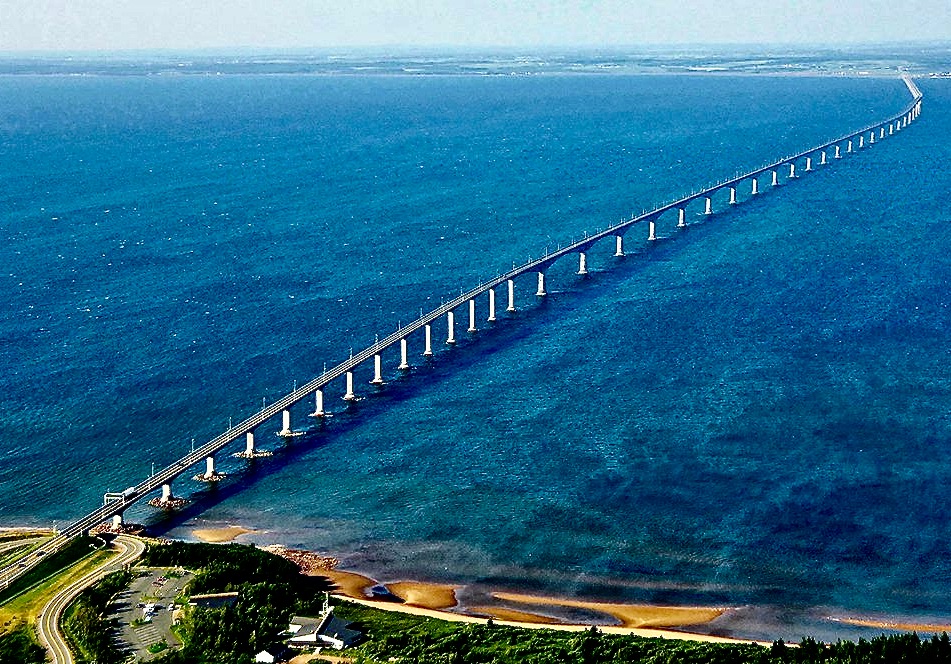
Making It Happen

By Ed Staskus

   “I’ve been immersed in the world of performing arts for as long as I can remember, from singing songs from Cinderella with my mom as soon as I could speak, to studying performing arts at Sheridan College,” Charlee Whitty said. Cinderella is the story of a hardworking underdog who doesn’t have much but knows what she wants when she sees it. “When you’re driving through the moonlight, breathless with wild anticipation of adventure and excitement,” Julie Andrews sang in the 1956 Rogers and Hammerstein movie musical.

   It was the middle of summer on Prince Edward Island. Charlee was taking a break from serving coffee and sandwiches at Tide & Tales Bistro in North Rustico, where she was working part time for the season. Behind the eatery an osprey flew in from the ocean to its nest perched on top of a utility pole. There was a fish in its beak. The sea life was for its hatchlings.

   Charlee is a 26-year-old performer and choreographer from Newmarket, Ontario, now making a home in New Glasgow, Prince Edward Island with her husband Ryan. They got married in 2022 and straight away moved to Atlantic Canada. She graduated from the Huron Heights Secondary School arts program with majors in dance, drama, and vocals. She moved on to  Sheridan College’s performing arts program, where she honed her craft before relocating to the eastern seaboard. Some of her theatrical roles include Dorothy in ‘The Wizard of Oz,’ Little Red in ‘Into the Woods,’ and Frank-N-Furter in ‘The Rocky Horror Show.’  

   “My husband and I moved because we were going to get a small apartment in Ontario after we got married, but my dad advised us not to,” Charlee said. “What he said was, ‘You’re not going to get anywhere starting out in Ontario, it’s so cutthroat finding work.’ There is a crazy rat race mentality in the province. We had been talking about moving to Prince Edward Island where there is a lot of opportunity in theater. Both of my parents pushed for that, saying we could better make a name for ourselves in a smaller community.”

    Everything in life is competitive. It can be a good thing. It forces us to do our best. The theater business is especially scrappy. “Getting a role can literally come down to you and one other person. You could be perfect but maybe you don’t have the exact look the creative team is looking for. It’s not about talent at that point. Its cutthroat although it’s not personal. It’s a rewarding job. You get to be like a child again, exploring things, but you have to keep auditioning and auditioning. One rejection after another can be taxing on your mental health.”

   When Charlee got to Prince Edward Island she started looking for doors to get her foot into. “I didn’t know a single soul on the island. I was nervous. It was daunting, but I knew I wanted to get into choreography. When I got the opportunity to do that in ‘Rent’ it kick-started everything. I have made some friends since then who have become best friends.”

   ‘Rent’ is a rock musical based on Puccini’s opera ‘La Boheme.’  It tells the story of young artists and musicians struggling to survive in New York City in the days when the East Village was bohemian and not yet gentrified and bland. More than anything it is about finding your voice. It scored four Tony Awards and is one of the top 10 longest-running musicals on Broadway. “It’s about a community celebrating life,” said Jonathan Larson, who created the show.

   “I’m thrilled to be part of its debut on the island this summer,” Charlee said. “It resonates with me for many reasons, but a huge one is because it encapsulates the essence of love. I think we can all empathize with the characters in ‘Rent,’ such as how we cherish the bonds of friendship, how we navigate self-worth, and understanding that you must find love in everything you do because life is so precious. I strive to infuse every aspect of my own life with that same spirit.”

   She has lately added ‘Anne and Gilbert: The Musical’  to her resume. She got to spread her wings, playing four roles, which are Ruby, Mrs. Pye. Christie Stuart, and Marilla Cuthbert. The actor who has no immediacy has no wings.

   Acting isn’t for everybody. The competition is never-ending. Everybody wants it as bad as everybody else. It can amount to years of dispiriting turndowns. The travel takes you away from your family and friends. Equity pay is more terrible than phenomenal. “Almost 100% of everybody I talked to growing up said don’t go into acting,” Charlee said. “They said, if you can do something else, do something else.”

   What they were saying is, do something normal. What they weren’t saying is, normal is only one cycle on a washing machine. There are other cycles. Cut-and-dried isn’t always the be-all and end-all to aspire to. It can be overrated. Sometimes the aspiration to move into a new frame of mind is what brings into being a new normal.

   Lee Strasberg, the preeminent exponent of method acting, said, “Acting isn’t something you do. Instead of doing, it occurs. You can have conscious preparation but If you’re going to start with logic, you might as well give up.”

   “It’s mostly people who aren’t in theater telling you to give up, go do something else, get a real job,” Charlee said. “Everybody in theater, they tell you making it is hard, but they never tell you not to do it. Nobody in the theater world tries to discourage you. Surrounding yourself with the right people is absolutely imperative.” The right people are the people actors need in their lives to make it happen.

   “It’s vulnerable being an actor. You find out things about yourself that you didn’t know. You grow so much, but you’re not doing it by yourself. Many people in theater have shaped who I am. The reason I love it, every show you do, you become like a family. It’s special, the community you create. It’s a great feeling, so bonding.”

   Acting can be scary. It is a form of public speaking in a world where many people think speaking in public is akin to dying. “The first time I had a lead role was when I played Dorothy in ‘The Wizard of Oz,’” Charlee said. “I was excited but terrified.”

   She was even more terrified playing Frank-N-Furter in the ‘The Rocky Horror Picture Show.’ Frank-N-Furter is a cross-dressing mad scientist. His mission in life is to create Rocky, the perfect man. In his own words, Frank-N-Furter is a “sweet transvestite from Transylvania.” The show is a mash-up of sci-fi and horror B-movies, campy slapstick, and rock ‘n roll.

   “I was scared to do the show because it is so demanding vocally and because it’s supposed to be a man doing the role,” Charlee said. “I had never done anything like it, being usually typecast as a princess or the girl next door. I had to play a transvestite wearing a jock strap, fishnets, and my hair colored bright orange. He’s a very out there character. My friends were there. My parents were there. I walked out on stage and everybody lost their minds. I got crazy laughs and it fueled me for the whole show. I needed it so bad because I was so nervous.”

   Not every audience breaks out into laughs and applause. Every one of them is different. “Sometimes you get an audience that doesn’t react while others react too much, like talking at the stage,” Charlee said. Sometimes acting is the art of keeping a large group of people from hemming and hawing. “An audience can be drab and all you can do then is get through the show. Other times they hype you up, although you definitely need to find a line. You can go over the top, like if it’s a comedy show, you try too hard, and then it’s not funny anymore. You don’t want to chase it.”

   The acting business is a freelance business. You never stop having to prove yourself and promote your work. It’s also a business which is conducive to pivoting in new directions. Charlee has pivoted in the direction of choreography. “One of the challenges I face as a choreographer is navigating the diverse skill levels of actors. I tend to create relatively intricate choreography, which I know can be intimidating, but I do my best to break it down piece by piece so that everyone becomes comfortable and knows what they’re doing. Dancing can be daunting and doesn’t come naturally, so my goal is to lift everyone up and give them the confidence to have fun, own the stage, and help them enhance the story with movement and dance. It is rewarding to watch and experience them gaining confidence and doing things they never thought they could do.”

   Besides acting, stagecraft, and choreography, Charlee teaches at Revolution Dance Studio and works with the Queensville Players, among other things. “Ryan and I have started our own business called Little Wonders Character Entertainment,” she said. “We will bring a princess to your party, like having a clown or a magician.” The Whitty’s need to pay the rent like all young actors and artists. Paying the rent by making somebody’s magic day more magical is as good a way to do it as any.

   “My first acting job was being a Disney princess at parties when I was 16 years old. We have hired a few of my friends to do the performing. I stay in the background, coordinating it all, which I love doing. That’s the direction I am going in for a career. I love being on stage, but I totally love being behind the scenes.” 

   Charlee and her husband Ryan, who also studied performing arts at Sheridan College, are planning on starting a musical theater program. “He and I will be tag-teaming the program,” she said. “Life is about finding a clear path. Don’t try to fit into somebody else’s box. If you ignore the clear path you will miss opportunities. Stay on the path and the opportunities will present themselves. Connections are huge, you have to be strategic, you have to be able to pick and choose, but staying on the path is essential. Things are falling into place. We’ll be here next year making a name for ourselves.”

   Making it happen is a process. It is a direction, not necessarily a destination. What you achieve fleshing out dreams is what you make of your direction.

Ed Staskus posts monthly on 147 Stanley Street at http://www.147stanleystreet.com, Made in Cleveland http://www.clevelandohiodaybook.com, Down East http://www.redroadpei.com, and Lithuanian Journal http://www.lithuanianjournal.com. To get the site’s monthly feature in your in-box click on “Follow.”

“Ebb Tide” by Ed Staskus

“A thriller in the Maritimes, the deep blue sea, magic realism, and a memory..” Sam Winchell, Beyond Books

Available at Amazon: https://www.amazon.com/dp/B0CV9MRG55

Summer, 1989. A small town on Prince Edward Island. Mob money on the move gone missing. Two hired guns from Montreal. A peace officer working the back roads stands in the way.

A Crying of Lot 49 Publication