Category Archives: Ebb Tide

Homeward Bound

By Ed Staskus

   “How does it happen that you’re from Sudbury,” Kayleigh Jurgelaitis asked JT Markunas. He was sitting across from her at Junior’s Bar & Grill.

   “World War Two,” JT said, giving the pint in front of him a break. “My father is from Lithuania. My grandmother Antonina was from Russia, a schoolteacher in Saransk. My grandfather Jonas met her during the first war.” The town and an army garrison were in the badlands, four hundred miles southeast of Moscow. “He was an officer in the Russian Imperial Army.”

   “You’re part Russian, like Ivan the Terrible?”

   “A part of me is, so watch your step.”

   “Yes, sir,” Kayleigh said, mock saluting.

   “He was conscripted and trained as an officer and sent to serve with an infantry regiment. Back then they said drinkers go to the navy and dimwits to the infantry. He had to keep the dimwits in order.” The Imperial Russian Army counted more than a million men in uniform, most of them conscripted, most of them peasants. There were a quarter million Cossacks, too. Only the Cossacks knew what they were doing.

   “He swept my grandmother off her feet and they got married. They had a daughter in 1917. Another daughter was born the next year.” JT’s father was born six years later, in 1924. He was named after King Vytautas the Great. His mother called him Vytas. His sisters called him many things, including the Little Prince. They didn’t always mean it as a compliment.

   They lived in Siauliai, which is home to the Hill of Crosses. The hill bristles with tens of thousands of crosses, crucifixes, and statues. It was after Czarist forces crushed the November Uprising of 1831 when the first crosses appeared. By 1918 Lithuania had been missing from the map for more than a hundred years, having been disappeared after the Partition of Poland. Since that time, it had been under the thumb of the Russian Empire.

   In late 1919, when Russia was being torn apart by the Bolshevik revolution, Jonas and his family went home to a newly independent Lithuania. “The country didn’t have many officers when they formed their own army,” JT said. “Most of them were men who had been in the Imperial Army. My grandfather fought in the post-war battles around Klaipeda and after that served in the secret service in Kaunas, which was the capital then.”

   “Was he a spy?”

   “He was more like somebody who kept spies on their toes. After the fighting he got some land for serving his country. They had a house in town and a farm outside of town. Later on, he became the police chief.” 

   During the interwar years Lithuania was divided into twenty four districts and each district had its own governor and police chief. Farming was what mattered the most. Lithuania and Prince Edward Island are both mostly farm land. Potatoes are number one in both countries.

   During the late 1930s the world was changing fast. The Lithuanian world was changing even faster, although it didn’t change so much as fall apart. “The Russians showed up in 1940” JT said. “All of the country’s officials were let go and they put in new people who they wanted to run the show, like the British did here on Prince Edward Island back in the day.”

   He signaled Junior for more fried pickles. When Lithuanians go grocery shopping they buy pickles by the bushel. His mother in Sudbury had pickled cucumbers and served them at the dinner table all winter. He remembered sitting at the living room window with a bowl of them, watching snow fall until there wasn’t any place left for it to fall.

   The annexation of Lithuania was completed by the autumn of 1940. Businesses were nationalized and collectivization of land began. As the Russian presence expanded the family talked about leaving the Baltics. “They had a chance to leave the country and go somewhere else, but didn’t.”

   The stayed on their farm through the winter. Mass arrests and deportations of politicians, policemen, and dissidents began. “My grandfather was in his kitchen plot, wearing a shirt, old pants, and slippers when they drove up, a carload of Russians, and stopped, saying there was something wrong with their engine,” JT said. “He walked over to the car with them to help. They shoved him into the back and drove off.”

   He remained under lock and key in the local lock-up until he was finally loaded into a boxcar with many others. Four days later, the 4th Panzer Group, part of the first phase of Operation Barbarossa, the German invasion of Russia, destroyed the Russian armored forces in Lithuania. Within a week Nazi Germany seized the whole of the country.

   “It was too late for my grandfather. He  was transported to a labor camp in Siberia. He was forced to work in a logging forest. He slept in an unheated barrack and starved to death during the winter of 1942.”

   “That’s horrible,” Kayleigh said. “My father worked at logging when he first came to Canada, somewhere north of Sudbury,” Kayleigh said. “It wasn’t anything like Russia, though. Nobody starved to death. They didn’t lack for food or shelter. What happened to the rest of your family?”

   “It was every man for himself, unless you were a Red,” JT said. “After the deportations they left the farm. It was too dangerous to stay. They went into the forest. But then my grandmother told my father, who was around 18 years old, to go to Vilnius, the capital, and tell his older sister their father had been arrested. She wanted her daughter to know to be careful. He took a train, but as soon as he got there, he got a phone call saying his mother had been arrested.”

   “They were still living in the forest?” Kayleigh asked.

   “They had built a lean-to near a stream and camouflaged it,” JT said. “His other sister stole food from nearby farms. They had a rifle. The gun didn’t do them any good, though.”

   “Most of the Acadians around here were deported during the French and Indian War,” Kayleigh said. “They didn’t have many guns, not that it would have mattered. I’ve heard people call it the Great Expulsion.”

   “The way I’ve heard it was that if you were Acadian, you were removed from your home and your land,” JT said. “Your house was burned and the land given to settlers loyal to Britain, mostly immigrants from Scotland and New England.”

   The Great Expulsion was the forced removal of Acadians from Nova Scotia, New Brunswick, and Prince Edward Island during the French and Indian War. Most of the Acadians were deported, most of them ending up in France, Louisiana, and Massachusetts. Half of them died of disease, starvation, and  shipwrecks.

   “Was your grandmother sent to a prison camp even though she was Russian?” Kayleigh asked.

   “Yes, she was sent to a prison camp. She was transported to the Gulag. She was released in 1956, after Stalin’s death, but not allowed to go back to her home. She was sent to live out her days in a one-room cinder block  apartment near the Baltic Sea.”

   “What did your father do?” 

   “After his mother’s arrest he stayed in Vilnius, with his sister and her husband,” JT said. “He stayed there for a month but went home when summer ended. The farm had to be taken care of. It had chickens, some pigs, and draft horses to do the heavy work. It was a dairy farm with more than twenty cows. “He started taking care of things, even though he didn’t know much. He had mostly been a schoolboy until then. He knew the cows had to be milked and the milk had to go to the dairy. But about the fields, he didn’t know anything. That fall he sent farmhands to till the ground. When his nearest neighbor saw them working, he ran across the road yelling and waving his arms.”

   “What the hell are you doing?” the neighbor yelled.

   “He told him they were preparing the ground for next year,” JT said.

   “You’re ruining this year’s seed and you won’t have any grass next year,” the neighbor said.

   “He stopped right away. He learned what to do.” 

   A year later he was on a horse-drawn mower cutting hay when he saw storm clouds gathering. He decided he would walk the horses, lightening the load so they could pull the mower faster, and jumped down from his seat. “As he hopped down, he stumbled and fell on the blades of the mower. The horses stopped. One of his hands was almost cut off. The boy who was helping him ran over. My father told me when the boy saw what happened, he passed out.”

   As the war dragged on, JT’s father had problems keeping the farm going. He had only partial use of his injured hand and farmhands were deserting the countryside. He went to a nearby  prisoner-of-war camp where he knew they loaned Russians out. They gave him some of them. They kept the farm going but one morning they were all gone. He had to go back to the Germans and ask for more. They were mad about it. One officer insisted he hadn’t looked after them, that he needed to lock them up at night, and that they weren’t going to give him anymore. “I need more,” he said. They eventually gave him more. He kept them locked up after that and they were still there when he fled Lithuania.

   “My father had to do that, too,” Kayleigh said. “He had to get out fast in 1944.”

   In 1944 the Red Army stormed back into Lithuania. JT’s father fled with a mechanized company of Wehrmacht, whisked up by them as they passed. They had been stationed near the prisoner-of-war camp. They told him he had five minutes to decide whether he was coming with them as they retreated. “They were in a big hurry. They said the Russians were on the other side of the Hill of Crosses. He only had time to fill a bag with a few clothes, a little money, and some photographs of his parents.”

   In July the Red Army took Siauliai, inflicting heavy damage on the city. Two months after that the counterattacking German 3rd Panzer Army was destroyed and Lithuania became part of the Union of Socialist Republics. “My father ended up in Sudbury in the late 1940s with a duffel bag and enough loose change to get a sandwich,” JT said. “He got a job with Inco and that’s where he stayed. At first, he worked as a black powder blaster, one of the more dangerous jobs, but over the years the grind got easier.”

   “After my father made it to Canada,” Kayleigh said, “he cut down trees to make a living. He moved to Sudbury after he got married. We later moved to Toronto, and from there to Buffalo. No matter, I still think of myself as a Sudbury girl.”

   “Where did you live?”

    “We lived on Pine Street, around where all the Eastern Europeans lived.”

   JT grew up on Stanley Street where it dead-ended a few blocks from Pine Street.

   “When were you born?”

   “1961.”

    JT had been born the same year. Kayleigh was the same age, from the same town, and they had grown up within walking distance of each other. The coincidences were piling up. He had never been sure if coincidence was a good thing or a bad thing. At the moment he thought it was a good thing.

   “Do you remember the Canadian Pacific trains blowing their air horns when they curled around the cliff at the back of Stanley Street?”

  “I sure do,” Kayleigh said. “Whenever they wailed, I wailed right back.”

   “Me, too,” JT said.

   They laughed loud enough so that Junior looked their way. They smiled at each other, seeing one another better than ever.

Excerpted from the book “Ebb Tide.”

Ed Staskus posts monthly on 147 Stanley Street at http://www.147stanleystreet.com, Made in Cleveland http://www.clevelandohiodaybook.com, Down East http://www.redroadpei.com, and Lithuanian Journal http://www.lithuanianjournal.com. To get the site’s monthly feature in your in-box click on “Follow.”

“Ebb Tide” by Ed Staskus

“A thriller in the Maritimes, out of the past, a double cross, and a fight to the finish.” Sam Winchell, Beyond Books

Available at Amazonhttps://www.amazon.com/dp/B0CV9MRG55

Summer, 1989. A small town on Prince Edward Island. Mob money on the move gone missing. Muscle from Montreal. JT Markunas, an RCMP constable working the back roads, stands in the way.

A Crying of Lot 49 Publication

Back in Action

By Ed Staskus

  “Oy, where is that you are coming from?” Kieran Foyle asked the kitten going on tomcat at his feet. The half-pint was looking up at him. He had been on board the ferry when Prince Albert’s gunman shot Tom Spate dead. As the ferryman was spitting out his last breath, the kitten jumped off his perch and scurried to the side. He watched Kieran roll, push, and kick the dead Englishman into the Stanley River. He floated face down into the New London Bay. The Kulloo flying overhead didn’t bother glancing down at the end of Tom Spate.

   That was the end of Queen Victoria’s would-be killer, at least until he sank. When he did bottom feeders like eels would eat whatever was left of his decomposing body. The kitten had seen plenty of eels in his short time on Prince Edward Island. He knew what they were up to. It was why he never snacked on them.

   The kitten was striped and gray, still small but on the stocky side. “The only true animal is a cat, and the only true cat is a gray cat,” Lucy Maud Montgomery said. The Green Gables author had two of them. “When people ask me why I want to keep two cats I tell them I keep them to do my resting for me.”

   Snapper was a Scottish half-breed from Rear Settlement, on the west side of Settlement Rd. beside a tributary of the Montague River. Everything had gone wrong a month before when Ann Beaton, the woman who had given him his name and kept him fed, dry, and warm, was murdered when somebody smashed the back of her head with a grubbing hoe.

   Ann was 41 years old and a spinster. She was lonely but had a one-year-old daughter to keep her company. Nobody knew who had gotten Ann pregnant. She had a lot of explaining to do but kept it a secret. She had called the bun in the oven her snapper. When she found the kitten, who had wandered away from his litter, she called him Snapper. She lived with her brother Murdoch and his family. The night she was killed was the day she went visiting her neighbor who was weaving some cloth for her. They had tea and raisin pie after dinner and Ann started for home when it was near to sunset.

   “What do you say, it’s getting awful dark, maybe you should stay overnight,” her neighbor suggested.

   Ann said she knew the way back like the back of her hand and besides, she enjoyed walking in the dark. Her brother was away and one of his children was watching her girl. She wanted to get back to her young one. Ann was found dead the next day in a ditch at the back of her brother’s farm. She was lying in blood day-old dry and caked.

   She was laid out in the barn. She had been stamped on and violated. Her body and dress were marked with the prints of a shod foot. Everybody from the community filing past the viewing laid a hand on her. There was a Scottish belief that if a murderer touched the body of his victim, blood would gush forth. At the end of the viewing everybody was in the clear. There had not been any gushers. The killer was never found.

   Snapper stayed alert as Kieran walked back to North Rustico. He bounced up and down in the man’s coat pocket. The island’s pioneer days weren’t over, except where they were. Most still farmed and fished, but not all of them. Some made and sold farming implements while some worked in shipyards. Everybody needed lumber and many men worked at lumbering. There were sawmills and shingle mills. There were schools, churches, and post offices. There were some inns and hotels. There were plenty of distilleries.

   Ann Beaton’s funeral was presided over by the Reverend Donald McDonald, a minister of the Church of Scotland. He had a large following of “kickers” and “jumpers.” They were known that way for the religious frenzy they fell into while being “under the works.” The clergyman had emigrated from Scotland to Cape Breton and finally to Prince Edward Island. Everybody knew he drank too much when he was still a Scotsman. When he became a Canadian, he tried to stay on the wagon. “Prince Edward Island is a dubious haven for a man fleeing demon rum,” one of his kinsmen said. There was plenty of strong drink on the island. 

   A year before her death Ann attended several prayer meetings and while under the works had knocked a Bible and a candle from Reverend McDonald’s hands. She invertedly kicked the Bible, too. She purposely blew out the candle. “They are both under her feet now and mark the end of that girl,” the clergyman said by way of a sour eulogy.

   Snapper watched country folk going to Cavendish by horse and buggy to buy tea, salt, and sugar. If they had something extra in their pockets, they bought molasses and tobacco. They only bought clothes they couldn’t make themselves. They didn’t buy food as a rule. They grew and processed it themselves, picking and preserving berries, milking cows and churning cream for butter, and curing beef and pork after slaughtering the animals.

​   The grubbing hoe that killed Ann Beaton belonged to Archibald Matheson. He lived nearby on the Settlement Rd. with his wife and son. The three of them were arrested on suspicion of the crime. Some local women reported being molested by the farmer. But bad feelings among neighbors weren’t facts. He and his family were soon released. He may have had a bad reputation, but so did Ann. There were rumors she had been killed by a jealous wife. A smutty ballad was composed describing her as “light in her way.” 

   After the funeral she was buried in the Pioneer Graveyard. Her brother moved away nobody knew where. Nobody knew what happened to her baby, either. Nobody wanted to know. By the time Snapper was on his way to North Rustico everybody had done their best to forget all about it.

   The kitten had been sleeping in the back of a wagon one day almost a month after Ann’s death. He was sick and tired of nobody feeding him. Before he knew it the wagon was on its way. When he looked back, he didn’t see anything worth going back to. He made himself comfortable and went with the flow. The flow went towards the northwest. The wagon stopped overnight at Saint Andrews and the next night at Covehead before getting to the Stanley River, where it rang for the ferry. Once they were across, and the wagoner was stretching his legs, Snapper stretched his legs, too. When he was done the wagon was long gone. Unlike wagoner’s hauling freight, the kitten wasn’t on a schedule. He was go-as-you-please footloose.

   Tom Spate’s young wife took him in, poured him a bowl of milk, and fed him scraps of white fish. He bulked up and stayed agile by staying out of Tom Spate’s way. The ferryman had a bad temper and wasn’t above hitting his wife or trying to kick the kitten. Snapper was fast and none of the ferryman’s kicks ever landed. Tom Spate’s wife wasn’t fast enough and had the bruises to prove it.

   Snapper wasn’t overly distressed to see the dead as a doornail Tom Spate floating away. Kieran was his kind of man, irascible but not mean-hearted. I have never known anyone worth a damn who wasn’t irascible, the kitten thought. Snapper stayed where he was, not jumping ship. Besides, he had already spotted foxes along the coastline. He would deal with them once he was grown up and ready for bear, but for the moment he kept his eyes open and his nose on high alert.

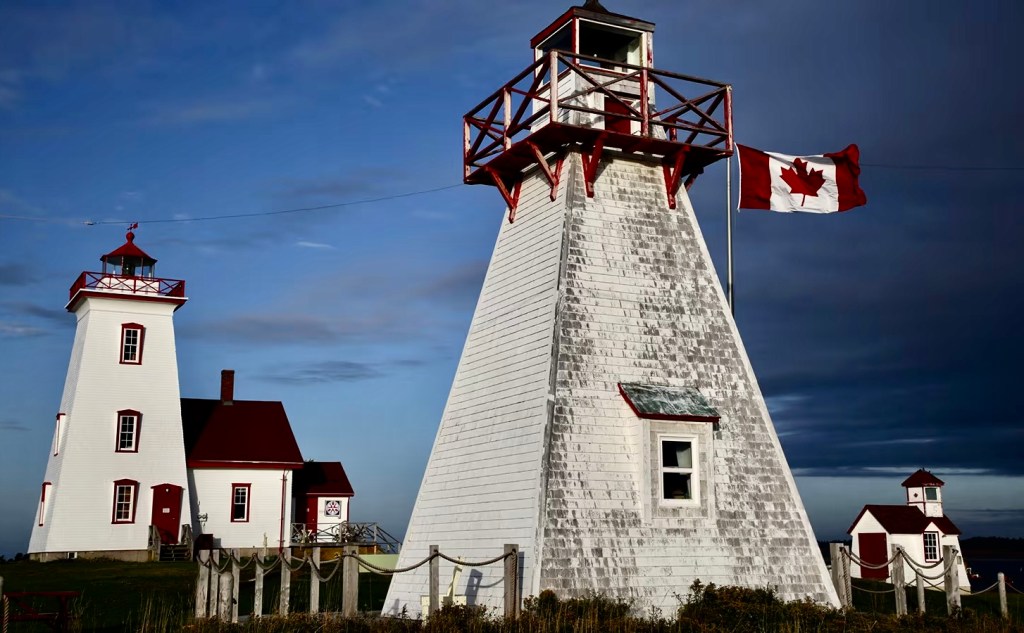
   He saw a lighthouse in the distance. It was weather-beaten. He was farsighted but saw well enough so long as it was a few feet past his nose. He made good use of his nose and ears for everything closer. They walked past a house where it was wash day. Behind the house was a field of sunlit rapeseed. A woman was raising water from a well with a bucket and washing clothes on a washboard with home-made laundry soap. She pressed what clothes needed to be pressed using an iron she heated on her kitchen stove. Snapper didn’t own or wear clothes and thought it was a lot of bother.

   A traveling tailor was walking up the path to a nearby house. He was going to stay for several days, maybe even a week, making wool coats for everybody. The lady of the house had already spun, dyed, and woven the cloth. What Snapper didn’t know was winters on the island were long and cold. He was going to find out soon enough. When he did, he was every day going to sniff out wool so he could curl up into it.

   When they got to North Rustico there was still plenty of daylight left in the day. Snapper ran behind the boarding house where Kieran was staying and started pawing at a beetle. He batted it one way and another way. The beetle looked for a tree to scurry up. The only beetles Snapper never messed with were lady bugs. He liked the way they went about their business as they hunted for aphids. They were deadly killers of the pests. Snapper never killed lady bugs. It would have brought bad luck. Everybody knew that.

   Snapper slept on Kieran’s bed that night. He made himself small and pressed himself into the man’s ribs. The Irishman didn’t toss and turn, which suited the kitten. He didn’t have to catnap with one eye open, ready to jump at any minute. He slept better that night than he had in many nights. By the morning he had forgotten all about Tom Spate.

Excerpted from the book “Ebb Tide.”

Ed Staskus posts monthly on 147 Stanley Street at http://www.147stanleystreet.com, Made in Cleveland at http://www.clevelandohiodaybook.com, Atlantic Canada at http://www.redroadpei.com, and Lithuanian Journal at http://www.lithuanianjournal.com. To get the site’s monthly feature in your in-box click on “Follow.”

“Ebb Tide” by Ed Staskus

“A thriller in the Maritimes, out of the past, a double cross, and a fight to the finish.” Sam Winchell, Beyond Books

Available at Amazon: https://www.amazon.com/dp/B0CV9MRG55

Summer, 1989. A small town on Prince Edward Island. Mob money on the move gone missing. Two hired guns from Montreal. A constable working the back roads stands in the way.

A Crying of Lot 49 Publication

Shock Wave

By Ed Staskus

   “When Britain is at war, Canada is at war,” Prime Minister Wilfrid Laurier said in 1910. “There is no distinction.” Four years later when Britain entered World War One, Canada signed on, too.  In August 1914 the Governor-General of Canada vowed that “if unhappily war should ensue, the Canadian people will be united in a common resolve to put forth every effort and to make every sacrifice necessary to ensure the integrity and maintain the honor of our Empire”

   Empires are made by plundering and slaughtering. They are always sure of the rightness of their cause. They never go down without a fight. It doesn’t matter if there’s any honor in the fighting, or not. They plow straight ahead.

   The country had no air force, a navy fit for a bathtub, and an army of 3,000-some men.  By the end of the war more than 600,000 Canadians had enlisted in the Canadian Expeditionary Force to fight for King and Country and more than 400,000 of them served in Europe, out of a population of fewer than 8 million nationwide.

   “The Empire Needs MEN” is what the posters said. “All answer the CALL! Helped by the YOUNG LIONS the OLD LION defies his foes. ENLIST NOW!”

   Everybody wanted in on the fight because everybody thought it would be over by Christmas. Canadians lined up to support the British Empire and collect steady pay of $1.10 a day. The harvest that year was bad, and unemployment was soaring. But machine guns fired ten times as many bullets a minute as they were paid pennies a day. Hundreds of thousands on all sides were slaughtered week by month by year by the rapid-firing weapons on the Western Front.

   At the beginning of the war, it was better to be killed than wounded. The wounded were taken off battlefields in horse-drawn wagons or on mules with baskets on their sides, the baskets soaked and dripping with men bleeding to death. There wasn’t any such thing as a dressing. If they made it to a train station, they were transported to hospitals. “One of those trains dumped about 500 badly wounded men and left them lying between the tracks in the rain, with no cover whatsoever,” said Harvey Cushing, the head of the Harvard Unit of volunteer doctors at the American Ambulance Hospital of Paris.

   Nearly 60,000 Canadians were killed, most of them the result of enemy action, and more than 170,000 of them were wounded. Almost 3.500 men and one woman had at least one arm or leg amputated. Private Curley Christian lost all four limbs but survived.

   During the Battle of Vimy Ridge he was unloading cargo from trucks when an artillery shell hit next to where he was, trapping him under debris for several days. When stretcher bearers tried to reach him, they were killed by more artillery. When he was finally rescued, he was transported to a military hospital and from there to London. His arms and legs had gone gangrenous and all four were sawed off.

   When he got back to Canada he was fitted with prosthetic limbs and married Cleopatra McPherson. He deigned his own prosthesis for writing. Cleo and he had a son who twenty years later served in World War Two.

   More than 7,000 Prince Edward Islander’s enlisted. Five hundred of them were killed and more than a 1,000 wounded. Tommy Murphy went overseas with a siege battery in 1915. Before he went, he got married to Freya O’Sullivan and got her pregnant. He got word of his son Danny’s birth by telegram while taking a break in an ankle-deep puddle of water sheltering in a trench during the Third Battle of Artois. 

   He had spent eight days at the front and was due for four days in a reserve trench and then four more days at a rest camp. When the bloodletting went on and on and the ranks thinned out, he never made it to the reserve trench much less the rest camp. It was that kind of a war. The Allied and Central Powers fought the same battles over and over.

   The British French and Canadians assembled seventeen infantry and two cavalry divisions for the offensive at Artois, backed by 630 field guns and 420 heavy artillery guns. During the fighting the field artillery fired 1.5 million rounds and the heavy artillery 250,000 rounds at the Germans defenses. Tommy Murphy barely slept for days. Whenever he took a break, he felt like his arms were going to fall off after loading shells until there weren’t any more to load. He knew he had sent his share of Germans to Hell even though he never saw one of them die.

   When the Allies tried to advance, they suffered 40% casualties. The battle went on from late September to mid-October when it ground to a halt in the middle of a never-ending autumn rainstorm and mutual exhaustion. By that time both sides were conserving ammunition because they were running out of it. They spent the rest of the month burying their dead, tending to their wounded, and withdrawing.

   Tommy was a cannon man because he was taller than five feet seven inches and burly enough to do the heavy work of feeding artillery. He didn’t have flat feet or bad eyesight, He didn’t have the greatest teeth, but explained he was enlisting to fight Germans, not bite them. He could have begged off the war because he was married, but he was patriotic and wanted to do his fair share. Money from the Canadian Patriotic Fund helped his wife keep the home fire burning.

   His battery had a lance corporal scout sniper attached to it. Francis “Peggy” Pegahmagabow was an Aboriginal who could split a bullseye nobody else could even see. He had more than 300 kills to his name. He roamed No Man’s Land at night for them, seeking out enemy snipers and forward spotters. He always came back in the morning. The other side never made it back to their side.

   He wore moccasins instead of army boots, chewed dead twigs whenever he sensed danger, and always carried a medicine bag. “When I was at training camp on Lake Superior in 1914, some of us landed from our vessel to gather blueberries near an Ojibwa settlement,” he said. “An old Indian recognized me and gave me a tiny medicine bag to protect me, saying I would shortly go into great danger. The bag was of skin tightly bound with a leather throng. Sometimes it seemed to be hard as a rock, at other times it appeared to contain nothing. What was inside of the bag I do not know.”

   Tommy had signed up for short service and when 1915 was over and done and it was April 1916, he was done with his one year on the Canadian Expeditionary Force. His commanding officer tried to convince him to re-enlist, but he had a wife, a child, and a farm that needed him. He didn’t need to kill anymore Germans. He was sick of the butchery. Three men from North Rustico were already dead. He didn’t want to be next. He knew if he re-enlisted it was only a matter of time before he went home in a box to be buried on Church Hill Rd.

   He got out when the going was good. The next year enlistments dried up as men near and far began to realize the toll the new style combat on the Western Front was taking. Machine gun fire and shell fire was murderous. On top of that there was poison gas. The dead were left where they fell. They were left for the rats. In May 1917 the government announced conscription through the Military Service Act. The rats stood up and cheered.

   It was easier getting into the army than it was getting out. He finally found a ride on a troop transport from Calais to Dover, took a train to London, and spent the night at a whore house with a razzle dazzle girl. He took a steam bath the next morning and had lunch at a corner fish and chip shop eating cod with a splash of vinegar and a full pint at his elbow. He followed the first pint with a second pint and was happy for it. He had a ticket for passage to Halifax in his wallet, but it was a week away. His grandfather had come from Ireland, or so the family story went, and done something big for the Crown, who rewarded him with 400 acres of PEI shoreline. He unfolded a map and located Dublin. It was directly across the Irish Sea from Liverpool.

   He bought a train ticket to Liverpool and the next morning landed in Dublin. It was Easter Monday. The Easter Rising had happened yesterday. The Easter Rising was happening today. 

   After landing at the Dublin Port, he followed the River Liffey, making for Dublin Castle and St. Patrick’s Cathedral. His plan was to find a room for a few days and have dinner. He would explore the rest of the city after a good night’s sleep. He was wearing his Canadian Army uniform over a pair of Spring Needle underwear and carrying a rucksack. He had his toiletries, four pairs of clean socks, his rolled up military wool overcoat, and a paper bag full of Huntley & Palmer biscuits in it. The biscuits were so hard they would crack a man’s teeth at the first bite if not soaked in tea beforehand.

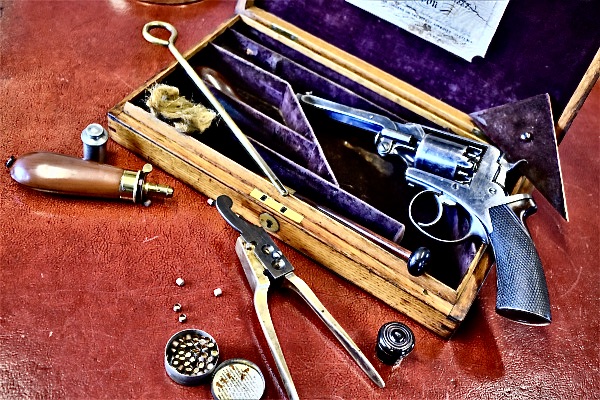
   His papers and money were in a travel wallet attached to his belt. He had his Colt New Service revolver on his belt, too, for what it was worth now that his war was over. An hour later he was glad he had it, after he got it back, although he wasn’t sure if he was going to need it to protect himself from the Irish or the British.

   Dublin Castle was in the middle of the old part of the city. The city got its name from the Black Pool, the ‘Dubh Linn,’ where the rivers Liffey and Poddle met. It was where the castle was. It had been a Gaelic ring fort in the beginning, a long time ago. Later, after the Vikings showed up, it was a Viking fort. For the past 700 years it had been a British fort, the seat of their rule in Ireland. 

   Tommy didn’t have anything against the British, but after a year of serving in their army, he thought the Irish might be better served ruling themselves. They couldn’t do worse. During the year he served on the Western Front three quarters of a million Jacks and John Bulls were killed. It made him sick to think of the men he had seen obeying orders to attack barbed wire and machines guns across open fields. Another few million men went wounded and missing. The broken might survive, but he didn’t think the missing were coming back anytime soon.

   He was glad to be out of it. It hadn’t ended by Christmas of 1914. It still wasn’t over by Christmas of 1915. The next Christmas was in eight months and the talk was it would take a half-dozen more holidays to either win or lose the war. He meant to say a prayer in St. Patrick’s Cathedral before dinner. 

   He didn’t get a chance to say a prayer, find a room, or have dinner. He lost his chance when he came across the bridge leading to Trinity College, turned the corner towards Dublin Castle, and found himself face to face with a Mauser semi-automatic pistol. He knew exactly what it was. He stood stock still exactly where he was. The hand on the firearm was a woman’s hand. She was wearing an old military hat and a yellow armband.

   “Hand’s up and on the wall, boyo,” she said, a second woman coming up behind him. The second woman was wearing a bandolier laden with a half dozen hand grenades. She had a revolver. It looked like it came from the Middle Ages. He did what she said. She patted him down and took his Colt.

   “Who are you and what are you doing here?” she asked.

   “Tommy Murphy, Canadian Army, from Prince Edward Island by way of a year in France,” he said. “I’m here to take in the sights before going home. Now that we’re talking, I thought Ireland was sitting the war out.”

   “We ask the questions,” the woman wearing the bandolier spit out.

   “Come on,” the woman with the Mauser said, poking him in the small of the back with the barrel of the gun.

   The streets leading to the city center were barricaded. When they got to the General Post Office, he saw there were two green flags flying in place of the Union Jack. They said “Irish Republic” in gold letters. He knew there was no such thing as an Irish Republic. 

   “What’s going on?”  

   “We’re rocking the casbah,” the grenade girl said.

   There was a man outside the post office reading from a broadsheet. It was the “Proclamation of the Irish Republic.” There were copies of it pasted on walls. Newsboys were handing them out to anybody who wanted one. Not everybody wanted one. Most of them didn’t understand what was happening. The grenade girl handed him a copy. “Read this,” she said. There were men with rifles and shotguns on the roofs of buildings overlooking bridges.

   “Who’s this?” said a man wearing a scrap of paper pinned to his breast. It said “Citizen Army.”

   “We found him down the street, Sean.”

   Sean was Sean Mac Duiarmada, one of Commander-in-Chief Patrick Pearce’s right-hand men.

   “He’s Canadian,” Sean said pointing to Tommy’s regimental badge and the “CANADA” title at the end of his shoulder straps.

   “We thought he was a Brit.”

   “They’ll be here soon enough,” Sean said.

   There were 1,200 rebels waiting for 20,000 British troops to arrive.

   A shot rang out in the distance and Margaret Keogh fell down dead. She was a 19-year-old nurse tending to a wounded Citizen Army man. She was the first person to die during the Rising of Easter Week.

   A team of Volunteers trotted past on their way to the Magazine Fort in Phoenix Park. They took all the weapons and ammunition they could carry and blew up the rest. When the son of the fort’s commander tried to raise the alarm, he was shot dead. He was the second person to die.

   “You’re free to go,” Sean said to Tommy. “Best you leave Dublin all together.”

   “What about my sidearm?”

   Sean nodded to the grenade girl, and she handed Tommy’s Colt back to him.

   When a contingent of the Citizen’s Army approached Dublin Castle, the police sentry James O’Brien ordered them to halt. He was shot dead even though he was unarmed. He was the third person to die. When British troops showed up the rebels retreated to City Hall, stormed up to the roof, and fired down on the troops in the street. The man commanding the rebel contingent, Sean Connolly, was shot dead by a sniper, the first rebel and fourth person killed.

   Tommy carefully made his way back to the docklands and the port. He boarded the same boat he had come on. An hour later the boat was steaming into Dublin Bay on its way back to Liverpool. Eight hours later he was asleep in a room of a boarding house on the waterfront, not far from the Three Graces.

   The next morning was cold and damp. Women were out in the streets with their long-handled push brooms. They were called Sweepers. Others were in homes cleaning and scrubbing. They were called Dailies. Many more were at work in munitions factories. They were called Munitionettes. Liverpool’s men were on the Royal Navy’s battleships and in the King’s Liverpool Regiment. They were called Cannon Fodder.

   Tommy found a greasy spoon near the port and ordered breakfast, eggs back bacon sausage baked beans a fried tomato fried mushrooms fried bread and black pudding. The Liverpool Daily Post headline screamed “REBELLION!” There was no need for him to read about it. He thought he might have this same breakfast at midday and tonight. Somebody once said, “To eat well in England you should have breakfast three times a day.”

   He put the newspaper aside. Pushing himself away from the table, he checked his ticket for Canada. He tucked it securely away with his service revolver. Tommy Murphy was going to keep himself safe and sound until his boat sailed for home. Once he was out of the frying pan that was burning and smoking on another man’s stove, he was going to stay out of it.

Ed Staskus posts monthly on 147 Stanley Street at http://www.147stanleystreet.com, Made in Cleveland http://www.clevelandohiodaybook.com, Down East http://www.redroadpei.com, and Lithuanian Journal http://www.lithuanianjournal.com. To get the site’s monthly feature in your in-box click on “Follow.”

“Ebb Tide” by Ed Staskus

“A thriller in the Maritimes, out of the past, a double cross, and a fight to the finish.” Sam Winchell, Beyond Books

Available at Amazon: https://www.amazon.com/dp/B0CV9MRG55

Summer, 1989. A small town on Prince Edward Island. Mob money on the move gone missing. Two hired guns from Montreal. A constable working the back roads stands in the way.

A Crying of Lot 49 Publication